Last updated on March 12th, 2026 at 07:08 am
When you see “wut” in a text, social media post, or meme, you might pause and wonder: “Is this a typo, slang, or something more?” In today’s fast-paced digital conversations, abbreviations and alternative spellings like wut have become part of online culture.
People search for its meaning because they want to understand tone, context, or even how to respond correctly in a chat.
Unlike formal language, online texting often favors quick, expressive, and playful forms of writing. Wut is one such word — it’s short, casual, and conveys a sense of curiosity, surprise, or confusion.
Understanding it can help you communicate better, avoid misinterpretations, and even join in on memes and viral trends. This guide will break down everything you need to know about wut — from its origins to real-world usage, emotional undertones, and practical responses.
Meaning & Definition
At its core, wut is an informal, phonetic spelling of “what”. It is widely used in texting, social media, and meme culture.
Primary Meaning:
- Expresses confusion, disbelief, or a request for clarification.
- Example: “Wut? You actually did that?”
Secondary Meanings:
- Can convey playful sarcasm or exaggeration.
- Example: “Wut 😂 I can’t believe this happened!”
- Used in memes for humorous emphasis.
Quick Fact: The spelling wut intentionally mimics casual speech patterns, making it feel more expressive than just “what.”
Background & Origin
Wut originated in early internet chats and forums, including IRC (Internet Relay Chat) and 4chan, around the early 2000s. Users began altering spellings to save time or convey tone. Its quirky spelling caught on because it added a humorous or casual vibe.
- Similar trends: lol → lawl, yeah → yeh, okay → k.
- Popularized further through memes, reaction GIFs, and TikTok videos.
It’s essentially a linguistic shortcut with emotional undertones, reflecting the informal, playful nature of online communication.
Usage in Different Contexts
Chat Conversations
- Shows confusion or surprise:
- Friend: “I ate the entire cake 😳”
- You: “Wut? No way!”
Social Media
- Often used in captions, comments, or reactions to posts:
- Instagram comment: “Wut… that filter is impulsive😂”
Professional Fields
- Rarely used formally, but sometimes appears in relaxed corporate chats or casual Slack channels.
- Example: “Wut did you mean by Q3 numbers? Can you clarify?”
Key Insight: Context matters. While common among friends or social media users, avoid using wut in formal emails or academic writing.
Meanings Across Platforms
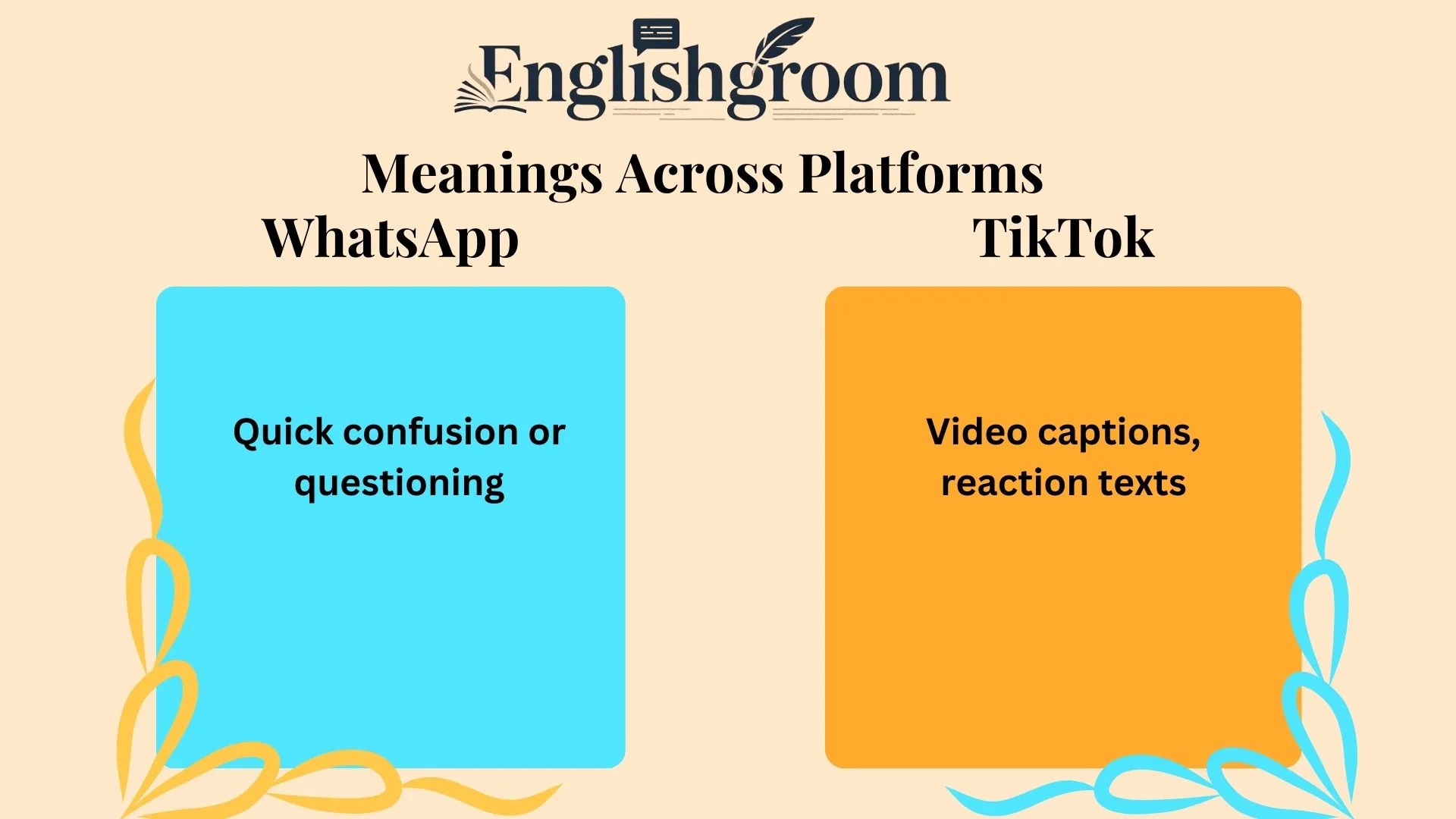
| Platform | Common Use | Tone / Nuance |
|---|---|---|
| Quick confusion or questioning | Casual, friendly | |
| Caption reactions, meme commentary | Playful, humorous | |
| TikTok | Video captions, reaction texts | Dramatic or exaggerated |
| Snapchat | Quick replies or story responses | Short, informal |
Note: On TikTok or meme platforms, wut often accompanies exaggerated emojis, gifs, or reaction faces for humor.
Examples in Real Conversations or Memes
- “Wut… you actually finished all the work in one day?”
- “Me: Wut 😭 Friend: I can’t explain it either 😂”
- Meme captions:
- “When you wake up and see your dog ate your homework… wut.”
Quick Tip: Emojis often accompany wut to enhance emotional expression.
Cultural or Regional Interpretations
- Western internet culture: Most common, casual, humorous.
- Asian chat apps (WeChat, LINE): Sometimes used with Katakana in memes, showing global influence.
- Gaming communities: Indicates genuine confusion, often followed by lol or ??
Other Fields / Technical Meanings
Though rare, WUT can stand for abbreviations in technical contexts:
- Physics / Engineering: Weighted Unit Test (hypothetical technical context)
- Medical: No common standard meaning, sometimes misused as shorthand in casual notes
- Aviation / Aircraft: Flight code abbreviations in logs
Important: Always infer meaning from context. In casual text, wut nearly always means “what.”
Common Misconceptions & Mistakes
- Misconception: Wut is a typo for “what.”
- Reality: Intentional spelling for tone or humor.
- Misconception: Only younger people use it.
- Reality: Meme and social media culture spreads it across ages.
- Misconception: Wut is offensive.
- Reality: Generally friendly, neutral, or humorous, unless paired with rude context.
Psychological or Emotional Meaning
Using wut signals:
- Confusion or curiosity
- Surprise or disbelief
- Humor or playfulness
It can help soften questions, making them feel less confrontational than a direct “what?”
Similar Terms & Alternatives
| Term | Meaning | Usage Context |
|---|---|---|
| what | Standard spelling | Formal or casual |
| huh | Confusion or disbelief | Casual conversation |
| whut | Similar to wut, playful | Meme culture |
| wat | Another meme-style spelling | Humor or sarcasm |
| eh? | Request for clarification | Informal, sometimes regional |
Is It Offensive or Friendly?
- Usually friendly, humorous, or playful.
- Tone depends on context:
- Friendly: “Wut 😂 you did not!”
- Sarcastic: “Wut… seriously?”
Famous Quotes or Lines Using the Term
- Internet meme: “Wut face” — a popular reaction image showing exaggerated confusion.
- TikTok / YouTube captions often use wut for comedic emphasis.
Grammar or Linguistic Insights
- Wut is an interjection; it doesn’t follow formal grammatical rules.
- Functions like “what”, but adds tone and informal nuance.
- Phonetic spelling reflects casual speech patterns.
How to Respond to It
Chat-style responses:
- “Haha 😅 I know, right?”
- “Wut do you mean exactly?”
- “Lol, same here 🤣”
- “I can’t believe it either 😳”
Tips: Match tone with emojis or humor to keep conversation friendly.
Differences From Similar Words
| Word | Key Difference |
|---|---|
| what | Standard, formal spelling |
| huh | More casual, often used alone |
| wut | Expressive, humorous, internet slang |
| wat | Meme-style variant, exaggerated tone |
Relevance in Online Conversations & Dating Apps
- Used for quick clarification without sounding harsh.
- Shows playful personality in dating app chats:
- “Wut… you love pineapple on pizza? 😂”
- Keeps tone light and friendly.
Popularity & Trends Over Time
- 2000s: Emerged in IRC, forums.
- 2010s: Spread through memes, YouTube, Instagram.
- 2020s: TikTok, Snapchat, and meme pages solidify usage.
Trend Insight: Google Trends show spikes in searches for “wut meme” during viral meme periods.
FAQs
What does wut mean in text?
It’s a casual, playful spelling of “what,” used to express confusion, surprise, or disbelief.
Is wut offensive?
No, it’s generally friendly or humorous, depending on context.
Can I use wut professionally?
It’s best for casual chats; avoid formal emails or academic writing.
How is wut different from what?
Wut adds humor, tone, and informality; “what” is neutral and standard.
Where did wut come from?
Early internet chats, forums, and meme culture, popularized since the early 2000s.
Conclusion
Wut is more than a typo — it’s a playful, expressive form of “what”. By understanding its nuances, you can use it to convey confusion, surprise, or humor naturally in texts, social media, or memes.
Its casual tone makes online conversations feel friendly and approachable, while its meme usage keeps it relevant across platforms.
Whether chatting with friends, reacting to a viral video, or joining a TikTok trend, wut is your go-to shorthand for showing curiosity and lighthearted disbelief.

Hi! I’m Sami, a 28-year-old content writer with a love for words and storytelling. Writing has always been my way of expressing ideas, sharing knowledge, and connecting with people. I enjoy creating engaging and well-researched content—whether it’s blogs, articles, or social media posts—that not only informs but also inspires readers. My goal is to turn complex ideas into clear, creative, and meaningful pieces of writing that leave a lasting impact.