When chatting with friends online or texting someone quickly, you might have typed “What happen?” or seen someone else use it.
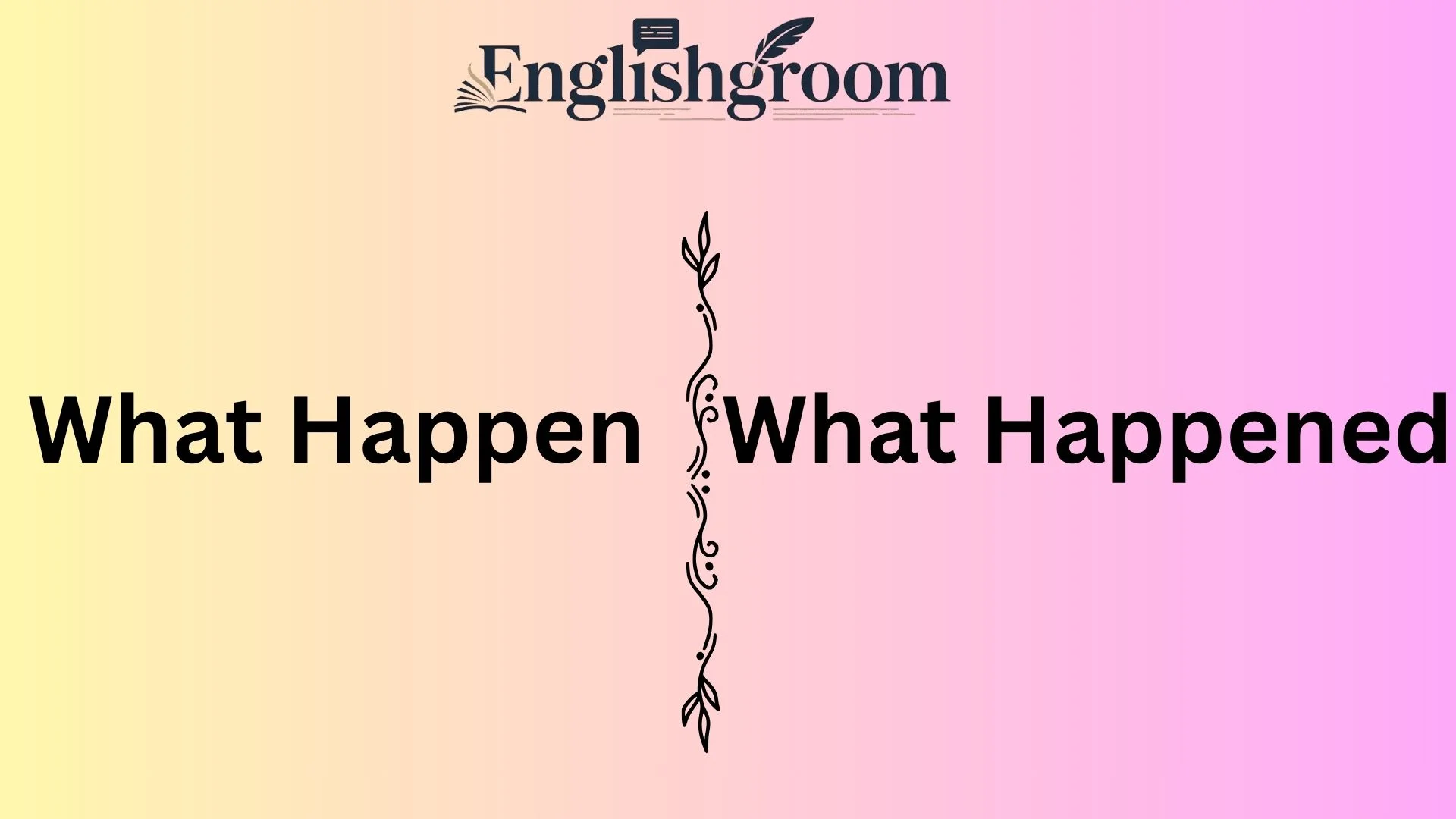
At first glance, it seems natural, but in standard English, it’s incorrect. The proper form is “What happened?”
Understanding the difference may seem trivial, but verb tense affects clarity, meaning, and credibility. This guide will explain why “what happened” is correct, how to avoid mistakes, and how to use it naturally in everyday conversation.
Understanding English Verb Tenses
English has multiple tenses, but the present and past tenses are most relevant here. Verb tense tells us when something occurs, and using the wrong tense can confuse the listener or reader.
- Present tense: Describes actions happening now or generally. Example: “Things happen for a reason.”
- Past tense: Describes actions that have already occurred. Example: “What happened yesterday surprised everyone.”
Why Tense Matters
Incorrect tense usage can change the meaning of a sentence entirely. For instance:
| Sentence | Tense | Meaning |
|---|---|---|
| “What happen?” | Present (incorrect) | Sounds awkward, incomplete, and non-standard |
| “What happened?” | Past (correct) | Asks clearly about a completed event |
Notice how the correct version is clear and professional, even in casual conversation.
The Verb “Happen”: A Grammar Breakdown
The verb “happen” is an intransitive verb, which means it doesn’t take a direct object. You can’t say “I happened the meeting”; instead, you ask about the event itself.
Present Tense Usage
- “Things happen every day.”
- “Accidents happen when you least expect them.”
Past Tense Usage
- “What happened at the party last night?”
- “A lot happened while you were away.”
Tip: Whenever you want to ask about a past event, always use “happened”. Present tense with “happen” sounds incomplete and grammatically incorrect.
Common Misconceptions
Many English learners and even native speakers sometimes say “What happen?”. This usually happens due to:
- Influence of informal speech: Texting or social media slang often drops “-ed”.
- Dialectal variations: Certain regional accents simplify tense endings.
- Speed of communication: People type quickly and skip letters.
Although common online, it’s not standard English. Using the past tense demonstrates both clarity and grammatical accuracy.
When to Use “What Happened”

The phrase “What happened” is your go-to choice for asking about completed events. Here are key scenarios:
Storytelling & Reporting
Use it to report past events:
- “What happened at the conference yesterday?”
- “Can you tell me what happened in the meeting?”
Questioning About the Past
- “I heard there was an accident. What happened?”
- “I missed the class. What happened while I was gone?”
Formal Writing vs. Casual Speech
Even in emails, reports, or professional messages, “What happened” maintains a polished tone, whereas “What happen” looks careless.
Why “What Happen” is Incorrect
Here’s why “What happen” doesn’t work grammatically:
- Verb Tense Mismatch: Asking about a past event requires the past tense happened, not the present tense happen.
- Subject-Verb Agreement: Even in questions, the verb must agree with the tense of the event.
- Clarity: Listeners/readers expect past tense when referring to completed events.
Example Comparison:
| Phrase | Correct? | Explanation |
|---|---|---|
| What happen? | ❌ No | Uses present tense for a past event |
| What happened? | ✅ Yes | Past tense correctly reflects completed action |
Note: The only time “happen” is correct in a question is when asking about general truths:
- “Does this happen often?”
- “What usually happens during these meetings?”
Contextual Clues to Choose the Correct Verb
Choosing the right verb form often depends on contextual indicators. Here’s how to spot them:
Time Indicators
Look for words signaling past or present:
- Past: yesterday, last week, two hours ago, recently
- Present: now, currently, these days, usually
Sentence Structure
- Questions about past events → past tense
- General observations → present tense
Example Table:
| Sentence | Context | Correct Verb |
|---|---|---|
| “What happen at school today?” | Asking about a specific past event | What happened |
| “What happen if I press this button?” | Hypothetical/general situation | Happen (present tense is correct) |
Real-Life Examples
Seeing proper usage in real-life conversations makes it easier to remember.
Casual Conversation:
- A: “I was late to the party.”
- B: “Oh no! What happened?”
Social Media:
- Correct: “I just saw the news. What happened in the city?”
- Incorrect: “I just saw the news. What happen in the city?”
Professional Email Example:
“Hi Sarah, I missed the morning meeting. Could you please summarize what happened?”
These examples show how “happened” keeps communication clear and professional, while “happen” looks unpolished.
Expert Opinions & Grammar References
According to English language experts:
- Oxford English Dictionary emphasizes using past tense for completed events.
- Cambridge Grammar of English notes that intransitive verbs like happen require proper tense alignment.
- Grammarly recommends avoiding shortcuts like “What happen” in formal writing, even if common in casual text.
Quote:
“Verb tense is the backbone of clear communication. Using the correct tense ensures your reader or listener understands your timeline.” – Dr. Jane Carter, Linguist
Common Errors to Avoid
To avoid mistakes, remember these key rules:
- Always use “happened” for past events.
- Reserve “happen” for general truths or hypothetical scenarios.
- Check for time indicators in your sentence.
- Avoid using informal shortcuts in professional or academic writing.
- Proofread short messages too – grammar errors are noticeable.
Quick Self-Check List:
- Did the event already occur? → use happened
- Is it a general or recurring event? → use happen
- Am I in a formal context? → never use “What happen”
FAQs
What is the difference between “what happen” and “what happened”?
Answer: “What happened” is correct for past events. “What happen” is informal and grammatically incorrect.
Can “what happen” ever be correct?
Answer: Only in casual slang or hypothetical general statements, not in standard English.
When should I use “what happened”?
Answer: Use it whenever asking about completed events, stories, or incidents.
How can I avoid mistakes with “what happen” vs. “what happened”?
Answer: Look for time indicators and context. If the event is in the past, use “happened.”
Is “What happen?” acceptable in informal texts?
Answer: It appears in casual texting or memes, but it’s best avoided in proper English.
Conclusion
Using “What happened” instead of “What happen” may seem minor, but it improves clarity, professionalism, and credibility. Remember:
- Past events → “happened”
- General truths → “happen”
- Context matters; check for time indicators.
Next time you ask about an event, try: “What happened?” and notice how much clearer and natural it sounds. Grammar isn’t just rules—it’s the key to being understood correctly.

Hi! I’m Sami, a 28-year-old content writer with a love for words and storytelling. Writing has always been my way of expressing ideas, sharing knowledge, and connecting with people. I enjoy creating engaging and well-researched content—whether it’s blogs, articles, or social media posts—that not only informs but also inspires readers. My goal is to turn complex ideas into clear, creative, and meaningful pieces of writing that leave a lasting impact.