People type fast. Thoughts don’t always arrive neatly. That’s where words like “uhm” sneak into text messages, comments, and DMs.
You’ve probably seen it pop up in chats and wondered what it really means. Is it hesitation? Awkwardness? Politeness? Or something else entirely?
Searches for “uhm meaning in text” keep growing because digital conversations lack tone. When someone types “uhm,” you’re left decoding intent.
This article clears the confusion. You’ll learn what “uhm” means, where it comes from, how people use it across platforms, and what emotions hide behind it. You’ll also see examples, common mistakes, and even how to respond without making things weird.
Let’s break it down in plain English. No fluff. No guesswork.
Meaning & Definition of “Uhm” in Text
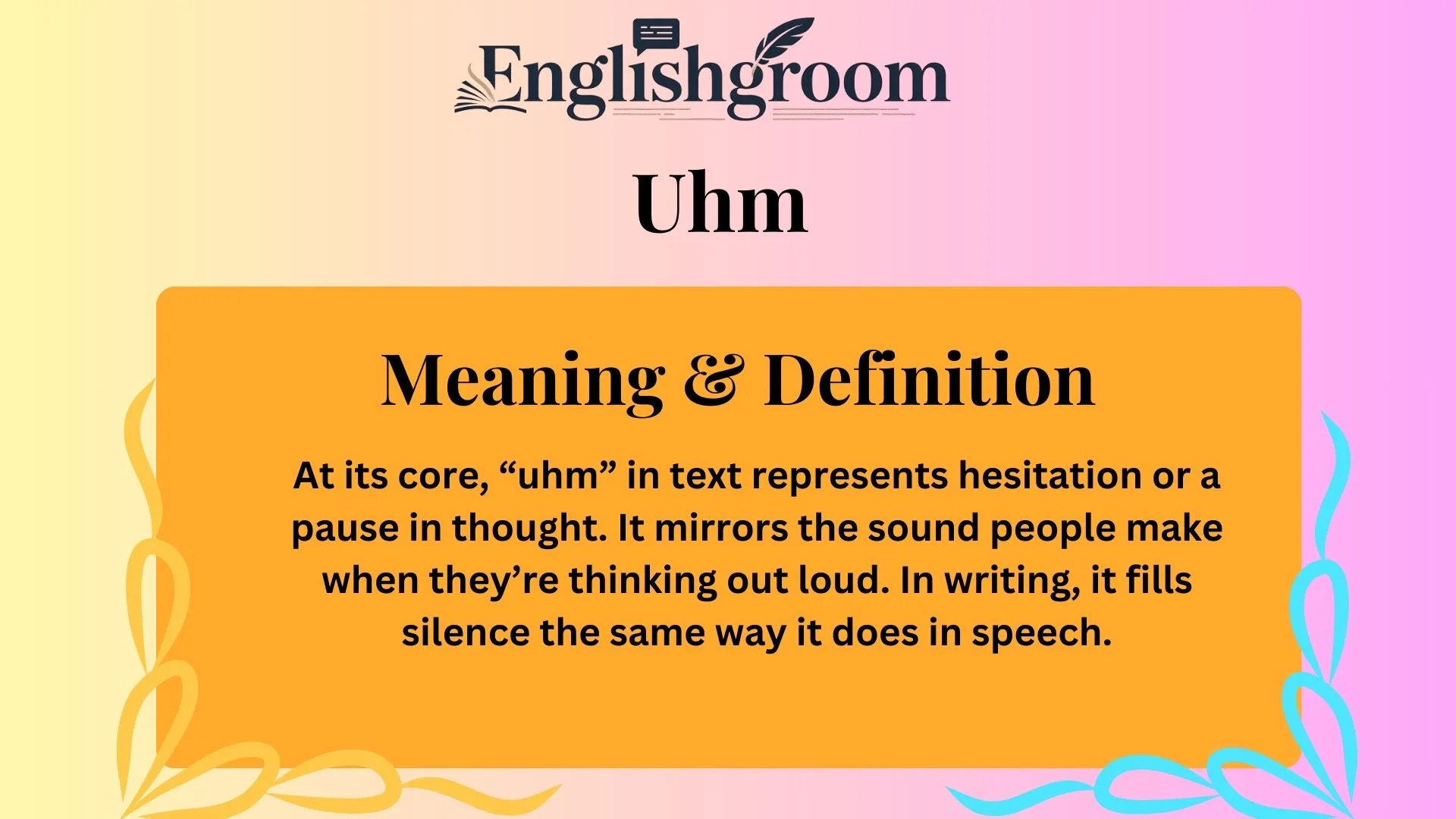
At its core, “uhm” in text represents hesitation or a pause in thought. It mirrors the sound people make when they’re thinking out loud. In writing, it fills silence the same way it does in speech.
Primary Meaning
- Indicates uncertainty or hesitation
- Signals someone is thinking or choosing words carefully
- Softens a response to avoid sounding blunt
Secondary Meanings
Depending on context, “uhm” can also mean:
- Mild disagreement without confrontation
- Awkwardness or discomfort
- Buying time before answering
- Polite hesitation
Key insight: “Uhm” rarely carries information. It carries emotion.
Quick Examples
- “Uhm… I’m not sure about that.”
- “Uhm yeah, maybe later?”
- “Uhm, can we talk?”
In text, those three dots often amplify hesitation.
Background & Origin of “Uhm”
“Uhm” comes from filled pauses in spoken language. Linguists call these vocal disfluencies. Humans use them unconsciously to:
- Hold their turn in conversation
- Signal thinking
- Avoid silence
Long before texting, people said “uh,” “um,” and “erm” aloud. When casual writing exploded through SMS and chat apps, those sounds migrated into text.
Unlike formal writing, digital communication favors speech-like spelling. That’s why “uhm” appears instead of “um.” The added “h” stretches the pause visually.
Fun linguistic note:
Languages worldwide have hesitation sounds. English uses “uhm.” French uses “euh.” Japanese uses “ano.”
Usage in Different Contexts
Casual Chat
This is where “uhm” thrives.
- Friends
- Family
- Group chats
It softens replies and makes messages feel human.
Social Media Comments
Often used to:
- Express doubt
- Add sarcasm
- Question someone indirectly
Example:
- “Uhm… did you actually read the post?”
Professional or Work Chat
Use cautiously.
- Can sound unsure
- Might reduce authority
Better alternatives include:
- “Let me think.”
- “I’d like to review this.”
Dating & Flirting
“Uhm” can signal:
- Nervous interest
- Emotional hesitation
- Mixed feelings
Example:
- “Uhm, I don’t know… maybe 😅”
Meanings Across Platforms

- Indicates hesitation before responding
- Often paired with voice notes or emojis
- Used sarcastically in comments
- Signals disbelief or shade
TikTok
- Appears in captions mocking awkward situations
- Often exaggerated: “uhmmm”
Snapchat
- Casual, playful hesitation
- Often followed by filters or emojis
Platform matters. Tone changes everything.
Examples in Real Conversations & Memes
Chat Examples
- “Uhm… can I call you later?”
- “Uhm yeah, that’s not what I meant 😬”
- “Uhm ok, but hear me out.”
Meme Usage
- Used to mock obvious mistakes
- Highlights awkward silence
- Paired with reaction images
Example meme text:
- “Uhm… sir? This is a Wendy’s.”
Cultural & Regional Interpretations
In American English, “uhm” feels casual and neutral.
In British English:
- “Erm” appears more often
- “Uhm” still understood but less common
In formal cultures:
- Textual hesitation may feel unprofessional
- Silence is preferred over filler words
Cultural takeaway:
The more casual the culture, the more acceptable “uhm” becomes.
Other Fields Where “UHM” Appears
Outside texting, UHM can mean entirely different things.
Medical
- UHM may refer to internal shorthand or abbreviations in notes, not standard texting usage
Aviation
- Rarely used as an official acronym
- Spoken hesitation discouraged in communication
Technical Fields
- Sometimes appears in transcripts or interviews
- Represents verbal hesitation, not data
Important distinction:
Capitalized UHM ≠ casual “uhm” in text.
Common Misconceptions & Mistakes
- ❌ Thinking “uhm” always means confusion
- ❌ Using it in formal emails
- ❌ Assuming it’s rude by default
- ❌ Overusing it, which weakens messages
Reality: Context defines meaning, not the word itself.
Psychological or Emotional Meaning Behind “Uhm”
“Uhm” often reveals what people won’t say directly.
It can signal:
- Anxiety
- Politeness
- Fear of conflict
- Emotional processing
- Desire to soften rejection
Psychologically, it acts as a buffer. It protects both speaker and reader from blunt impact.
Similar Terms & Alternatives
| Term | Meaning | Tone |
|---|---|---|
| Um | Short hesitation | Neutral |
| Uh | Sudden pause | Casual |
| Erm | British hesitation | Polite |
| Well… | Thoughtful delay | Softer |
| Hmm | Thinking or doubt | Curious |
Is “Uhm” Offensive or Friendly?
Short answer: Neither by default.
It becomes:
- Friendly in casual chat
- Awkward in professional settings
- Sarcastic when paired with context or emojis
Emoji changes tone fast:
- “Uhm 😅” = nervous
- “Uhm…” = skeptical
- “UHM.” = annoyed
Famous Lines Using Hesitation Words
Writers and speakers use hesitation for realism:
- “Uh… Houston, we have a problem.”
- “Uhm, that’s not exactly true.”
These pauses humanize dialogue.
Grammar & Linguistic Insights
From a grammar standpoint:
- “Uhm” is an interjection
- It doesn’t follow sentence rules
- Punctuation shapes meaning
Examples:
- “Uhm?”
- “Uhm…”
- “Uhm,”
More dots = more hesitation.
How to Respond to “Uhm”
Respond based on tone, not the word.
Practical Chat Replies
- “Take your time 😊”
- “Sounds like you’re unsure.”
- “What’s on your mind?”
- “No rush, I’m listening.”
Reading emotional cues matters more than grammar here.
Differences From Similar Words
- “Uhm” vs “Hmm”: hesitation vs thinking
- “Uhm” vs “Well”: uncertainty vs explanation
- “Uhm” vs silence: softer than silence
Each choice shapes perception.
Relevance in Online Conversations & Dating Apps
In dating apps, “uhm” often means:
- Hesitation about interest
- Emotional caution
- Polite deflection
Example:
- “Uhm, I’m not sure I’m ready.”
Translation:
They’re thinking carefully, not rejecting outright.
Popularity & Trends Over Time
“Uhm” usage has increased with:
- Casual texting
- Voice-to-text habits
- Meme culture
Google searches spike during:
- Messaging confusion
- Relationship advice trends
- Social media slang cycles
The word survives because it feels human.
FAQs: What People Also Ask
What does “uhm” mean in texting?
It signals hesitation, uncertainty, or a pause in thought.
Is “uhm” rude in text?
No. Context decides tone.
Why do people type “uhm”?
To soften responses or express hesitation.
Is “uhm” professional?
Not usually. Avoid it at work.
Does “uhm” mean no?
Sometimes. It often means “maybe” or “thinking.”
Conclusion
The meaning of “uhm” in text goes far beyond a simple filler word. It reflects hesitation, emotion, and social awareness. People use it to soften messages, avoid conflict, and sound more human in digital spaces.
While harmless in casual chats, it can weaken clarity in professional settings. Context, punctuation, and emojis all shape its tone.
Understanding “uhm” helps you read between the lines. It also helps you respond with empathy instead of confusion. In a world driven by fast messages and short replies, small words like this carry surprising weight.

Hi! I’m Sami, a 28-year-old content writer with a love for words and storytelling. Writing has always been my way of expressing ideas, sharing knowledge, and connecting with people. I enjoy creating engaging and well-researched content—whether it’s blogs, articles, or social media posts—that not only informs but also inspires readers. My goal is to turn complex ideas into clear, creative, and meaningful pieces of writing that leave a lasting impact.