Confused about when to write “that’s” or “thats”? You’re not alone. Even seasoned writers and professionals often slip up on this tiny but crucial detail.
Small grammar mistakes like this can change meaning, create misunderstandings, and sometimes make your writing look careless.
This guide will help you understand the difference, show real-life examples, and give actionable tips to avoid mistakes in the future.
Understanding the Basics
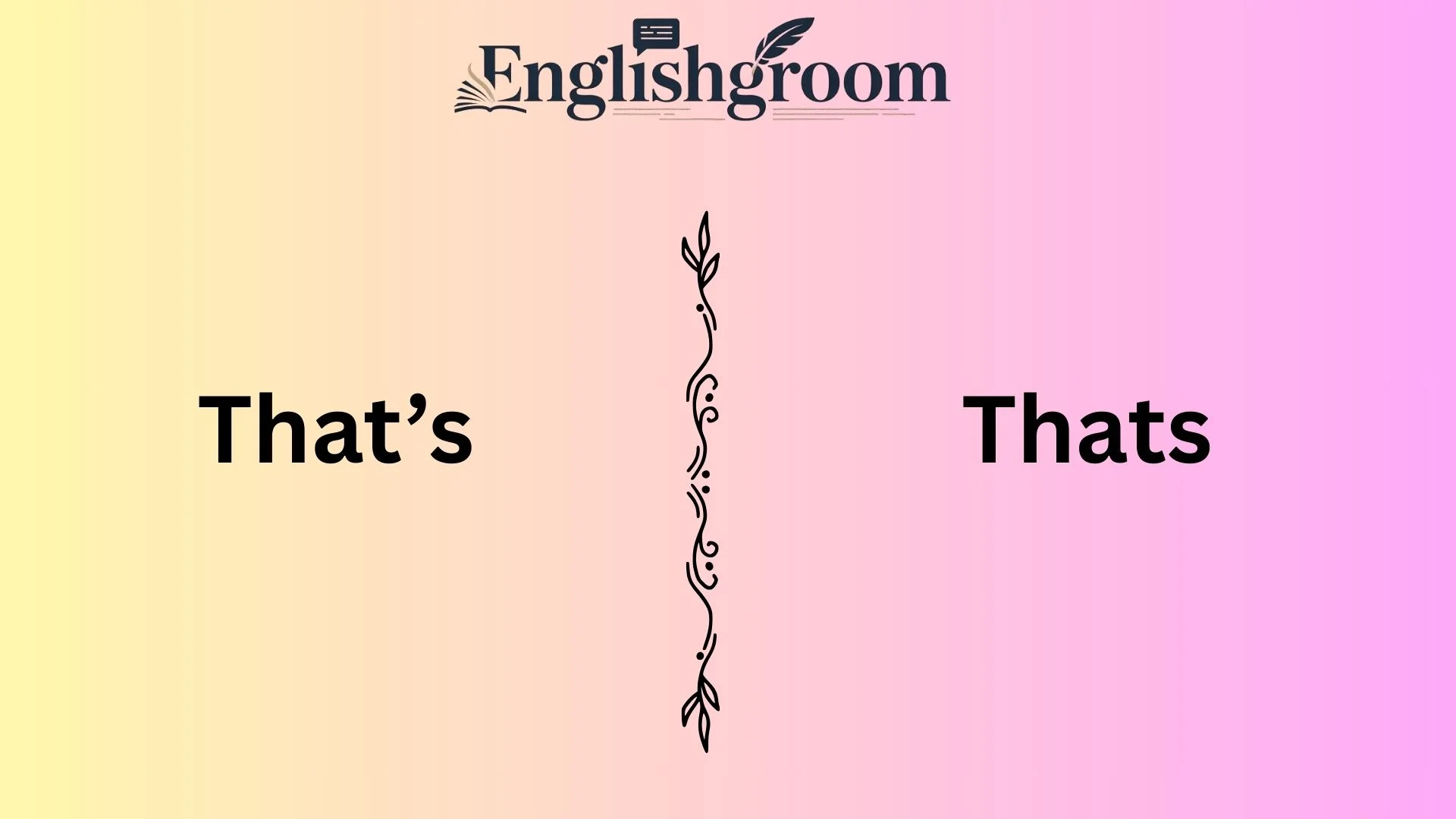
At first glance, “that’s” and “thats” might look similar, but their uses are completely different.
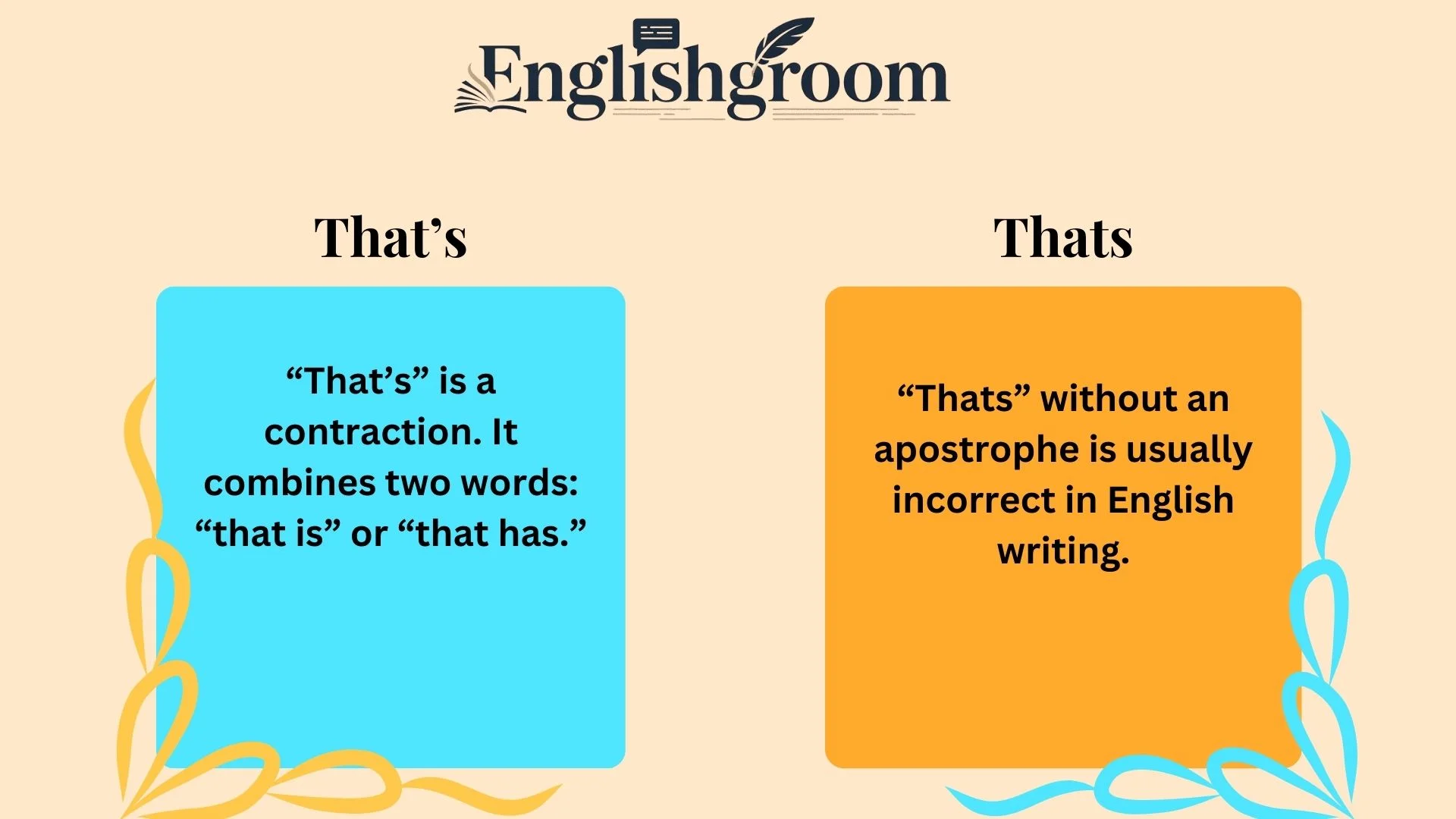
- “That’s” is a contraction. It combines two words: “that is” or “that has.”
- “Thats” without an apostrophe is usually incorrect in English writing.
Why does this matter? Even minor grammar errors can make emails, social media posts, and professional documents seem sloppy. Using the correct form ensures clarity, professionalism, and readability.
Think of it like a key: using the right contraction unlocks understanding; using the wrong one leaves your readers confused.
The Correct Usage of “That’s”
As a Contraction of “That Is”
The most common usage of “that’s” is as a contraction for “that is.” It simplifies sentences and keeps your writing conversational.
Examples:
- “That’s a brilliant idea!” → That is a brilliant idea!
- “That’s not what I expected.” → That is not what I expected.
- “That’s exactly what we needed.” → That is exactly what we needed.
Notice how using “that’s” instead of “that is” makes the sentence flow naturally. In spoken English, this is almost always preferred.
As a Contraction of “That Has”
Less commonly, “that’s” can contract “that has.” This usually happens in perfect tenses.
Examples:
- “That’s been the best day of my life.” → That has been the best day of my life.
- “That’s gone unnoticed by many.” → That has gone unnoticed by many.
- “That’s caused a lot of confusion.” → That has caused a lot of confusion.
Using “that’s” this way is perfectly correct but often overlooked. Misunderstanding this form is one reason people mistakenly write “thats.”
Common Sentence Structures
Here’s a simple guide to structure sentences with “that’s”:
| Structure Type | Example Sentence |
|---|---|
| Subject + That’s + Adjective | That’s incredible news! |
| Subject + That’s + Noun | That’s my favorite book. |
| Subject + That’s + Verb Phrase | That’s been causing issues for years. |
| Subject + That’s + Prepositional Phrase | That’s on the table. |
Using these patterns helps avoid mistakes and makes your writing cleaner.
Why “Thats” is Usually Incorrect
Many people type “thats” without an apostrophe, thinking it’s a shortcut. Unfortunately, this is grammatically wrong in standard English.
Common misconceptions:
- People believe “thats” is acceptable in casual writing.
- Autocorrect sometimes removes apostrophes, reinforcing the habit.
- Some think “thats” is easier or faster to type, especially in texting.
Incorrect vs Correct Usage Table
| Incorrect | Correct | Explanation |
|---|---|---|
| Thats amazing! | That’s amazing! | Missing apostrophe for “that is.” |
| I think thats true. | I think that’s true. | Apostrophe needed to contract “that is.” |
| Thats been fun. | That’s been fun. | Apostrophe needed to contract “that has.” |
Without the apostrophe, your writing can look careless or unprofessional.
Exceptions: When “Thats” is Acceptable
Believe it or not, there are exceptions where “thats” is not wrong. These are usually proper nouns or stylized brand names.
Examples:
- Honda That’s – A car model name where the apostrophe is part of branding.
- ThatsApp – A hypothetical app name using stylized spelling.
- URLs and usernames often drop apostrophes because they are not allowed in web addresses.
Even in these cases, it’s important to know the context. In standard writing, always use “that’s” with an apostrophe.
Practical Tips to Avoid Mistakes
Avoiding the “thats” mistake is easier than you think. Here are practical strategies:
Tip 1: Expand the contraction mentally.
- Ask yourself: “Do I mean ‘that is’ or ‘that has’?” If yes, use “that’s.”
Tip 2: Proofread for apostrophes.
- Reading aloud can help catch missing apostrophes naturally.
Tip 3: Use grammar-check tools.
- Tools like Grammarly or Microsoft Editor highlight missing apostrophes.
Tip 4: Watch out for autocorrect.
- Sometimes your phone will remove apostrophes automatically. Double-check before sending important messages.
Tip 5: Create a mental rule:
- If you can replace “that’s” with “that is” or “that has,” it’s correct. If not, rethink the sentence.

The Impact of Correct Usage
Clarity in Communication
Even small grammar mistakes affect clarity. A missing apostrophe can confuse readers.
Example:
- “Thats amazing!” → Could confuse readers momentarily.
- “That’s amazing!” → Immediately clear and professional.
Perception of Credibility
Research shows that readers judge writers by attention to detail. Proper grammar makes your content more trustworthy.
Writing Quality
Consistent correct usage of “that’s” contributes to polished writing. It enhances your:
- Emails
- Social media posts
- Blog articles
- Academic papers
Even one small error can distract readers from your main message.
Examples in Real Life
Let’s look at real-life scenarios to see how “that’s” works:
Social Media:
- “That’s so cute!” ✅
- “Thats so cute!” ❌
Business Email:
- “That’s an excellent suggestion; we should implement it immediately.” ✅
- “Thats an excellent suggestion; we should implement it immediately.” ❌
Texting and Chat:
- “That’s been a long day!” ✅
- “Thats been a long day!” ❌
Notice how small errors can subtly undermine clarity.
FAQs
What is the difference between “that’s” and “thats”?
Answer: “That’s” is a contraction of “that is” or “that has.” “Thats” without an apostrophe is usually incorrect.
Is “thats” ever correct in English?
Answer: Only in brand names, stylized URLs, or proper nouns. Standard writing always uses “that’s.”
How do I use “that’s” in a sentence?
Answer: Use it to replace “that is” or “that has,” e.g., “That’s a great idea” or “That’s been challenging.”
Why do people confuse “that’s” with “thats”?
Answer: Typos, autocorrect, informal texting, and misunderstanding contractions cause confusion.
What are some tips to avoid the “thats” mistake?
Answer: Read aloud, mentally expand contractions, proofread, and use grammar-check tools.
Conclusion
Using “that’s” correctly is a small but powerful detail in writing. It ensures clarity, professionalism, and polished communication. Remember:
- That’s = that is / that has
- Thats = usually incorrect
- Exceptions exist but are limited to branding or URLs.
Next time you write a blog, email, or social post, pay attention to your apostrophes. That small mark makes a big difference. That’s the power of precision in writing.

Hi! I’m Sami, a 28-year-old content writer with a love for words and storytelling. Writing has always been my way of expressing ideas, sharing knowledge, and connecting with people. I enjoy creating engaging and well-researched content—whether it’s blogs, articles, or social media posts—that not only informs but also inspires readers. My goal is to turn complex ideas into clear, creative, and meaningful pieces of writing that leave a lasting impact.