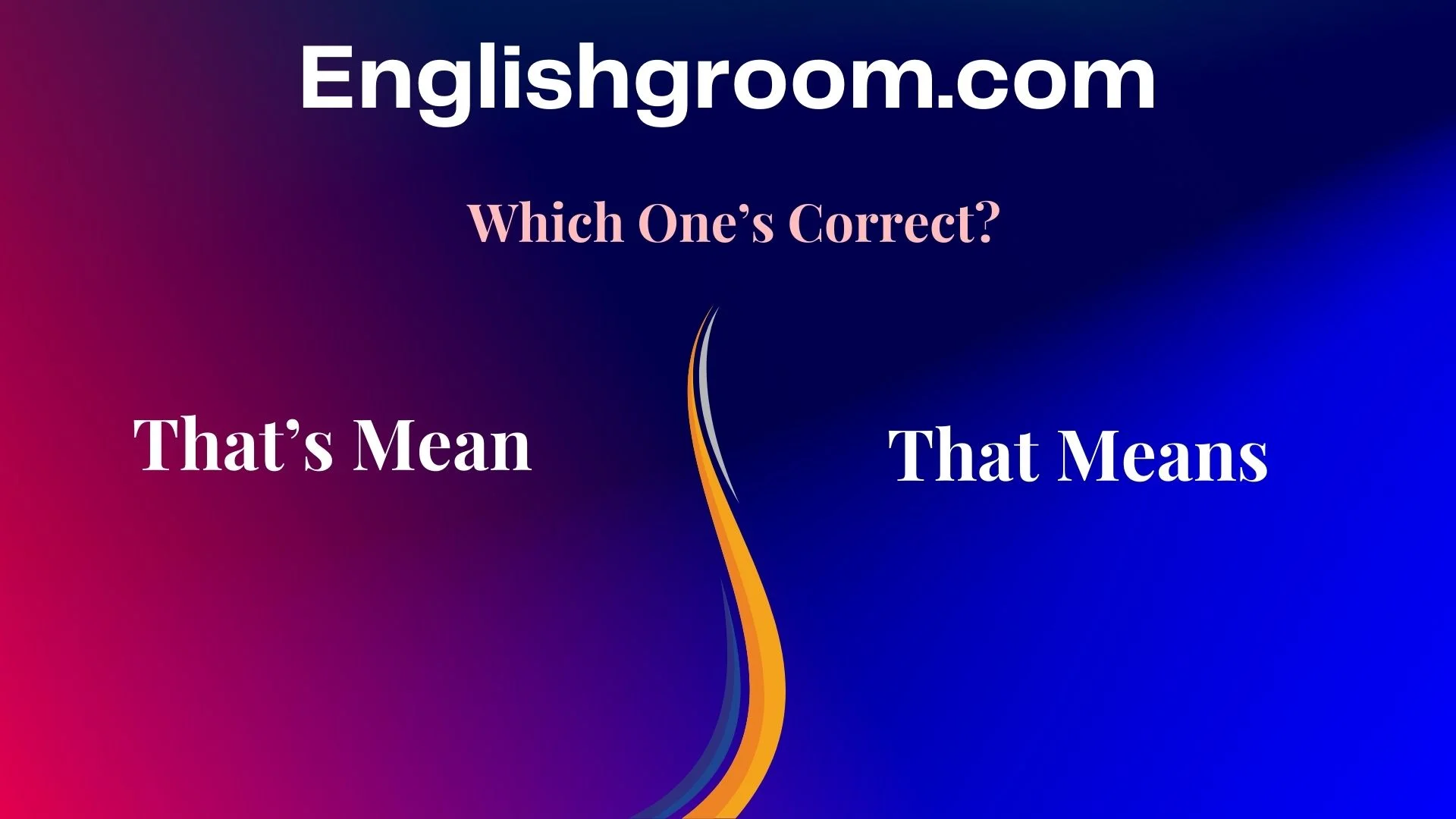
Confusing “That’s mean” and “That means” is one of the most common mistakes learners make in English. They look similar, but their uses are completely different.
Getting this right not only improves your grammar but also helps you sound more natural in conversations. In this guide, you’ll get clear definitions, examples, common mistakes, and practical tips to use both phrases correctly every time.
Understanding the Core Difference
At its core, the difference between “That’s mean” and “That means” lies in function and context.
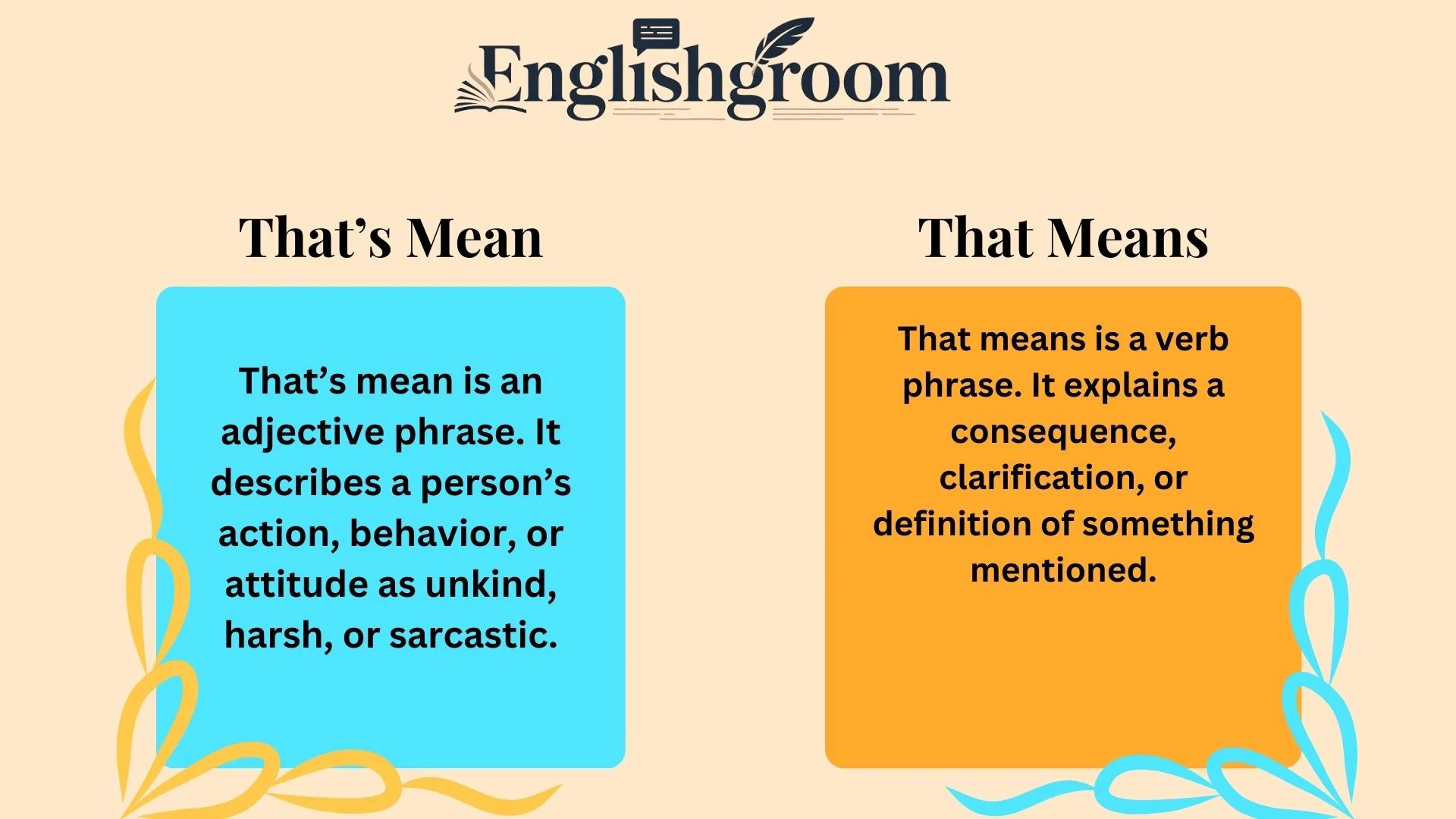
- That’s mean is an adjective phrase. It describes a person’s action, behavior, or attitude as unkind, harsh, or sarcastic.
- That means is a verb phrase. It explains a consequence, clarification, or definition of something mentioned.
Here’s a quick table to visualize it:
| Phrase | Part of Speech | Meaning | Example |
|---|---|---|---|
| That’s mean | Adjective phrase | Describes unkind or cruel behavior | “That’s mean of you to ignore her.” |
| That means | Verb phrase | Explains consequence or interpretation | “That means we have to leave early.” |
Notice how one focuses on behavior, and the other focuses on explanation or result.
Deep Dive: “That’s Mean”
Definition and Function
“That’s mean” expresses negative judgment or emotional reaction. You use it to comment on someone’s behavior that feels unfair, cruel, or inconsiderate.
Emotional and Social Context
The tone matters. It’s mostly negative, but can also be playful or sarcastic. Context determines whether it’s serious criticism or light teasing.
Examples in Real Situations
| Context | Sentence |
|---|---|
| Teasing | “Oh, that’s mean! You ate the last cookie!” |
| Criticism | “That’s mean to leave them out of the group.” |
| Sarcasm | “Wow, that’s mean… not!” |
Alternatives to “That’s Mean”
- That’s unkind
- That’s harsh
- That’s cruel
- That’s rude
Using alternatives can help vary your speech and sound more natural in different social settings.
Deep Dive: “That Means”
Definition and Function
“That means” expresses consequence, clarification, or definition. You use it to explain the result of something or to interpret a statement logically.
Everyday Functions
- Explaining instructions: “We leave at 5. That means we should pack by 4:30.”
- Clarifying definitions: “Oxygen is essential for survival. That means we can’t live without it.”
- Drawing conclusions: “He didn’t reply to my message. That means he’s busy.”
Signal Words That Often Follow
- You should
- We need to
- This implies
- Which indicates
Pronunciation and Grammar Notes
- Stress the “means” to emphasize the explanation.
- Avoid the incorrect form “That’s means”—it is grammatically wrong.
- “That means” is always followed by a clause explaining the consequence.
Examples in Real Sentences
| Context | Sentence |
|---|---|
| Instruction | “The store closes at 6. That means we must hurry.” |
| Definition | “Photosynthesis allows plants to make food. That means sunlight is essential.” |
| Conclusion | “He didn’t respond to the email; that means he’s busy today.” |
Alternatives to “That Means”
- That signifies
- This indicates
- Which implies
- That suggests
Using alternatives keeps your speech and writing from sounding repetitive.
Related and Confusing Phrases
Some phrases look or sound similar but have different meanings:
- That’s kind vs That’s mean – opposite emotional judgment.
- That stands for vs That means – “stands for” usually refers to abbreviations.
- Mean as a math term vs emotional term – “mean” in statistics = average.
Knowing these helps avoid subtle mistakes that confuse listeners.
Common Mistakes Learners Make
Frequent Errors
- Using “That’s means” – incorrect mix of adjective + verb.
- Misjudging tone with “That’s mean”, making it sound harsher than intended.
- Overusing “That means” when a simpler word like “so” would suffice.
Why Mistakes Happen
- Literal translation from native language.
- Confusing adjectives and verbs.
- Lack of exposure to natural speech contexts.
Practical Usage Tips
- Ask yourself: Does the phrase describe behavior (mean) or explain a result (means)?
- Mnemonic device: “S for Someone → That’s mean; E for Explanation → That means.”
- Listen to native speakers in TV shows or podcasts to internalize usage.
Case Study: Real-Life Conversation Example
Scenario: Two friends discussing a movie.
- Alex: “The main character betrayed his best friend.”
- Jamie: “That’s mean! He shouldn’t have done that.”
- Alex: “Yeah, that means he might lose all his friends in the story.”
Analysis:
- “That’s mean” comments on the character’s behavior.
- “That means” explains the consequence of that behavior.
This case study shows how both phrases work together naturally in conversation.

Quick Decision Checklist
- Describes behavior? → That’s mean
- Explains consequence? → That means
- Alternative wording needed? → Use synonyms like unkind, harsh, indicates, or signifies
- Tone check: Make sure “that’s mean” doesn’t sound overly harsh unless intended.
FAQs
What does “That’s mean” mean?
It describes someone’s behavior as unkind, cruel, or harsh.
What does “That means” mean?
It explains a result, consequence, or definition of something mentioned.
How do I know when to use “That’s mean” vs “That means”?
Use “That’s mean” to judge behavior, and “That means” to explain or clarify something.
Is “That’s mean” always negative?
Mostly yes, but it can be playful or sarcastic depending on context.
What are alternatives to “That means”?
That signifies, this indicates, which implies, that suggests.
Conclusion
Mastering “That’s mean” vs “That means” is a small but powerful step in improving your English fluency. Remember: one describes behavior, the other explains results.
Practice using both in conversations, pay attention to context, and soon you’ll stop confusing the two. Using them correctly will make your speech sound natural, confident, and fluent.

Hi! I’m Sami, a 28-year-old content writer with a love for words and storytelling. Writing has always been my way of expressing ideas, sharing knowledge, and connecting with people. I enjoy creating engaging and well-researched content—whether it’s blogs, articles, or social media posts—that not only informs but also inspires readers. My goal is to turn complex ideas into clear, creative, and meaningful pieces of writing that leave a lasting impact.