When it comes to English grammar, a tiny difference can change how natural your writing sounds.
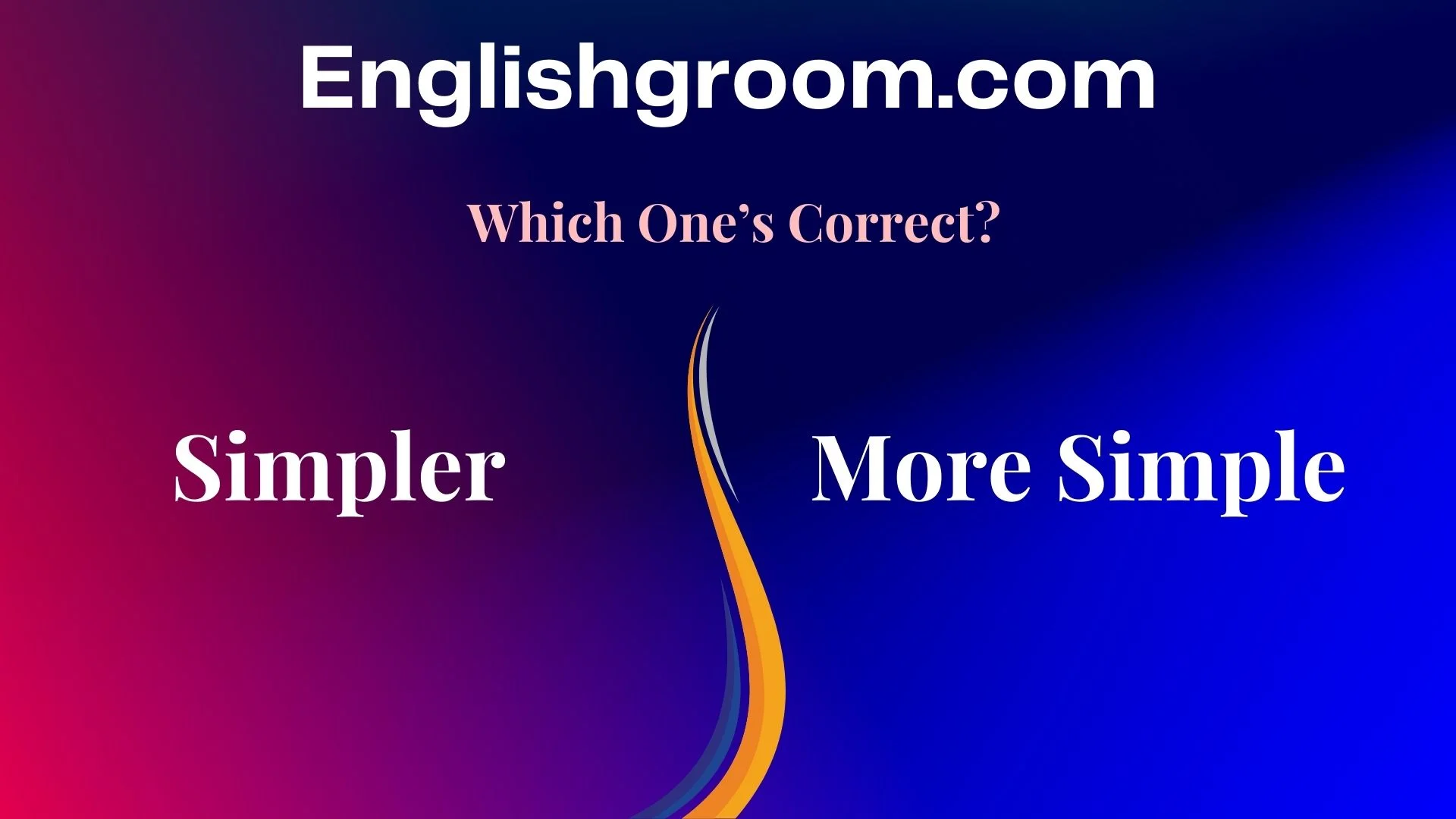
One of the most common questions learners—and even native speakers—have is whether to use “simpler” or “more simple”.
Both are technically correct in certain situations, but knowing which one fits naturally in speech and writing can make a big difference.
In this article, we’ll dive deep into the grammar, usage, trends, and style choices around simpler vs more simple, giving you practical tips, examples, and clear guidance.
By the end, you’ll confidently know which form to use—and when.
Understanding the Basics of “Simpler” and “More Simple”
At first glance, “simpler” and “more simple” might seem interchangeable. After all, both indicate a comparison. However, English has some rules and preferences that influence which form feels natural.
- Simpler – the most common form in modern English. It’s a comparative adjective formed by adding -er to “simple.”
- More simple – a slightly older or more formal construction, using more + adjective. It’s grammatically correct but less popular today.
Quick Rule of Thumb:
- One-syllable adjectives (like “simple”) usually take -er for the comparative.
- Two-syllable adjectives can sometimes use either form, depending on style.
- Adjectives with three or more syllables generally use more + adjective.
Example Sentences:
- This puzzle is simpler than the last one. ✅
- This puzzle is more simple than the last one. ✅ (less common)
Notice how the first option sounds more natural in everyday English.
Grammar Deep Dive
Comparatives in English can be tricky. Let’s break it down:
How Comparatives Work
- Add -er to short adjectives: fast → faster, small → smaller.
- Use more + adjective for longer adjectives: beautiful → more beautiful.
- For simple, either works because it’s one syllable but stylistically flexible.
Comparison Table:
| Form | Correct? | Usage Tip |
|---|---|---|
| simpler | ✅ Yes | Most natural in spoken and written English |
| more simple | ✅ Sometimes | Acceptable, slightly formal or literary style |
| simplest | ✅ Yes | Superlative form |
| more simply | ✅ Yes | Used when describing actions or adverbs |
Tip: Avoid using more simple in casual writing unless you’re trying for a specific effect, like emphasizing clarity or simplicity in formal writing.
Usage in Real Life
So, when do people actually use simpler or more simple? Here’s a breakdown:
Spoken English
- Simpler dominates everyday conversation.
- People rarely say more simple, except for emphasis or stylistic reasons.
Written English
- Simpler is preferred in most modern writing.
- More simple may appear in technical manuals, legal writing, or academic papers, where formal phrasing is common.
Real-Life Examples:
- News article: “The new app is simpler to use than the previous version.”
- Academic paper: “A more simple approach to the problem can be adopted for clarity.”
Trends and Popularity
English is constantly evolving. Let’s look at how usage trends have changed over time.
Observation:
- Simpler has increased in popularity over the last 50 years in both writing and speech.
- More simple is slowly decreasing, largely replaced by simpler in modern style guides.
Mini Trend Table (Hypothetical Ngram-style Data)
| Year | Simpler (%) | More Simple (%) |
|---|---|---|
| 1970 | 60 | 40 |
| 1990 | 70 | 30 |
| 2010 | 80 | 20 |
| 2020 | 85 | 15 |
Fact: Writers who want a modern, natural tone almost always use simpler.
Side-by-Side Comparison with Examples
Seeing both forms in context makes the difference clear:
| Sentence Example | Preferred Form | Notes |
|---|---|---|
| This method is simpler. | simpler | Clear and natural |
| This method is more simple. | simpler | Understandable, but slightly formal |
| The solution is the simplest. | simplest | Superlative form |
| Simply put, a simpler design works better. | simpler | Emphasizes clarity |
| A more simple explanation may help beginners. | more simple | Acceptable in technical contexts |
Common Mistakes and Misunderstandings
Even experienced writers sometimes get confused. Here are some common issues:
- Confusing adjectives with adverbs:
- Incorrect: “This solution is more simply.” ❌
- Correct: “This solution is simpler.” ✅
- Overusing “more simple” in casual writing – can sound stiff.
Quick Tips to Avoid Mistakes:
- Stick with simpler in everyday writing.
- Reserve more simple for formal, technical, or literary contexts.
- Use more simply only for adverbs describing actions.
Synonyms and Alternatives
If you want to vary your language, there are many alternatives to simpler or more simple:
- Easier – “This exercise is easier than the last one.”
- Less complicated – “The instructions are less complicated now.”
- Straightforward – “She gave a straightforward explanation.”
- Effortless – “The task seemed effortless after practice.”
Synonym Table:
| Synonym | Use Case | Example Sentence |
|---|---|---|
| easier | Everyday, casual | Math is easier when you practice daily |
| less complicated | Formal or technical | The design is less complicated |
| straightforward | Informal and professional | He gave a straightforward answer |
| effortless | Descriptive, emphasizes simplicity | The recipe was effortless to follow |
Literature and Real-World Examples
English literature and modern writing provide good examples of both forms:
- Simpler – widely used in modern novels and journalism:
- “The instructions are simpler than you might expect.”
- More simple – appears occasionally in older texts or formal contexts:
- “A more simple explanation may suffice for beginners.”
Case Study: Technical manuals often prefer more simple to emphasize clarity and formality, even though simpler would be acceptable.
Practical Guidance for Writers and Learners
Here’s a simple checklist for choosing the right form:
- ✅ Use simpler for most casual, professional, or journalistic writing.
- ✅ Use more simple when writing formally, technically, or for effect.
- ✅ Avoid more simply unless modifying a verb.
- ✅ When in doubt, read the sentence out loud—if it sounds natural, it’s probably correct.
Practice Sentences:
- The new software is ______ than the old one. → simpler
- A ______ approach to the problem may help students. → more simple
- His explanation is ______ and clear. → simpler
- She explained the process ______ than her colleague. → more simply
- The final design is the ______ solution. → simplest
Frequently Asked Questions (FAQs)
What is correct: simpler or more simple?
Both are correct, but simpler is more natural and widely used.
Is “more simple” wrong in English?
No, it’s grammatically correct but less common in modern writing.
When should I use “simpler” instead of “more simple”?
Use simpler in casual, professional, or journalistic contexts. Reserve more simple for formal or technical writing.
What is the difference between “simpler” and “more simply”?
Simpler is an adjective, more simply is an adverb describing an action.
Are there synonyms for “simpler” and “more simple”?
Yes. Examples include easier, less complicated, straightforward, effortless.
Conclusion
Choosing between simpler and more simple is less about strict rules and more about style, context, and tone.
Simpler dominates modern English in most scenarios, while more simple has a formal or stylistic niche.
By understanding these differences, you can make your writing clearer, more professional, and easier to read.
Key Takeaways:
- Stick with simpler in everyday writing.
- Reserve more simple for technical, formal, or literary contexts.
- Remember the difference between adjectives (simpler) and adverbs (more simply).
With these tips, you’ll never second-guess your comparative adjectives again.

Hi! I’m Sami, a 28-year-old content writer with a love for words and storytelling. Writing has always been my way of expressing ideas, sharing knowledge, and connecting with people. I enjoy creating engaging and well-researched content—whether it’s blogs, articles, or social media posts—that not only informs but also inspires readers. My goal is to turn complex ideas into clear, creative, and meaningful pieces of writing that leave a lasting impact.