Whether you’re writing an essay, drafting a professional email, or posting on social media, the last thing you want is a typo that makes you look careless.
One of the most common mistakes people make is confusing “persue” and “pursue.”
In this guide, you’ll learn the correct spelling, the meaning, the uses, and real-life applications of “pursue.” By the end, you’ll never mix them up again.
The Correct Spelling: Pursue
First things first: the right spelling is always pursue.
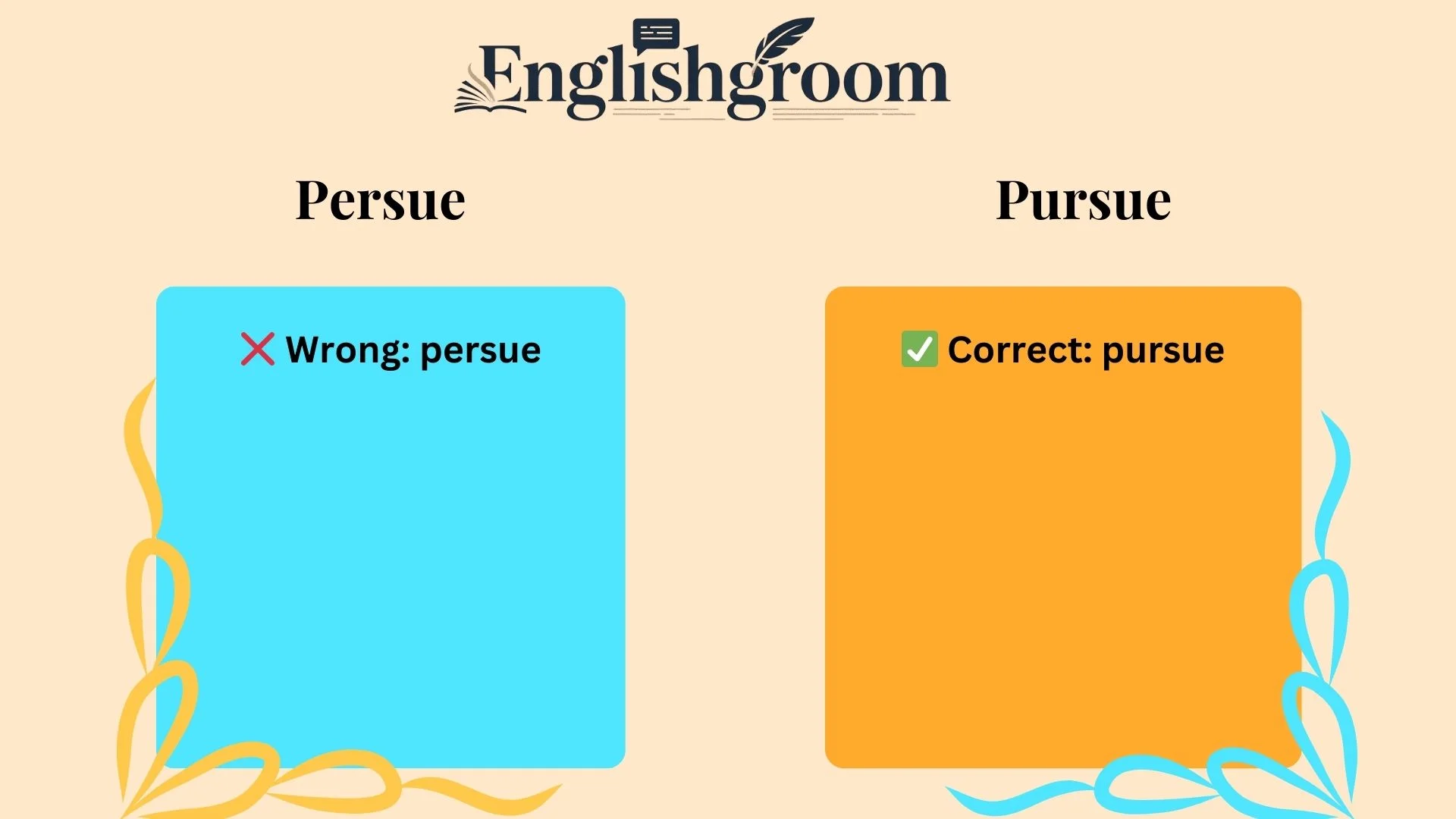
- ❌ Wrong: persue
- ✅ Correct: pursue
“Persue” is a typo that pops up frequently, often because people spell it as they pronounce it. The double “u” in pursue is essential—it comes from the Old French poursuir, which means “to follow or chase.”
Think of it this way: when you pursue something, you’re actively chasing a goal, not just casually hoping it happens.
Meaning and Usage of “Pursue”
The word pursue has both literal and figurative meanings.
Literal Meaning:
- To follow or chase someone or something physically.
- Example: The dog pursued the ball across the park.
Figurative Meaning:
- To follow a course of action, goal, or ambition.
- Example: She decided to pursue a career in medicine.
Part of Speech:
- Verb (action word)
Using “pursue” correctly communicates action, determination, and intention. It’s an active word that adds energy to your writing.
Synonyms and Related Words
Understanding synonyms can help you choose the right word for each situation. Here’s a table for clarity:
| Synonym | Usage Example | Subtle Difference |
|---|---|---|
| Chase | He chased the thief down the street. | Physical or literal pursuit |
| Follow | She followed her dreams relentlessly. | More general, can be literal or figurative |
| Seek | He sought advice from his mentor. | Emphasizes looking or asking for something |
| Strive for | They strive for excellence every day. | Focuses on effort and ambition |
| Aim for | She aims for a promotion this year. | Highlights a specific target |
Choosing the right synonym ensures your writing sounds precise and professional.

Example Sentences in Daily English
Here’s how “pursue” fits into everyday English, along with examples to avoid mistakes:
Literal Use:
- The cat pursued the mouse into the garden.
- Police pursued the suspect after the robbery.
Figurative Use:
- He pursued his passion for painting despite challenges.
- We should pursue innovation rather than just follow trends.
Wrong vs. Correct Spelling:
- ❌ She decided to persue her dreams.
- ✅ She decided to pursue her dreams.
Even small spelling errors like this can undermine credibility, especially in professional writing.
Contextual Applications of “Pursue”
The word pursue is versatile. Its meaning changes slightly depending on context:
Legal Context
- Refers to taking action or pressing a case.
- Example: The company decided to pursue legal action against the infringer.
- Synonyms: litigate, prosecute
Academic Context
- Means continuing education or research.
- Example: She pursued a Ph.D. in astrophysics.
- Often paired with degrees, research, or studies
Career Context
- Refers to chasing professional goals.
- Example: He pursued a promotion by leading major projects.
- Synonyms: seek, aim for, strive for
Personal Context
- Relates to personal goals or passions.
- Example: They pursued a hobby in gardening after retirement.
- Often figurative, about life satisfaction
Literal vs. Figurative Use
| Use Type | Example Sentence | Key Idea |
|---|---|---|
| Literal | The police pursued the thief. | Physical chasing |
| Figurative | She pursued excellence in her studies. | Ambition, goals, or actions |
Remember: context is everything. “Pursue” shows active engagement, whether in a physical chase or personal ambition.
Memory Tricks to Remember the Correct Spelling
Struggling to remember that pursue has a double “u”? Here are some tricks:
- Visual Cue: Imagine “you” in the word: pursue → chase for what you want.
- Rhyme Trick: “If you want to achieve, you must pursue.”
- Keyboard Trick: The double “u” is like two people running after a goal.
Practice writing the word in short sentences every day—it will stick faster than memorizing a rule.
Historical Background
The verb pursue has evolved over centuries:
- Origin: Old French poursuir, meaning “to follow, chase.”
- Middle English: spelled pursuen or pursuen, gradually modernized to pursue.
- Persistence of error: “persue” never became standard, but phonetic spelling makes it tempting.
Knowing its history helps reinforce the correct spelling in your mind.
“Pursue” in Literature and Famous Quotes
Writers and thinkers have used pursue to express ambition and determination:
- “Do not go where the path may lead, go instead where there is no path and leave a trail.” – Ralph Waldo Emerson (pursuit of originality implied)
- “Whatever you can do, or dream you can, begin it. Boldness has genius, power, and magic in it.” – Goethe
Classic Literature Examples:
- Shakespeare often used pursue in plays: “I will pursue the truth relentlessly.”
- 19th-century novels: Characters pursue love, justice, or revenge.
Common Mistakes and How to Avoid Them
People frequently write persue, puruse, or pursu. Why?
- Phonetics: “persue” sounds correct when spoken
- Typing errors: missed letters or misplaced vowels
- Lack of awareness: people don’t learn the Old French origin
How to avoid mistakes:
- Always visualize the double “u”
- Use spell-check, but don’t rely solely on it
- Practice with example sentences
Practical Guide: Using “Pursue” Across Writing Styles
Professional Writing
- Use pursue to highlight action or initiative.
- Example: The team pursued a new market strategy aggressively.
Academic Writing
- Refers to research, degrees, or studies.
- Example: The student pursued a thesis on climate change solutions.
Creative Writing
- Expresses desire, ambition, or quest.
- Example: She pursued her dreams across distant lands and endless seas.
Everyday Writing
- Casual, personal contexts: social media, messages, journaling
- Example: I’m pursuing my passion for photography this summer.
Using pursue correctly makes writing sound intentional and polished across all contexts.
Examples of Correction in Real Sentences
| Wrong Sentence | Correct Sentence | Explanation |
|---|---|---|
| She decided to persue her goals. | She decided to pursue her goals. | Corrects spelling, maintains tone |
| He will persue law after college. | He will pursue law after college. | Correct verb for academic/career use |
| The cat persued the mouse. | The cat pursued the mouse. | Literal chasing scenario |
FAQs About Persue vs. Pursue
What is the correct spelling: persue or pursue?
The correct spelling is pursue. Persue is always incorrect.
Why do people write persue instead of pursue?
It’s a phonetic mistake. The double “u” in pursue is often overlooked.
How do I remember the correct spelling of pursue?
Think of the “you” in pursue—you pursue what you want. Practice daily with short sentences.
Can persue be used in British English?
No, persue is considered a typo in all standard forms of English.
What are some common collocations with pursue?
- Pursue a goal
- Pursue a career
- Pursue studies
- Pursue justice
- Pursue a hobby
Final Takeaway
Spelling “pursue” correctly is more than just grammar—it shows clarity, professionalism, and attention to detail. Whether you’re chasing a goal, writing creatively, or drafting formal documents, using pursue correctly keeps your writing precise and credible.
Don’t let a small typo like persue take away your authority. Start practicing today, and make “pursue” a word you always write confidently.

Hi! I’m Sami, a 28-year-old content writer with a love for words and storytelling. Writing has always been my way of expressing ideas, sharing knowledge, and connecting with people. I enjoy creating engaging and well-researched content—whether it’s blogs, articles, or social media posts—that not only informs but also inspires readers. My goal is to turn complex ideas into clear, creative, and meaningful pieces of writing that leave a lasting impact.