Few grammar questions trip writers as quietly as ourselves or ourself. One looks normal. The other looks suspicious. Yet both exist in English, both appear in serious writing, and both follow real grammatical rules.
If you write blogs, academic papers, legal documents, or polished business content, this distinction matters. A single misplaced pronoun can weaken authority, confuse readers, or signal shaky grammar instincts.
This guide settles the debate once and for all. You’ll learn what these words mean, why the confusion exists, how history shaped usage, and how to choose the right form every single time—without guessing.

Ourselves or Ourself: The Core Difference
Here’s the truth, stated plainly:
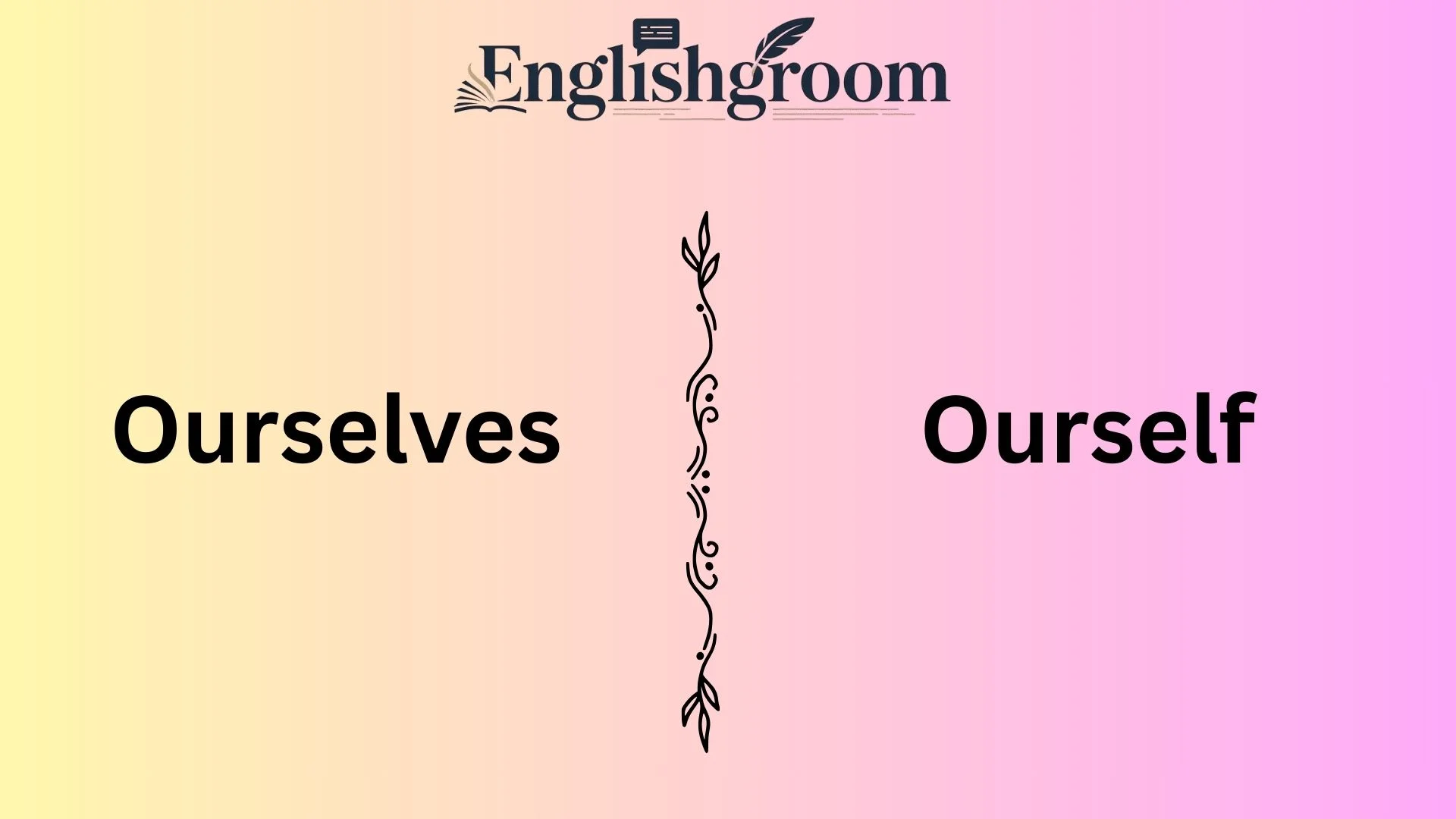
- Ourselves is a plural reflexive pronoun
- Ourself is a singular reflexive pronoun used with a singular “we”
That’s it. No mystery. No contradiction.
A Simple Comparison
| Feature | Ourselves | Ourself |
|---|---|---|
| Grammatical Number | Plural | Singular |
| Modern Frequency | Extremely common | Very rare |
| Typical Context | Everyday writing | Royal, legal, institutional |
| Tone | Neutral and natural | Formal and authoritative |
| Correct for One Person? | ❌ No | ✅ Yes (special cases only) |
If you remember one thing, remember this: the number of the pronoun must match the meaning of “we.”
Why This Confusion Exists at All
English didn’t design this problem on purpose. History did.
Early English allowed far more flexibility with pronouns. Writers routinely bent grammar to express authority, hierarchy, or symbolism. Over time, spoken English simplified. Written English followed, but more slowly.
That’s why:
- Ourselves became dominant in modern usage
- Ourself survived only in specialized contexts
Most people never encounter those contexts, so the word feels wrong even when it’s technically correct.
What “Ourselves” Really Means in Modern English
Ourselves functions as a plural reflexive pronoun. It refers back to a plural subject like we or us.
Basic Example
We prepared ourselves for the challenge.
The subject (we) and the object (ourselves) refer to the same group. That’s reflexive usage, plain and simple.
Emphatic Use
Sometimes ourselves adds emphasis rather than necessity.
We built the system ourselves.
Remove the word and the sentence still works. The emphasis disappears.
Common Verbs That Pair Naturally with “Ourselves”
- prepare
- blame
- remind
- pride
- convince
- protect
- isolate
These verbs often describe actions directed back toward the subject.
Rules for Using “Ourselves” Correctly
Use ourselves when all of these conditions apply:
- “We” refers to more than one person
- The action reflects back onto the group
- The sentence sounds natural when spoken aloud
What Not to Do
❌ The CEO congratulated ourselves.
✔ The CEO congratulated us.
Reflexive pronouns don’t replace object pronouns. They reflect actions back to the subject.
What “Ourself” Actually Means
Now for the misunderstood word.
Ourself is not a mistake. It’s a singular reflexive pronoun used when “we” refers to one person or one authority, not multiple individuals.
That sounds odd until you remember one thing:
Sometimes “we” doesn’t mean “many.”
The Royal We: Where “Ourself” Comes From
Monarchs have long spoken of themselves as “we.” This wasn’t ego. It symbolized the ruler as both individual and institution.
When a king said:
We command…
He meant:
I, as the embodiment of the state, command.
Because the speaker was singular, the reflexive form became ourself, not ourselves.
Example
We hold ourself accountable to the law.
Using ourselves here would imply multiple rulers, which breaks the intended meaning.
Editorial and Institutional “We”
The same logic applies outside royalty.
Organizations often speak with a collective voice that represents a single institutional authority.
Examples
- Academic journals
- Courts and legal bodies
- Universities
- Religious institutions
When one voice speaks for the whole institution, ourself can appear in formal writing.
We commit ourself to academic integrity.
This signals authority, not plurality.

Historical Usage in English Texts
In Middle English and Early Modern English, ourself appeared far more frequently than it does today.
Where It Appeared Most
- Royal decrees
- Legal charters
- Religious proclamations
- Early political documents
As spoken English evolved, plural agreement became stricter. Writers abandoned ourself except where tradition demanded precision.
Why Modern English Avoids “Ourself”
Clarity won.
Modern style guides prefer:
- Plain language
- Minimal ambiguity
- Natural spoken rhythm
Because ourself sounds unfamiliar to most readers, writers avoid it unless the context absolutely requires it.
That doesn’t make it wrong. It makes it specialized.
Real Examples in Context
Correct Use of “Ourselves”
We reminded ourselves why the mission mattered.
Multiple people. Shared action. Clear meaning.
Correct Use of “Ourself”
We bind ourself to this ruling.
One authority speaking for an institution.
Incorrect Use
❌ We taught ourself the process.
Unless you are a monarch, this is wrong.
Common Grammar Myths—Debunked
Myth: “Ourself Is Always Incorrect”
False. It’s rare, but grammatically valid in singular-authority contexts.
Myth: “Ourselves Can Be Singular”
False. Ourselves is always plural in meaning, even when used emphatically.
Myth: “They’re Interchangeable”
False. Substituting one for the other changes meaning and correctness.
How to Choose the Right Word Every Time
Ask one simple question:
Does “we” mean more than one person?
- Yes → use ourselves
- No → consider ourself, but only in formal or institutional writing
Editing Test
Replace “we” with “I.”
If the sentence still makes sense, ourself might be valid.
If it doesn’t, use ourselves or rewrite.
Style Guide Reality Check
Most modern grammar authorities agree on three points:
- Ourselves is standard and preferred
- Ourself is correct but limited
- Forced formality hurts clarity
Clear writing always beats archaic elegance.
Practical Tips for Writers
- Avoid ourself in blogs, emails, and casual prose
- Use ourselves only when reflexive meaning exists
- Rewrite sentences that feel awkward instead of forcing grammar
- Read aloud. If it sounds unnatural, it probably is
Frequently Asked Questions
What is the difference between ourselves and ourself?
Ourselves is plural. Ourself is singular and used only when “we” refers to one authority.
When should I use ourselves?
Use it when “we” means multiple people acting on themselves.
Is ourself grammatically correct?
Yes, but only in formal contexts involving singular authority or institutional voice.
Can ourselves refer to one person?
No. That breaks grammatical number agreement.
Why do monarchs and editors use ourself?
Because “we” represents a single authoritative entity, not multiple individuals.
Final Takeaway
Grammar isn’t about sounding impressive. It’s about sounding precise.
Use ourselves when speaking as a group.
Reserve ourself for rare moments when one voice speaks with institutional authority.
Most of the time, the choice is easy. When it isn’t, clarity should guide you.

Hi! I’m Sami, a 28-year-old content writer with a love for words and storytelling. Writing has always been my way of expressing ideas, sharing knowledge, and connecting with people. I enjoy creating engaging and well-researched content—whether it’s blogs, articles, or social media posts—that not only informs but also inspires readers. My goal is to turn complex ideas into clear, creative, and meaningful pieces of writing that leave a lasting impact.