Choosing between “my wife and I” and “my wife and me” sounds simple. Then the sentence hits.
Suddenly, confidence fades, the cursor blinks, and doubt creeps in. Many fluent speakers pause here.
Some guess. Others rewrite the sentence just to escape the decision.
You don’t have to do that anymore.
This in-depth guide breaks the rule down in plain English.
It uses real examples, practical tests, and everyday logic. By the end, you’ll know exactly which phrase to use, why it works, and how to sound natural every time.
Why This Tiny Grammar Choice Trips Up Smart People
This confusion doesn’t come from carelessness. It comes from overcorrection.
At some point, most people learned that saying “me and my wife” sounds informal. Teachers warned against it. Parents corrected it. Over time, many speakers started avoiding “me” altogether, even when grammar actually requires it.
That’s how sentences like this appear:
❌ She invited my wife and I to dinner.
It sounds polished. It feels formal. Yet it’s wrong.
The truth is simple. English doesn’t reward stiffness. It rewards clarity.
The Core Rule Most People Half-Remember
Everything hinges on one basic idea:
- “I” is a subject pronoun
- “Me” is an object pronoun
That’s it. No mystery. No secret exception.
What does that mean in real life?
- A subject performs the action
- An object receives the action
If the pronoun does the verb, use I.
If the pronoun receives the verb, use me.
Once you lock that in, the rest falls into place.
Subject vs. Object: The Only Distinction That Actually Matters
Let’s make this visual.
Subjects act
- I run.
- I speak.
- I decide.
Objects receive
- Help me.
- Call me.
- Invite me.
Now add “my wife” into the mix. Nothing changes. Grammar doesn’t care how many people show up in the sentence.
The role stays the same.
Why “My Wife” Changes Nothing Grammatically
This is where many people stumble.
They assume adding another person creates a special rule. It doesn’t.
Whether you say:
- I went to the store.
- My wife and I went to the store.
The pronoun still functions as a subject.
The same goes for objects:
- She called me.
- She called my wife and me.
Grammar treats compound phrases as a unit. No extra credit. No penalty.
When “My Wife and I” Is Correct
Use “my wife and I” when the phrase acts as the subject of the sentence.
Clear examples
- My wife and I are planning a trip.
- My wife and I own a small business.
- My wife and I disagree on pineapple pizza.
The removal trick that always works
Remove “my wife” from the sentence.
- I am planning a trip. ✅
- Me am planning a trip. ❌
If “I” works alone, it works in the pair.
This test feels almost too easy. That’s why it’s reliable.
When “My Wife and Me” Is the Only Correct Choice
Use “my wife and me” when the phrase acts as an object.
That includes:
- Direct objects
- Indirect objects
- Objects of prepositions
Everyday examples
- She invited my wife and me.
- The gift was for my wife and me.
- They surprised my wife and me with tickets.
Try the removal test again.
- She invited me. ✅
- She invited I. ❌
If “me” works alone, it’s the right choice in the compound phrase.
The Politeness Rule: Why “My Wife” Comes First
You’ll notice something consistent.
People almost always say:
- My wife and I
- My wife and me
Rarely:
- I and my wife
- Me and my wife
This comes from etiquette, not grammar.
The social convention
English favors mentioning others before oneself. It sounds considerate. It feels natural. It smooths the rhythm of the sentence.
Grammar allows multiple orders. Social norms narrow the choice.
Is “Me and My Wife” Grammatically Wrong or Just Informal?
Here’s where honesty matters.
In formal writing, “me and my wife” is discouraged.
In spoken English, it’s common.
Example from conversation
Me and my wife went to that new place downtown.
Native speakers say this daily. It flows in speech. Yet editors still avoid it in writing.
The takeaway
- Spoken English: informal but natural
- Written English: avoid it for clarity and tone
Knowing the difference helps you adapt without judging real speech.
Why “I and My Wife” Sounds Off to Native Ears
This phrase often triggers an instinctive wince.
Not because it’s grammatically wrong. Because it’s rhythmically awkward.
English relies on stress patterns. Starting a sentence with “I and” places emphasis in an unnatural spot.
Compare these aloud:
- I and my wife disagree.
- My wife and I disagree.
The second flows. The first stumbles.
Native speakers trust their ear. That’s why this form almost never appears.
The Reflexive Mistake: “My Wife and Myself” Explained
This one shows up everywhere. Especially in professional emails.
❌ Please contact my wife and myself.
It sounds formal. It sounds safe. It’s wrong.
What “myself” actually means
Reflexive pronouns reflect action back to the subject.
- I taught myself guitar.
- I reminded myself to call.
If there’s no reflection, don’t use it.
Correct versions
- Please contact my wife and me.
- My wife and I will attend.
“Myself” doesn’t add polish. It adds confusion.
The Simple Test That Never Fails
Forget memorizing rules. Use this instead.
The one-step grammar test
Remove the other person.
- My wife and ___ are traveling.
- I am traveling ✅
- Me am traveling ❌
- They invited my wife and ___.
- Invited me ✅
- Invited I ❌
This test works because it isolates the pronoun’s role. No guesswork. No anxiety.
Why Even Native Speakers Get This Wrong
Three main reasons explain most mistakes.
Overcorrection
People fear sounding uneducated, so they overuse “I.”
School shortcuts
Rules like “never say me and…” stick too well.
Spoken vs. written English
Speech evolves faster than grammar rules.
Understanding these pressures builds confidence instead of shame.
Formal Writing vs. Everyday Speech
Different settings demand different precision.
Where correctness matters most
- Academic papers
- Legal documents
- Professional emails
- Published content
Where flexibility rules
- Casual conversations
- Text messages
- Dialogue
Smart communicators adjust without overthinking.
Quick Reference Table: Choose the Right Form Instantly
| Sentence Role | Correct Phrase | Example |
|---|---|---|
| Subject | My wife and I | My wife and I are moving |
| Direct Object | My wife and me | She invited my wife and me |
| Object of Preposition | My wife and me | This is for my wife and me |
| Informal Speech | Me and my wife | Me and my wife talked |
Bookmark this mentally. It saves time.
Native-Speaker Tips to Sound Natural, Not Stiff
- Rewrite the sentence if it feels forced
- Trust your ear after applying the test
- Choose clarity over formality
- Don’t let grammar interrupt flow
Good writing sounds human. Great writing feels effortless.
FAQs
What is the difference between “my wife and I” and “my wife and me”?
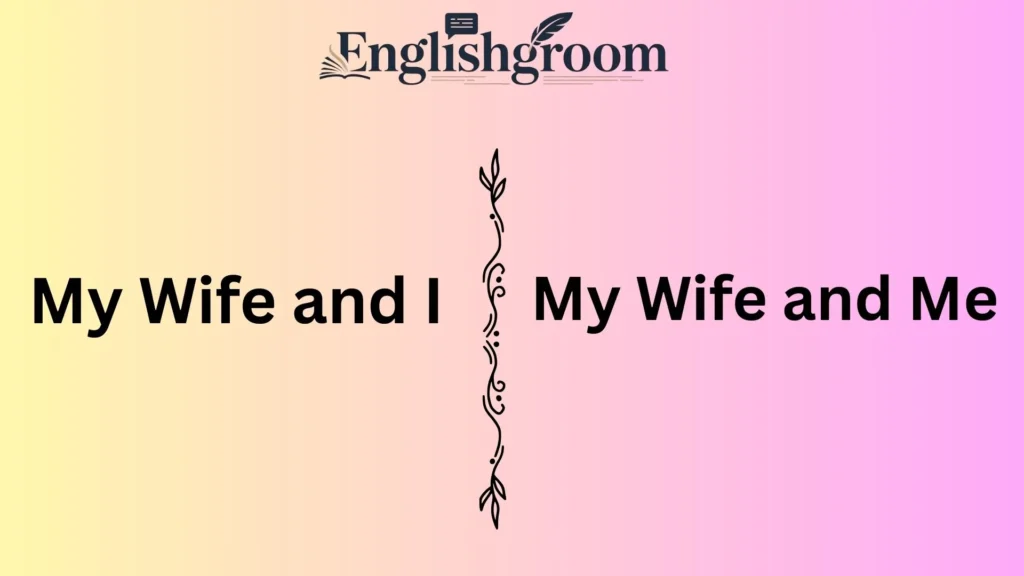
“My wife and I” acts as a subject. “My wife and me” acts as an object. The verb decides.
Is it wrong to say “me and my wife”?
In formal writing, yes. In casual speech, it’s common and widely understood.
Why does “I and my wife” sound awkward?
It disrupts natural sentence rhythm and violates social word-order norms.
Can I ever use “my wife and myself”?
Only when the action reflects back to the subject. Otherwise, avoid it.
What’s the fastest way to choose correctly?
Remove “my wife” and test the pronoun alone. It works every time.
Final Takeaway: Speak Clearly, Not Cautiously
Grammar shouldn’t feel like a trapdoor.
When you understand why “my wife and I” works in one sentence and why “my wife and me” works in another, confidence replaces hesitation.
Use the test. Trust the structure. Let clarity lead.
That’s how polished writing actually sounds.

Hi! I’m Sami, a 28-year-old content writer with a love for words and storytelling. Writing has always been my way of expressing ideas, sharing knowledge, and connecting with people. I enjoy creating engaging and well-researched content—whether it’s blogs, articles, or social media posts—that not only informs but also inspires readers. My goal is to turn complex ideas into clear, creative, and meaningful pieces of writing that leave a lasting impact.