Small details shape how writing feels. Sometimes, one tiny mark carries more weight than an entire paragraph.
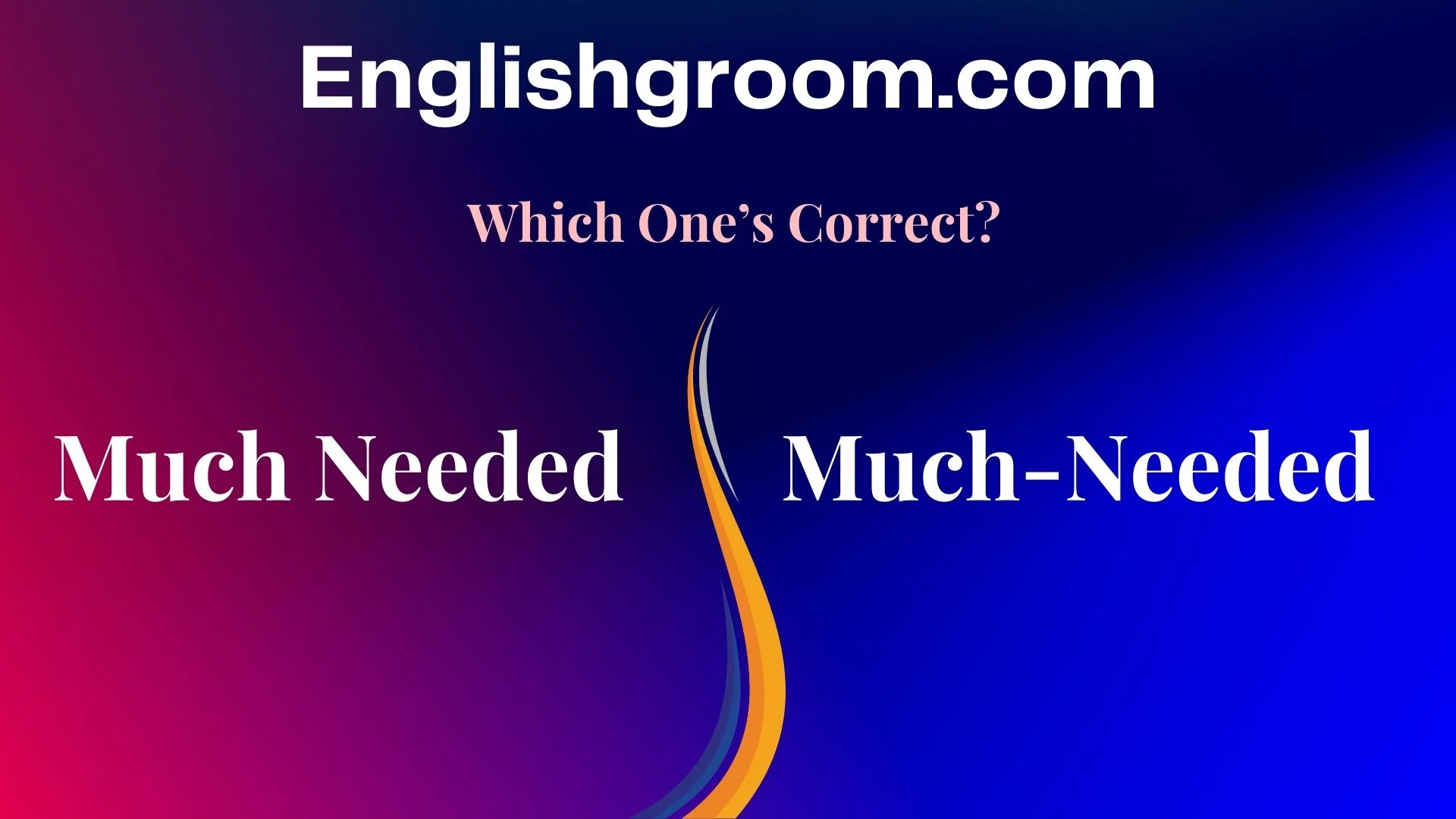
The hyphen in “much needed” versus “much-needed” proves that point perfectly.
You’ve seen both versions. You may have used both. And chances are, at least once, you paused and wondered which one was right.
Here’s the honest answer: both are correct—but only when used in the right place.
This guide breaks it all down in clear, simple language. No grammar fog.
No academic stiffness. Just real explanations, real examples, and real clarity you can apply instantly.
Why “Much Needed” vs. “Much-Needed” Confuses So Many Writers
English loves rules. English also loves breaking them.
Hyphens sit right in the middle of that chaos. Writers often treat them like optional accessories. Add one if it feels fancy. Remove one if it feels cluttered. Unfortunately, that instinct causes confusion.
This specific phrase causes trouble because:
- Both versions look correct
- Both versions are widely used
- The difference depends on placement, not meaning
That last point trips people up.
The phrase doesn’t change what you’re saying. It changes how the sentence works.
Once you understand that, the confusion fades fast.
The Core Difference Between “Much Needed” and “Much-Needed”
Here’s the cleanest way to understand it:

“Much-needed” modifies a noun.
“Much needed” completes a thought.
Same words. Different jobs.
Let’s simplify further.
| Version | What It Does | Where It Appears |
|---|---|---|
| Much-needed | Acts as a compound adjective | Before a noun |
| Much needed | Acts as an adjective phrase | After a verb |
The hyphen doesn’t exist to decorate the sentence. It exists to bind meaning.
What “Much Needed” (Two Words) Really Means
“Much needed” works as a descriptive phrase that follows a verb. It tells you the degree of necessity, not the type of thing.
It usually appears after linking verbs like:
- is
- was
- seems
- feels
Correct Examples of “Much Needed”
- The break was much needed.
- That advice is much needed right now.
- Sleep felt much needed after the trip.
In each case, the sentence already stands on its own. The phrase adds emphasis, not structure.
Why There’s No Hyphen Here
Hyphens exist to prevent confusion before a noun appears. Once the noun is already established, the hyphen becomes unnecessary.
Think of it like this:
The sentence already knows what it’s talking about.
The phrase simply adds color.

Common Contexts Where “Much Needed” Fits Naturally
You’ll often see much needed used in:
- Spoken English
- Emails and messages
- Narrative writing
- Opinion pieces
Typical Sentence Patterns
- Subject + verb + much needed
- Noun + linking verb + much needed
Examples:
- Closure was much needed.
- The explanation felt much needed.
The phrase ends the thought smoothly. No hyphen required.
What “Much-Needed” (Hyphenated) Actually Does
Now let’s flip the structure.
“Much-needed” acts as a compound modifier. That means two words join forces to describe a noun before it appears.
The hyphen signals unity.
Without it, the reader stumbles.
Correct Examples of “Much-Needed”
- A much-needed update fixed the bug.
- She took a much-needed vacation.
- The city approved much-needed reforms.
In every example, the phrase directly modifies a noun.
Why the Hyphen Matters
Remove the hyphen, and the sentence slows down:
A much needed update
The reader briefly wonders:
- Is “much” modifying “needed”?
- Or is “much” modifying “update”?
The hyphen clears that fog instantly.
Why English Requires the Hyphen Before a Noun
English relies heavily on word order. When multiple words appear before a noun, readers expect clarity.
The hyphen works like glue.
It tells the reader:
“These words belong together. Read them as one idea.”
Without that glue, meaning loosens.
The Grammar Rule Behind “Much-Needed” (Plain English Version)
Here’s the rule without textbook fluff:
When two or more words work together to describe a noun, and they come before that noun, they usually need a hyphen.
That’s it.
No advanced terminology required.
Examples of the Rule in Action
- a well-known author
- a high-quality product
- a long-term plan
- a much-needed change
When the Hyphen Disappears
Move the phrase after the noun, and the hyphen vanishes:
- The author is well known.
- The product is high quality.
- The plan is long term.
- The change was much needed.
Same words. New position. New rules.
Placement Controls Everything
Hyphen usage depends less on meaning and more on sentence structure.
Side-by-Side Comparison
| Sentence | Correct Form |
|---|---|
| The rest was ___ | much needed |
| ___ rest helped a lot | much-needed |
| The policy felt ___ | much needed |
| ___ policy passed quickly | much-needed |
If the phrase sits before a noun, hyphenate it.
If it sits after a verb, don’t.
That’s your shortcut.
Common Mistakes Writers Actually Make
Mistakes happen because rules feel fuzzy. Let’s clear up the most common ones.
Mistake: Adding Hyphens Everywhere
Some writers hyphenate both versions just to be safe.
- ❌ The help was much-needed.
This looks wrong because the phrase comes after the verb. The hyphen adds nothing and distracts the eye.
Mistake: Forgetting the Hyphen Before a Noun
This one shows up everywhere online.
- ❌ A much needed solution
Technically readable. Stylistically weak. Grammatically incomplete.
Add the hyphen, and the sentence tightens instantly.
Mistake: Inconsistent Usage
Switching styles mid-article damages trust.
If one paragraph uses much-needed support and another uses much needed support, readers notice—even if they don’t realize why.
Consistency signals care.
What Major Style Guides Agree On
Even though style guides differ on many details, they align here.
- AP Style: Hyphenate compound modifiers before nouns
- Chicago Manual of Style: Same rule, same reasoning
This isn’t a gray area. Editors expect consistency.
Quick Reference Guide You Can Bookmark
| Situation | Correct Choice |
|---|---|
| Before a noun | much-needed |
| After a verb | much needed |
| Headlines | much-needed |
| Informal writing | Depends on placement |
| Formal writing | Same rule applies |
If you remember nothing else, remember this table.
Case Study: When a Hyphen Changed the Meaning
Scenario
A nonprofit published this headline:
Providing much needed relief for families
At first glance, it works. But editors noticed hesitation during reading.
They revised it to:
Providing much-needed relief for families
What Changed
- Reading speed improved
- The phrase felt intentional
- The message sounded more authoritative
That single hyphen increased clarity and professionalism.
In writing, confidence often hides in small decisions.
Why “Much Needed” vs. “Much-Needed” Matters for SEO
Search engines don’t penalize grammar mistakes. Readers do.
Clear writing leads to:
- Longer time on page
- Better engagement
- Higher trust signals
Hyphenation helps scannability, especially in:
- Headlines
- Subheadings
- Featured snippets
Search intent focuses on understanding. Your job is to remove friction.
Memorable Takeaways You Can Apply Instantly
- Before a noun? Hyphenate it.
- After a verb? Leave it open.
- Hyphens create clarity, not decoration
- Placement controls grammar
- Consistency builds credibility
Think structure, not spelling.
FAQs About “Much Needed” vs. “Much-Needed”
Is “much needed” grammatically correct?
Yes. It’s correct when it appears after a verb or completes a sentence.
Why is “much-needed” hyphenated?
The hyphen turns the phrase into a single modifier that describes a noun.
Can both forms appear in the same article?
Yes, as long as each one follows proper placement rules.
Is “much-needed” formal or informal?
It works in both. The structure, not the tone, determines usage.
Are there similar phrases I should watch for?
Yes. Well-known, high-quality, long-term, and fast-growing follow the same rule.
Conclusion: Write With Confidence, Not Guesswork
Grammar doesn’t exist to trap you. It exists to guide the reader.
Once you understand why the hyphen appears, the choice becomes automatic.
You stop hesitating. You stop second-guessing. You write with flow.
Much-needed clarity improves writing.
That clarity is often much needed.

Hi! I’m Sami, a 28-year-old content writer with a love for words and storytelling. Writing has always been my way of expressing ideas, sharing knowledge, and connecting with people. I enjoy creating engaging and well-researched content—whether it’s blogs, articles, or social media posts—that not only informs but also inspires readers. My goal is to turn complex ideas into clear, creative, and meaningful pieces of writing that leave a lasting impact.