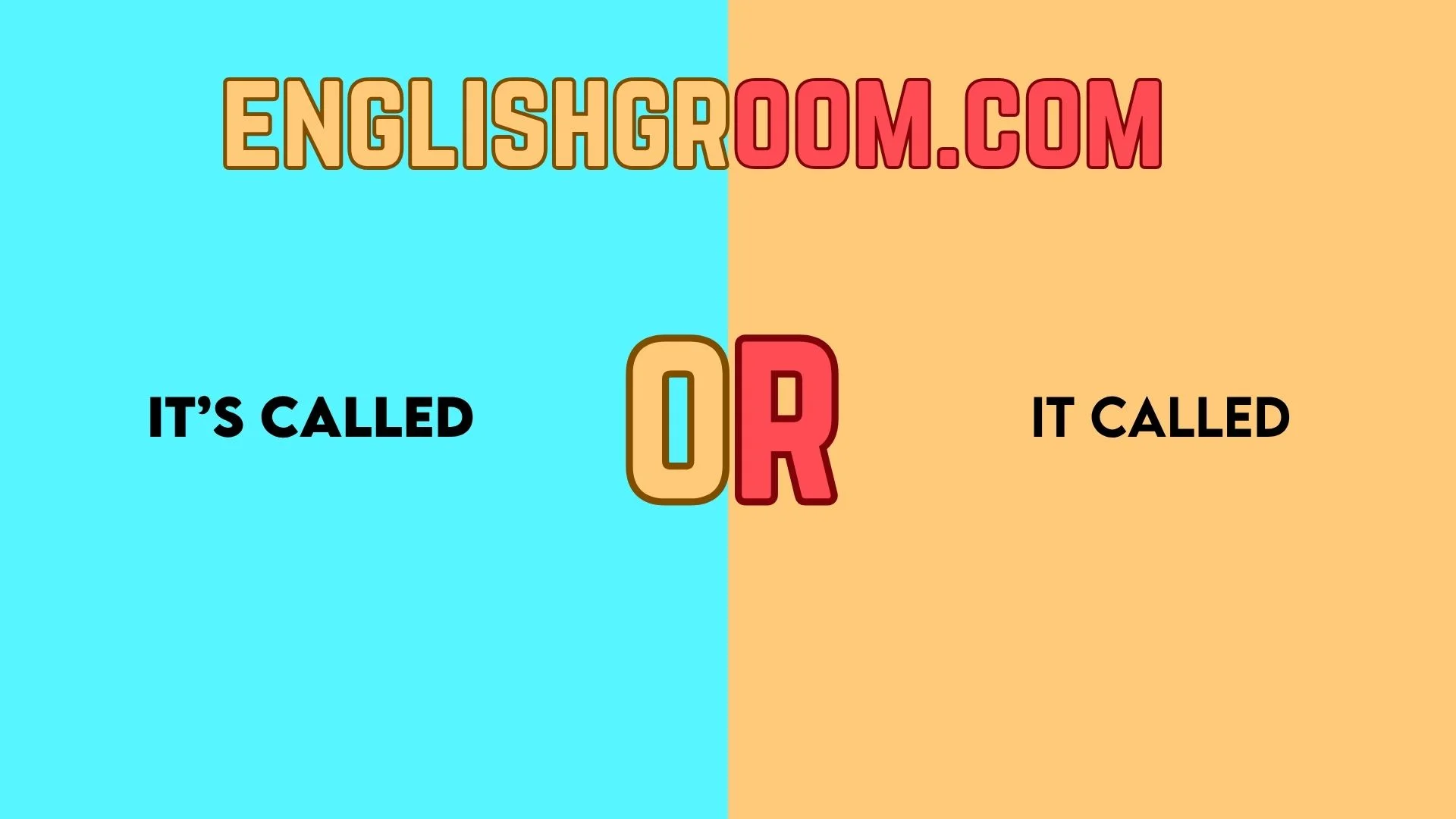
Have you ever paused while typing and thought, “Wait, is it it’s called or it called?”
You’re not alone. This tiny difference in wording confuses millions of English learners and even native speakers.
In English, small changes like adding or dropping an apostrophe can completely shift meaning. Understanding “it’s called” and “it called” isn’t just grammar nitpicking—it’s about sounding natural, confident, and correct in speech and writing.
Let’s break it all down in plain, friendly language.
✅ Quick Reference: Correct Usage
Before diving deep, here’s your cheat sheet:
| Phrase | Correct Usage | Example | Meaning |
|---|---|---|---|
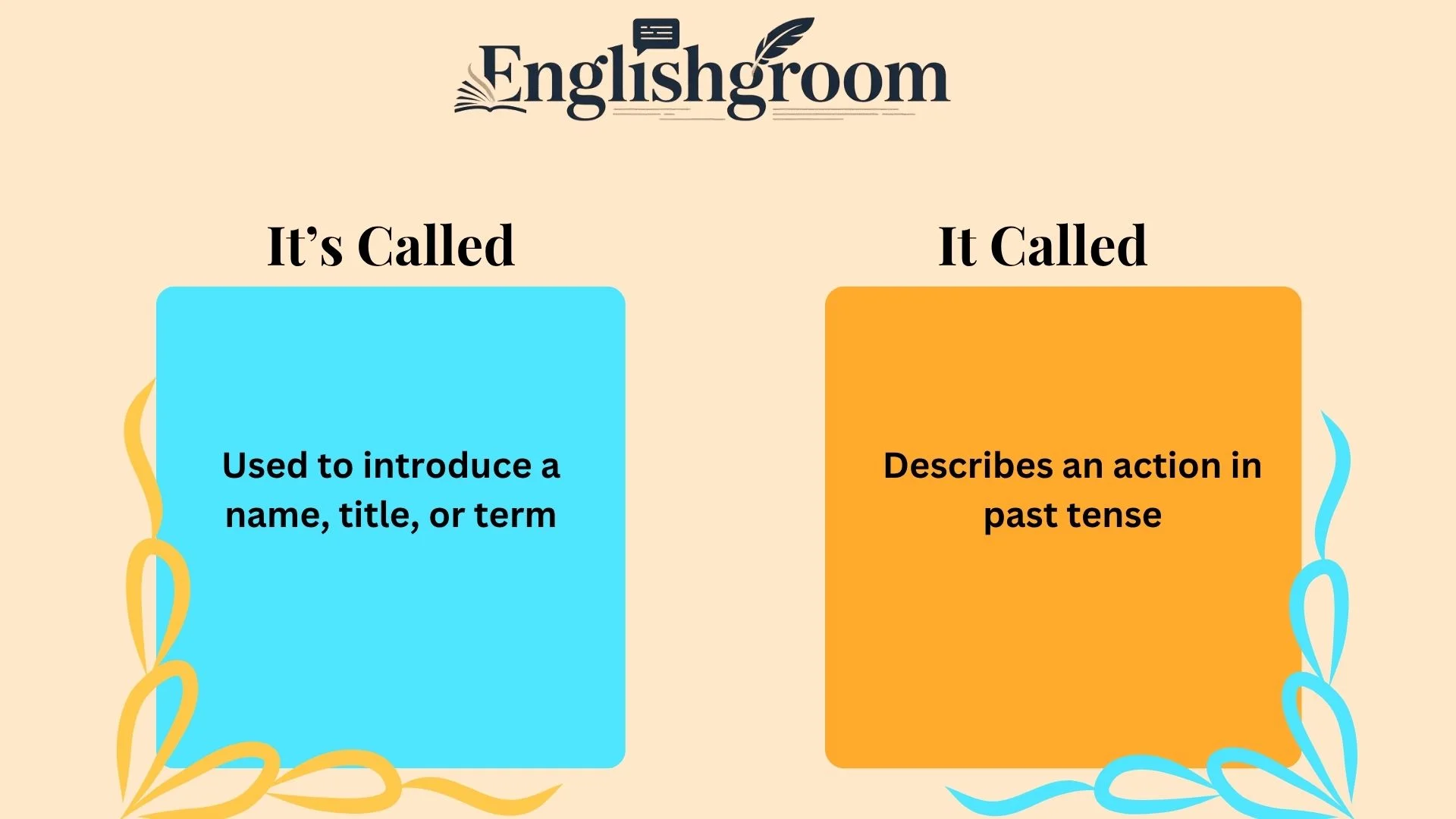
| It’s called | ✅ Correct | It’s called a shortcut. | Used to introduce a name, title, or term |
| It called | ⚠️ Sometimes correct | It called for help. | Describes an action in past tense |
| Its | ✅ Correct | Its handle is broken. | Possessive pronoun showing ownership |
In short:
“It’s called” is correct 99% of the time. “It called” only fits when “it” performs the action of calling.
💡 Understanding “It’s”
The word “it’s” is a contraction—a shortened form of “it is” or “it has.”
That tiny apostrophe replaces a missing letter.
Examples:
- It’s raining → It is raining.
- It’s been a long day → It has been a long day.
- It’s called minimalism → It is called minimalism.
So whenever you say “it’s called,” you’re really saying “it is called.”
That’s why the apostrophe matters—it marks the contraction.
Quick Grammar Tip 🧠
To check if “it’s” is correct, expand it mentally:
Replace “it’s” with “it is” or “it has.”
If the sentence still makes sense, you’re using it right.
Example:
- It’s called fusion cuisine. → It is called fusion cuisine. ✅
- The dog wagged it’s tail. → The dog wagged it is tail. ❌ (Wrong — should be “its tail.”)
🕰 Understanding “It Called”
Now, here’s where things get tricky.
“It called” is not a contraction—it’s simply the past tense of the verb call.
That means something (a thing, person, or entity) did the action of calling.
Examples:
- It called my attention.
- It called out in the dark.
- It called for immediate action.
So while “it called” isn’t wrong, it’s less common because we rarely describe non-human subjects doing the calling.
You’ll mostly see it in storytelling, formal writing, or poetic language.
Example from Literature:
“It called to her from beyond the forest, a whisper she could not ignore.”
In everyday English, though, “it called” sounds awkward unless the sentence has clear context.
🧩 The Possessive Pronoun “Its” (Without Apostrophe)
If you’ve ever typed “it’s color is blue” and felt unsure, here’s why that’s wrong.
“Its” without an apostrophe shows possession—it means “belonging to it.”
Examples:
- Its cover is torn. (Possession)
- It’s beautiful. (It is beautiful — different meaning)
- The phone lost its signal.
Remember: “It’s” means “it is” or “it has.” “Its” shows ownership.
Here’s a simple way to visualize it:
| Word | Type | Meaning | Example |
|---|---|---|---|
| It’s | Contraction | It is / It has | It’s working perfectly. |
| Its | Possessive Pronoun | Belongs to “it” | Its design is flawless. |
| It called | Verb (past tense) | Performed the act of calling | It called for help immediately. |
🚫 Common Mistakes and How to Avoid Them
Even strong writers slip up here. Let’s fix that.
1. Confusing “It’s” and “Its”
Wrong: The company increased it’s profits.
Right: The company increased its profits.
Tip: If you can replace it with “it is” and it doesn’t fit—drop the apostrophe.
2. Using “It Called” Instead of “It’s Called”
Wrong: It called a smartphone.
Right: It’s called a smartphone.
Why? Because “called” here doesn’t describe an action—it introduces a name.
So you need the “it is” structure → “It’s called.”
3. Forgetting the Apostrophe
Wrong: Its called minimalism.
Right: It’s called minimalism.
Without that apostrophe, you’ve changed the meaning completely.
🧭 Quick Fix Strategy
When in doubt:
- Say the sentence out loud.
- Replace “it’s” with “it is.”
- See if it still makes sense.
If yes → keep “it’s.”
If no → use “its.”
If describing an action → “it called” may fit.
🖼 Visual Grammar Guide: It’s vs Its vs It Called
Here’s a visual summary to keep things crystal clear 👇
| Phrase | Part of Speech | Function | Correct Example | Incorrect Example |
|---|---|---|---|---|
| It’s called | Contraction (it is) | Used to name or identify something | It’s called origami. | It called origami. |
| It called | Verb (past tense) | Describes an action done by “it” | It called for help. | It’s called for help. |
| Its | Possessive pronoun | Shows ownership | Its value increased. | It’s value increased. |
🌍 Real-World Examples
Let’s look at how these appear naturally in real conversations and writing.
Everyday Conversation:
- “It’s called multitasking.”
- “It called for celebration.”
Business or Technology:
- “It’s called cloud computing.”
- “The system called an emergency alert.”
Literature and Media:
- “It’s called destiny,” she whispered.
- “It called to him from the shadows.”
Notice the difference?
The first set defines or names something.
The second set describes an action.
💭 Case Study: Context Changes Everything
Let’s take one phrase and watch how its meaning shifts:
“It called my name.”
Here, “it called” is fine because something performed the action—like a spirit, phone, or voice.
But if you say:
“It’s called my name.”
That’s wrong. Why? Because you can’t say “It is called my name”—it doesn’t make sense.
Now try:
“It’s called ‘My Name.’”
Perfect! Here “My Name” is a title—maybe of a book or song.
So the rule is simple:
- “It called” → past action.
- “It’s called” → naming or identifying something.
💎 Tips to Remember the Difference
Here are some easy tricks to lock this in forever:
🧠 Memory Aids
- “It’s” hides a verb. (It is or It has)
- “Its” owns something.
- “It called” is a completed action.
🎯 Quick Mnemonic
If it names → use “it’s called.”
If it acts → use “it called.”
🗣 Practice Sentences
Try filling the blanks:
- ___ called a smart speaker.
- ___ called for help when it overheated.
- The robot waved ___ metallic arm.
✅ Answers:
- It’s
- It
- its
🏫 Contractions in Formal vs Informal Writing
Contractions like “it’s” make your writing sound natural and conversational. But in formal or academic writing, they’re often avoided.
Informal:
“It’s called a ripple effect.”
Sounds friendly and conversational—great for blogs or dialogue.
Formal:
“It is called the ripple effect.”
Polished and professional—suitable for research papers or business reports.
So, when writing emails, blogs, or creative work, “it’s called” feels perfectly natural.
In legal or academic documents, though, use the full form.
📚 Expert Insight
“In English, clarity often hides in small details. The apostrophe in ‘it’s’ may look tiny, but it holds an entire verb.”
— Dr. Laura King, Linguistics Educator
That’s why editors emphasize proofreading contractions carefully. Even a single misplaced apostrophe can change tone, meaning, and readability.
🧩 Real-Life Mistake Examples
Incorrect: Its called innovation.
Correct: It’s called innovation.
Incorrect: It called blockchain technology.
Correct: It’s called blockchain technology.
Incorrect: It’s engine is powerful.
Correct: Its engine is powerful.
Simple errors like these can make your writing appear careless—even if your ideas are brilliant.
🧱 Building Better Sentences
Here’s how choosing correctly improves flow and credibility:
| Version | Sentence | Tone/Effect |
|---|---|---|
| ❌ Wrong | Its called empathy. | Sounds unpolished |
| ✅ Right | It’s called empathy. | Professional and natural |
| ✅ Correct | It called for empathy. | Poetic or narrative tone |
Your choice depends on context—but the golden rule stands: clarity first.
💬 5 Frequently Asked Questions (FAQs)
What does “It’s called” mean?
“It’s called” means “it is named” or “it is referred to as.” Example: It’s called a paradox.
Can I say “It called” in normal sentences?
Yes, but only if “it” actually performed the action. Example: It called for help.
What’s the difference between “it’s” and “its”?
“It’s” is a contraction of it is or it has, while “its” shows possession.
Why is “its called” wrong?
Because “its” means belonging to it. You need the contraction “it’s” to form “it is called.”
Is “it is called” more formal than “it’s called”?
Yes. “It’s called” is conversational; “It is called” is formal and used in academic or professional writing.
🏁 Conclusion
When you boil it down, the difference between “it’s called” and “it called” lies in function and meaning.
- “It’s called” = It is called → used for naming or identifying.
- “It called” = past action of call → used in descriptive or narrative contexts.
- “Its” = possessive → shows ownership.
The apostrophe isn’t decoration—it’s definition.
Master it, and your English instantly becomes more precise and confident.
So next time you write, read aloud, double-check contractions, and remember:
👉 If it names, it’s called. If it acts, it called.

Hi! I’m Sami, a 28-year-old content writer with a love for words and storytelling. Writing has always been my way of expressing ideas, sharing knowledge, and connecting with people. I enjoy creating engaging and well-researched content—whether it’s blogs, articles, or social media posts—that not only informs but also inspires readers. My goal is to turn complex ideas into clear, creative, and meaningful pieces of writing that leave a lasting impact.