Language shapes how people judge your thinking. One small grammar mistake can quietly undermine your credibility.
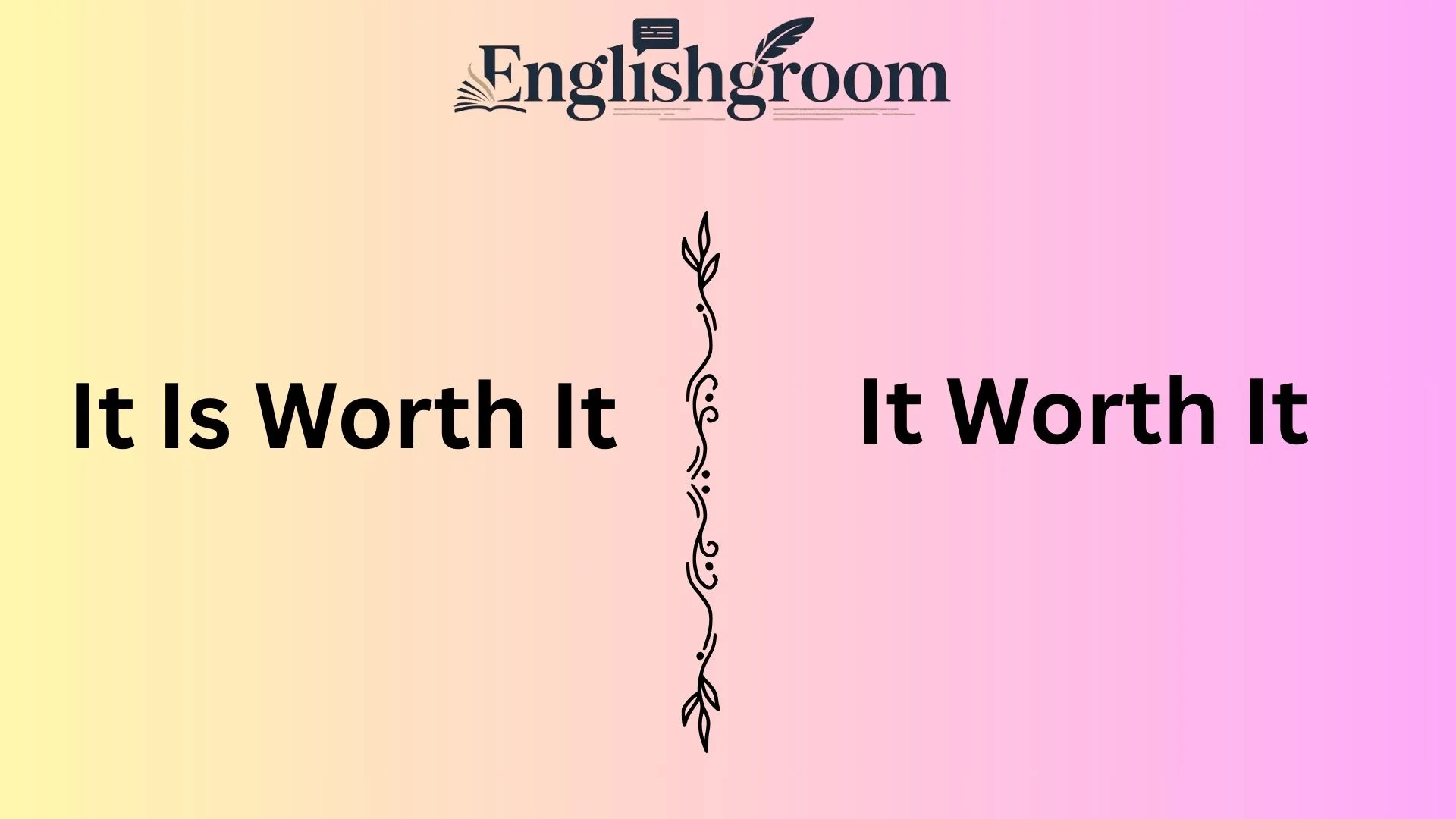
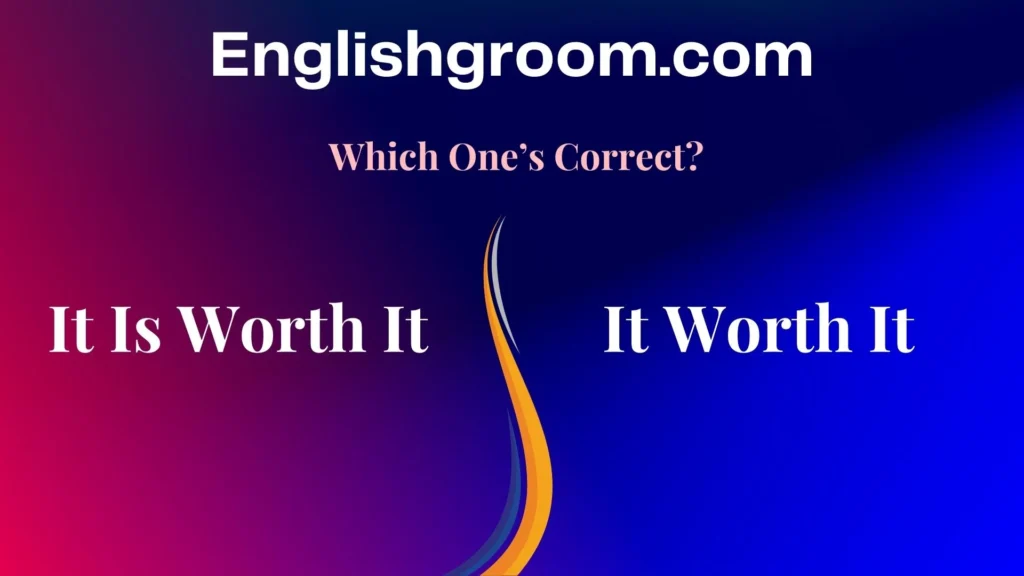
Few phrases cause as much confusion as “it is worth it” versus “it worth it.” They sound similar.
They feel interchangeable in casual speech. Yet on the page, only one works.
This guide breaks everything down in plain English. You’ll learn why “it is worth it” is correct, why “it worth it” fails, how native speakers really use the phrase, and when you should replace it with stronger alternatives.
By the end, you’ll never second-guess this expression again.
Why People Get Confused by “It Worth It”
English often blurs rules when people speak fast. In conversation, words disappear. Grammar bends. Meaning still survives.
Think about how people talk in real life:
“Worth it.”
“Totally worth it.”
“Not worth it.”
No subject. No verb. Still understandable.
That habit spills into writing. Writers drop “is” because their ears tell them the sentence sounds fine. Unfortunately, written English plays by stricter rules.
Here’s the real problem:
- Spoken English allows shortcuts
- Written English demands structure
- Search engines, editors, and readers expect correctness
When “it worth it” shows up in writing, readers notice. Instantly.
The Correct Form: “It Is Worth It”
Let’s get this straight early.
“It is worth it” is the correct, complete sentence.
Why It Works Grammatically
The sentence follows a clean structure:
| Sentence Part | Role |
|---|---|
| It | Subject |
| is | Linking verb |
| worth it | Subject complement |
The verb “is” connects the subject to its meaning. Remove it, and the sentence collapses.
Contractions Are Fine
You’ll often see:
- It’s worth it
This version is still correct. It simply uses a contraction. In blogs, emails, and conversational writing, contractions sound natural and human. Just don’t use them in highly formal documents if tone matters.
Why “It Worth It” Is Grammatically Incorrect

“It worth it” fails for one simple reason.
There is no verb.
English does not allow you to drop the main verb in a declarative sentence. Without “is,” the sentence becomes a fragment.
Why It Sounds Okay to Some People
- Speech often deletes small words
- Our brains fill in missing grammar automatically
- Informal replies influence written habits
But writing does not forgive this shortcut.
Where This Mistake Hurts the Most
- Blog posts
- Academic work
- Professional emails
- Marketing copy
- SEO content
Readers may not explain why it feels wrong. They’ll just trust you less.
Correct and Incorrect Variations You’ll See Everywhere
This phrase shows up in many forms. Some work beautifully. Others crash hard.
Common Variations Explained
| Phrase | Correct | Explanation |
|---|---|---|
| It is worth it | ✅ | Full sentence |
| It’s worth it | ✅ | Contraction |
| Is it worth it? | ✅ | Question form |
| Worth it. | ✅ | Informal reply |
| It worth it | ❌ | Missing verb |
| Does it worth it? | ❌ | Wrong auxiliary verb |
| Is it worth? | ⚠️ | Only correct with object |
The Rule That Saves You Every Time
If “worth” comes after “does,” the sentence is wrong.
Correct alternative:
- Is it worth the effort?
- Was it worth the time?
“Worth” vs. “Worthy”: A Critical Difference
These two words look related. They are not interchangeable.
How “Worth” Works
Worth measures value, cost, or benefit.
Examples:
- The trip is worth the money.
- The effort was worth it.
Structure:
worth + noun / pronoun / -ing verb
How “Worthy” Works
Worthy describes merit or deserving quality.
Examples:
- She is worthy of respect.
- The cause is worthy of support.
Structure:
worthy + of + noun / verb-ing
Side-by-Side Comparison
| Word | Usage | Example |
|---|---|---|
| Worth | Value-based | This course is worth the time |
| Worthy | Merit-based | This student is worthy of praise |
Confusing them changes meaning, not just grammar.
The Myth of “Worthed” (Why It’s Always Wrong)
“Worthed” does not exist in standard English.
Worth has no past tense.
Why People Invent “Worthed”
- They assume every verb changes tense
- They misunderstand “worth” as an action
In reality, “worth” functions as an adjective, not a verb.
Correct Past-Tense Structures
Instead of inventing words, use these:
- It was worth it
- It turned out to be worth the cost
- The risk proved worthwhile
Real-World Usage: “Worth It” in Context
Grammar makes more sense when tied to real life.
Case Study: Education
Students often ask:
“Is college worth it?”
The correct phrasing matters because the question carries weight. You’re evaluating years of time, money, and effort.
Correct usage:
- The degree is worth it if it improves earning potential.
- The experience was worth the investment.
Incorrect usage:
- The degree worth it ❌
Case Study: Health and Fitness
Fitness conversations rely heavily on this phrase.
Correct examples:
- Waking up early is worth it.
- The training was worth the soreness.
Why it works:
- “Worth it” evaluates long-term payoff versus short-term pain.
Case Study: Business and Money
In professional settings, “worth it” can sound casual.
Better alternatives:
- The campaign delivered measurable value
- The project justified the investment
Still, “worth it” remains correct in informal summaries or interviews.
Synonyms and Smarter Alternatives to “Worth It”
Sometimes repetition weakens writing. Alternatives keep your language sharp.
Casual Alternatives
Use these in blogs, conversations, or storytelling:
- Paid off
- Made sense
- Worked out
- Was worthwhile
Professional Alternatives
Use these in reports, proposals, or business writing:
- Justified the cost
- Delivered value
- Generated returns
- Produced measurable results
Quick Comparison Table
| Context | Best Choice |
|---|---|
| Casual talk | Worth it |
| Blog writing | Worthwhile |
| Business report | Justified the investment |
| Academic work | Provided value |
Why Search Engines Care About This Grammar
Search engines evaluate language quality. Grammar errors signal low-quality content.
Correct usage:
- Improves readability
- Increases time on page
- Builds authority
Incorrect usage:
- Triggers user distrust
- Increases bounce rates
- Weakens SEO signals
Grammar is not cosmetic. It’s structural.
The One-Sentence Rule You’ll Never Forget
If the sentence needs “is” when spoken slowly, it needs “is” when written.
Simple. Reliable. Foolproof.
FAQs About “It Is Worth It” vs. “It Worth It”
### What is correct: it worth it or it is worth it?
It is worth it is the only grammatically correct form in standard English.
### Can I say just “worth it”?
Yes. It works as an informal reply, not as a complete written sentence.
### Why is “does it worth it” incorrect?
Because “worth” does not follow the auxiliary verb “does.” Use “is it worth it?” instead.
### What tense is “it was worth it”?
It is past tense and fully correct. “Worth” itself does not change form.
### When should I use “worthy” instead of “worth”?
Use “worthy” when describing merit or deserving quality, not value or cost.
Final Takeaway: Write Like You Mean It
Grammar reflects thought. Clean structure builds trust. “It is worth it” works because it respects how English actually functions. “It worth it” does not.
Once you see the rule, you can’t unsee it. And that’s a good thing.

Hi! I’m Sami, a 28-year-old content writer with a love for words and storytelling. Writing has always been my way of expressing ideas, sharing knowledge, and connecting with people. I enjoy creating engaging and well-researched content—whether it’s blogs, articles, or social media posts—that not only informs but also inspires readers. My goal is to turn complex ideas into clear, creative, and meaningful pieces of writing that leave a lasting impact.