English loves giving you options. Sometimes that flexibility feels helpful. Other times, it feels like a trap.
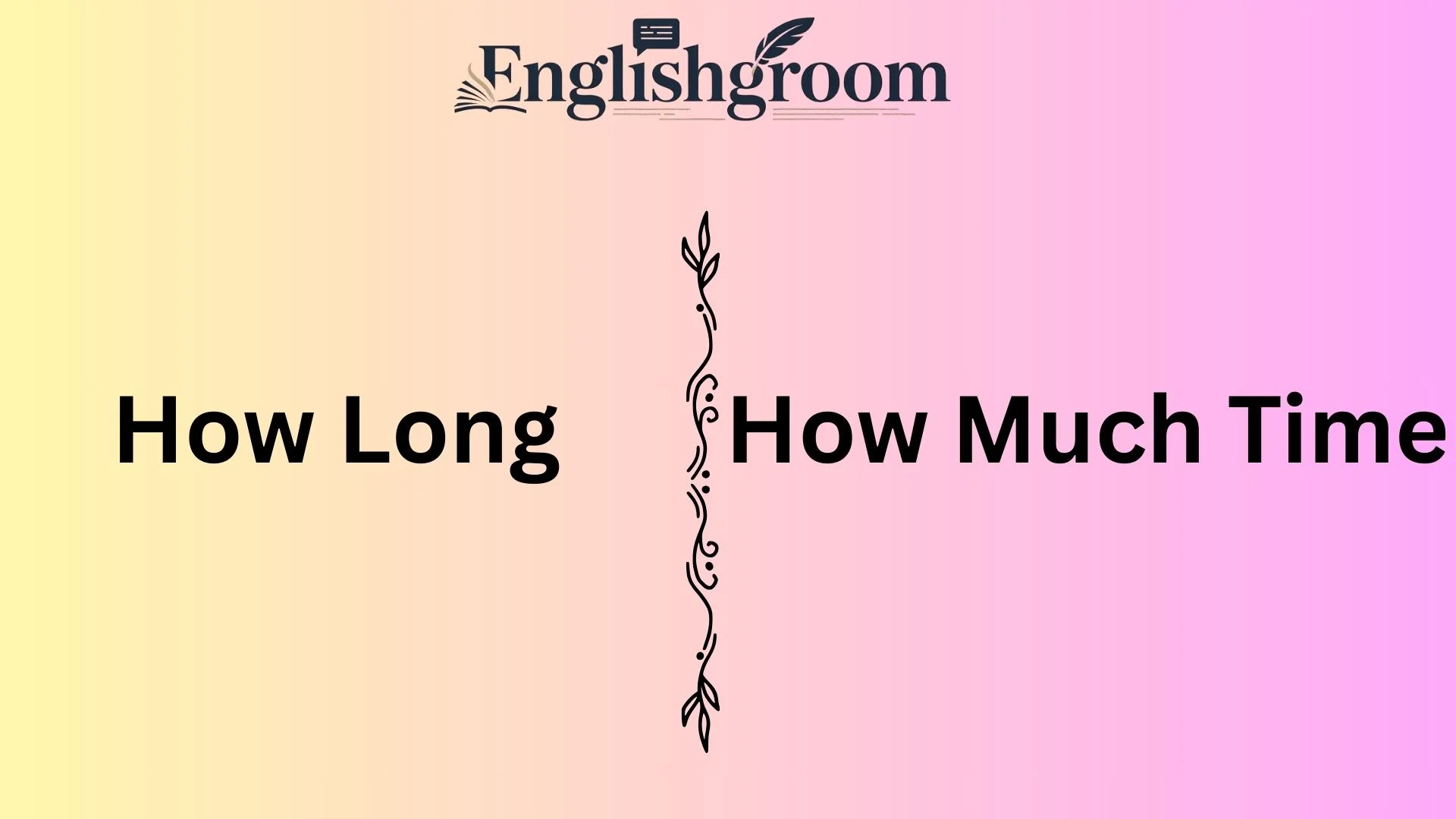
“How long” vs “how much time” sits squarely in that second category.
You hear both everywhere. In conversations. In emails. On exams. In meetings.
They look interchangeable. They aren’t.
Use the wrong one, and your sentence still sounds “okay,” yet something feels off. Native speakers notice. Teachers notice. Interviewers definitely notice.
This guide clears the fog. You’ll learn what each phrase really means, how tone changes between them, and how to choose correctly without overthinking. No fluff. No grammar lectures. Just practical clarity you can use today.
The Core Difference Between “How Long” and “How Much Time”
At first glance, both phrases ask about time. That’s true.
The difference lives in how the speaker frames time.
Here’s the simplest truth:

- How long asks about duration.
- How much time asks about quantity or allocation.
One focuses on length experienced.
The other treats time like a resource you measure or manage.
Quick Contrast Example
How long did the meeting last?
How much time do we have for the meeting?
Same topic. Different intent.
That distinction drives everything else in this article.
Understanding “How Long”
What “How Long” Really Asks
“How long” focuses on duration.
It asks about the stretch of time from beginning to end.
Think of it as a timeline question.
You’re curious about how extended something is, not how much time is available or required.
It feels natural. Conversational. Human.
When people tell stories, complain, explain experiences, or reflect, they reach for how long.
Situations Where “How Long” Sounds Natural
You’ll hear how long most often when:
- The event already happened
- The activity is ongoing
- The duration feels uncertain
- The speaker cares about the experience itself
Common real-life contexts:
- Travel
- Waiting
- Relationships
- Work processes
- Physical states
Examples:
- How long did the flight take?
- How long have you lived here?
- How long will the repair last?
- How long were you waiting?
Each question centers on span, not management.
Grammatical Patterns You’ll See Often
“How long” pairs naturally with verbs that imply duration.
Common verb partners:
- last
- take
- stay
- wait
- live
- work
- continue
You’ll also see it frequently with:
- Present perfect tense
- Simple past tense
- Future forms
Examples:
- How long has the project been delayed?
- How long did the call last?
- How long will the process take?
These patterns feel instinctive to native speakers.
Examples That Sound Truly Native
Let’s ground this in realistic language.
Casual conversation:
How long were you stuck in traffic?
Workplace talk:
How long will onboarding take?
Personal experience:
How long did it take you to learn this skill?
Notice how relaxed these sound.
“How long” flows easily in speech. It rarely feels stiff.
Common Mistakes With “How Long”
Even advanced learners stumble here.
Frequent errors include:
- Using “how long” when scheduling matters more than duration
- Asking “how long” when a fixed amount is expected
- Using it in formal planning documents
Awkward example:
How long do we have to submit the proposal?
This sounds off. The listener expects limits or allocation.
“How much time” fits better here.
Cultural and Conversational Tone
“How long” feels informal and experiential.
It suits:
- Conversations
- Storytelling
- Complaints
- Casual professional talk
It sounds human.
It sounds lived-in.
It feels less transactional.
That tone difference matters more than people realize.
Understanding “How Much Time”
What “How Much Time” Really Measures
“How much time” treats time as a countable resource.
Not emotionally. Not experientially. Practically.
This phrase fits when time feels:
- Limited
- Measured
- Allocated
- Controlled
You aren’t asking how something felt.
You’re asking what’s available or required.
When “How Much Time” Is the Better Choice
Use how much time when:
- Planning tasks
- Managing deadlines
- Setting limits
- Evaluating effort
- Measuring efficiency
Real-world examples:
- How much time do we have before launch?
- How much time should I spend studying?
- How much time is left on the exam?
Each question treats time like currency.

Grammatical Clarity and Structure
“How much time” almost always appears with nouns and constraints.
You’ll see it paired with:
- have
- need
- require
- allow
- spend
Examples:
- How much time do you need?
- How much time is allocated for Q&A?
- How much time should I budget?
The structure feels deliberate. Purposeful.
Precision and Tone Differences
“How much time” sounds:
- More formal
- More analytical
- More professional
It fits naturally in:
- Emails
- Reports
- Exams
- Meetings
Native speakers switch to it when clarity matters.
Nuanced Use Cases People Miss
Here’s a subtle point many overlook.
“How much time” implies responsibility.
When you ask it, you signal:
- Planning is required
- Limits exist
- Decisions follow
Compare the emotional undertone:
How long will this take?
How much time will this take?
The second sounds more structured. Almost managerial.
Side-by-Side Comparison: How Long vs How Much Time
Same Situation, Different Meaning
Let’s compare identical contexts.
| Situation | How Long | How Much Time |
|---|---|---|
| Meeting | How long did the meeting last? | How much time do we have for the meeting? |
| Exam | How long was the exam? | How much time is left? |
| Task | How long did it take you? | How much time do you need? |
| Travel | How long is the drive? | How much time should we allow? |
Same topic. Different intent.
That’s the real distinction.
Subtle Shifts in Meaning
How long emphasizes:
- Duration
- Experience
- Retrospection
How much time emphasizes:
- Limits
- Planning
- Allocation
Choosing the wrong one doesn’t break grammar.
It breaks precision.
Visual Summary Table
| Feature | How Long | How Much Time |
|---|---|---|
| Focus | Duration | Quantity |
| Tone | Natural, conversational | Structured, deliberate |
| Best for | Experience-based questions | Planning-based questions |
| Common settings | Speech, storytelling | Work, exams, schedules |
Bookmark this mentally. It saves effort later.
Choosing the Right Phrase in Daily Life
Casual Conversations
In everyday speech, people prefer how long.
Why?
Because casual talk centers on experience, not management.
Examples you’ll hear daily:
- How long were you on the call?
- How long did it take to cook?
- How long have you known them?
Using “how much time” here sounds stiff.
Professional and Workplace Settings
Workplaces reward clarity.
Use how much time when:
- Deadlines exist
- Resources matter
- Decisions follow
Examples:
- How much time do you need to finish this?
- How much time is allocated for review?
- How much time should we reserve?
“How long” still appears.
It just appears later, after planning ends.
Academic and Testing Environments
Exams love precision.
Teachers expect:
- “How much time is allowed?”
- “How much time remains?”
“How long” appears more in descriptive writing than instructions.
Knowing this improves scores instantly.
Common Mistakes and How to Fix Them
Mistake One: Using One Phrase for Everything
Some learners default to “how long” always.
Others overcorrect with “how much time.”
Fix it by asking one question:
Am I asking about experience or allocation?
That’s it.
Mistake Two: Translating Directly
Many languages use one phrase for both meanings.
English doesn’t.
Direct translation causes subtle awkwardness.
Think in intent, not words.
Mistake Three: Ignoring Tone
Professional settings demand clarity.
Casual settings demand flow.
Match the phrase to the moment.
Quick Decision Guide
Use this fast mental checklist.
- Asking about duration experienced → How long
- Asking about time available or required → How much time
- Casual talk → How long
- Planning or limits → How much time
If you hesitate, imagine a clock versus a timeline.
Practical Mini Case Studies
Case Study One: Workplace Email
❌ How long do we have to submit this?
✅ How much time do we have to submit this?
Why it works: It signals a deadline and constraint.
Case Study Two: Storytelling
❌ How much time were you stuck there?
✅ How long were you stuck there?
Why it works: It focuses on experience.
Case Study Three: Exam Setting
❌ How long is left?
✅ How much time is left?
Why it works: Precision matters under pressure.
Expert Insight
“Native speakers rarely think about rules here. They think about intent.”
— ESL Writing Instructor, Chicago
That insight explains everything.
FAQs
What is the difference between how long and how much time?
How long asks about duration. How much time asks about quantity or availability.
Can how long and how much time be interchangeable?
Sometimes. The meaning shifts slightly even when both sound acceptable.
Is how long only used for time?
No. It can refer to length in distance or extent in some contexts.
Which phrase sounds more professional?
How much time sounds clearer and more formal in professional settings.
What do native speakers prefer in conversation?
They usually prefer how long for casual speech.
Conclusion
“How long” and “how much time” aren’t rivals.
They serve different jobs.
One tells stories.
The other plans reality.
Once you stop memorizing rules and start noticing intent, the confusion fades fast.
Your English sounds sharper. More natural. More confident.
That’s the difference mastery makes.

Hi! I’m Sami, a 28-year-old content writer with a love for words and storytelling. Writing has always been my way of expressing ideas, sharing knowledge, and connecting with people. I enjoy creating engaging and well-researched content—whether it’s blogs, articles, or social media posts—that not only informs but also inspires readers. My goal is to turn complex ideas into clear, creative, and meaningful pieces of writing that leave a lasting impact.