Last updated on February 19th, 2026 at 09:31 am
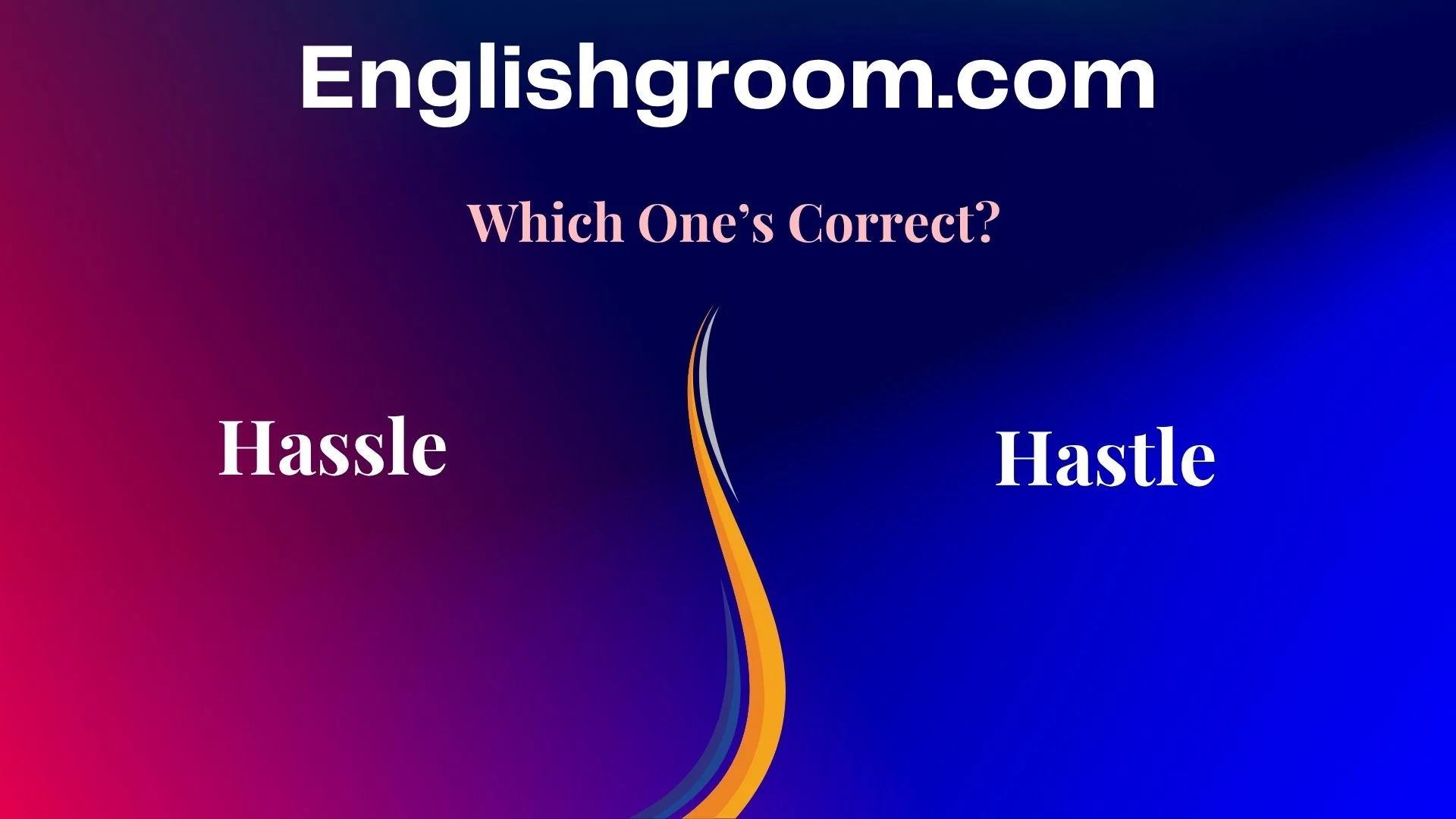
Language can be tricky sometimes. Words that sound the same often make us second-guess how to spell them. One such word is “hassle.” Many people accidentally write “hastle”—but only one of them is correct.
This article breaks it all down: what hassle means, how to use it as a noun and a verb, where it comes from, and why hastle keeps sneaking into everyday writing.
By the end, you’ll know exactly how to use this word without a second thought.
What Does “Hassle” Mean?
Let’s start with the basics.
The word “hassle” means a source of difficulty, inconvenience, or annoyance. It can also mean to bother or annoy someone when used as a verb.
In simple terms, if something takes extra effort, time, or energy you didn’t plan for—it’s a hassle.
Examples:
- “Renewing my passport was such a hassle.”
- “I don’t want to hassle you, but could you resend that email?”
In essence: A hassle is anything that wastes your time or patience.
“Hassle” as a Noun
As a noun, hassle describes a thing—a situation, event, or task that causes inconvenience.
Definition:
Hassle (noun) – something that causes difficulty, frustration, or bother.
Examples:
- “Finding parking downtown is always a hassle.”
- “Moving houses is such a hassle.”
- “She doesn’t need the hassle of dealing with paperwork.”
Synonyms Table
| Synonym | Meaning | Example |
|---|---|---|
| Trouble | Effort or difficulty | “It’s too much trouble to explain.” |
| Inconvenience | Something that disrupts ease | “Sorry for the inconvenience.” |
| Bother | Something mildly annoying | “Don’t go to the bother of wrapping it.” |
| Nuisance | Persistent annoyance | “That pop-up ad is a real nuisance.” |
Pro tip: Whenever you can replace hassle with trouble, bother, or inconvenience, you’re likely using it correctly.
“Hassle” as a Verb
As a verb, hassle means to annoy, bother, or pester someone repeatedly.
Definition:
Hassle (verb) – to harass or nag someone, especially about something minor.
Examples:
- “He keeps hassling me to finish the project.”
- “Stop hassling your sister!”
- “Reporters hassled the actor after the event.”
You’ll often see it in casual speech when someone feels pressured or bothered.
Common phrase examples:
- “Don’t hassle me!”
- “Why are you hassling him about it?”
- “They hassled the new student until he left.”
Quick Comparison Table: Noun vs. Verb
| Usage Type | Meaning | Example Sentence |
|---|---|---|
| Noun | An inconvenience or problem | “Commuting every day is a hassle.” |
| Verb | To bother or annoy someone | “Stop hassling me about dinner plans.” |
Tip: If you can replace it with “annoy” or “bother,” it’s probably a verb. If you can replace it with “problem” or “inconvenience,” it’s a noun.
How to Use “Hassle” Correctly in Sentences
“Hassle” fits best in informal or conversational contexts. You’ll rarely find it in academic writing or official reports, but it’s perfect for blogs, conversations, and friendly writing.
In Formal vs. Informal Usage
| Context | Example | Better Alternative (Formal) |
|---|---|---|
| Informal | “Canceling was too much of a hassle.” | “Canceling proved inconvenient.” |
| Informal | “I didn’t want to hassle the manager.” | “I preferred not to disturb the manager.” |
Grammar Note:
- “Hassle” is countable as a noun.
Example: “I had a few hassles at work today.” - It’s regular as a verb.
Example: “He hassled, hassling, has hassled.”
Common Mistakes and Misuses
Even native English speakers mix things up sometimes. Let’s clear that up.
Frequent Mistakes:
- Writing “hastle.”
❌ “It was such a hastle.”
✅ “It was such a hassle.”
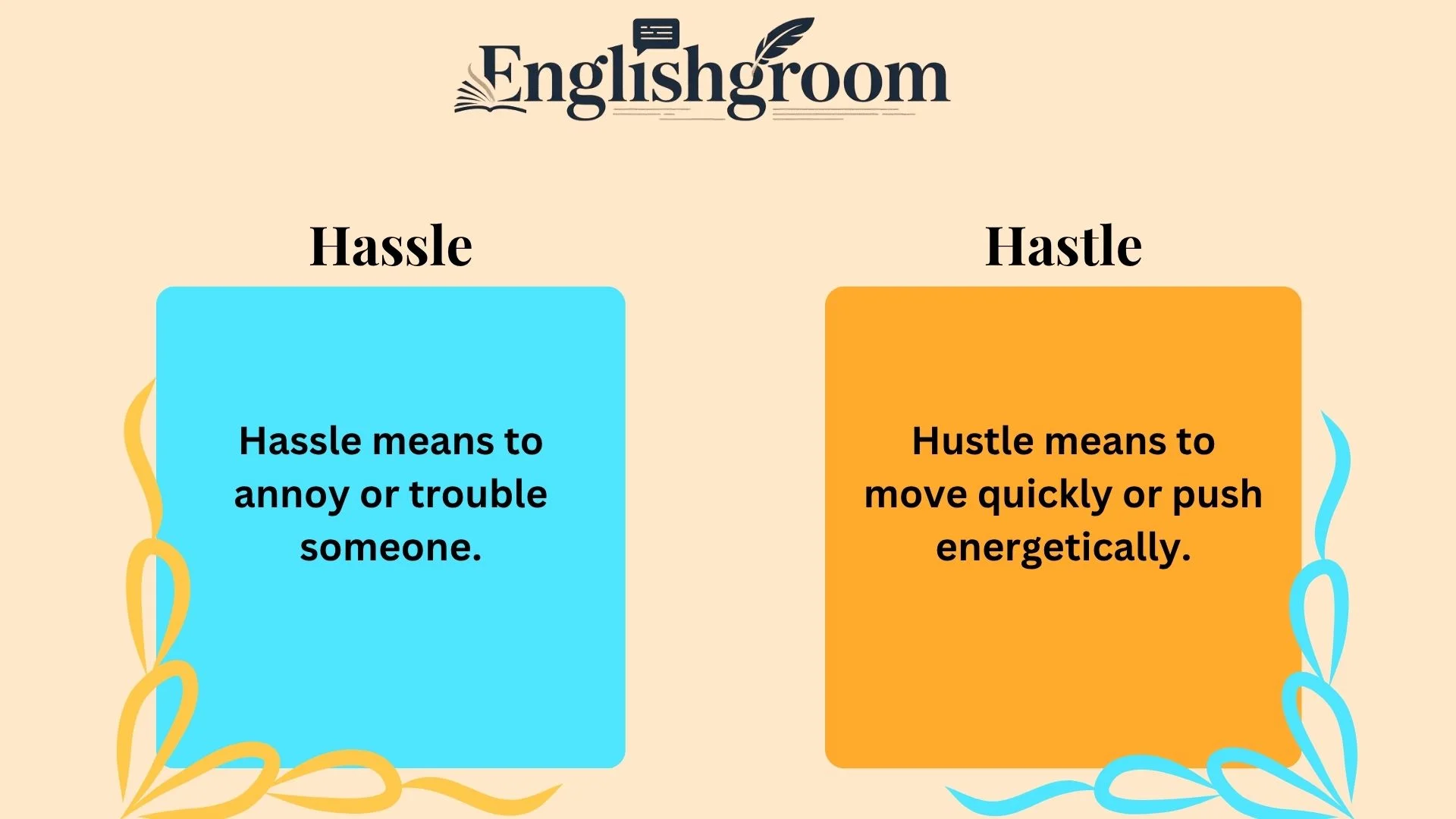
“Hastle” is not a real word. - Confusing “hassle” with “hustle.”
- Hustle means to move quickly or push energetically.
- Hassle means to annoy or trouble someone.
Example: - “She hustled to finish work.”
- “She was hassled by her coworkers.”
- Overusing “hassle” in formal writing.
Instead of saying “The policy creates a hassle for employees,” try:
“The policy causes difficulties for employees.”
Grammar and Style Tip
If you’re writing professionally, skip hassle. Choose a word that fits your tone better.
Formal Alternatives Table
| Level | Word | Example |
|---|---|---|
| Neutral | Difficulty | “It caused some difficulty.” |
| Semi-formal | Inconvenience | “We apologize for the inconvenience.” |
| Formal | Obstacle / Complication | “There were minor complications.” |

Rule of thumb:
If you’re talking to friends, hassle fits fine.
If you’re writing for work, choose difficulty or inconvenience.
Etymology and Origin of “Hassle”
Ever wonder where this casual-sounding word came from?
The word “hassle” originated in the United States in the 1950s. Linguists believe it evolved from a blend of “hustle” and the dialectal word “haggle.”
It began as slang—a rough-and-ready term used by Americans to describe quarrels, fights, or minor annoyances. Over time, it mellowed into the meaning we know today: an inconvenience or irritation.
Interesting fact:
Early printed examples of “hassle” appeared in newspapers and magazines around 1952–1955. By the 1970s, it had spread widely through pop culture and everyday English.
Why People Confuse “Hassle” with “Hastle”
So, why does the error keep happening? A few reasons stand out.
Phonetic Similarity
“Hassle” and “hastle” sound alike when spoken quickly. The soft “s” in the middle can easily sound like a “t” to untrained ears.
Influence of Similar Words
Words like “castle,” “whistle,” and “hustle” influence how people expect “hassle” to look. Since those words have a “t,” writers subconsciously insert one.
Autocorrect and Typing Habits
Autocorrect sometimes fails to catch “hastle,” especially in older systems or non-English settings. Fast typers also tend to add extra letters unconsciously.
Visual Confusion
English spelling patterns often rely on visual memory. Since “hassle” isn’t as common as “castle” or “hustle,” our brains try to force it into a familiar mold.
Examples of “Hassle” Misuse Online
Even professional writers have fallen into the trap. Here are real-world inspired examples (names changed for privacy).
| Incorrect Usage | Correct Form | Why It’s Wrong |
|---|---|---|
| “The paperwork was such a hastle.” | “The paperwork was such a hassle.” | “Hastle” doesn’t exist in English dictionaries. |
| “He hustled me about deadlines.” | “He hassled me about deadlines.” | “Hustled” changes the meaning completely. |
| “Don’t hasle me.” | “Don’t hassle me.” | Missing the double ‘s’ changes pronunciation. |
Tip: Remember — “hassle” always has double “s” and no “t.”
Easy Tricks to Remember the Correct Spelling
Here’s where mnemonics help.
Memory Aids:
- “No T in trouble — no T in hassle.”
- “Hassle has two S’s because it’s twice the stress.”
- Visualize: Imagine “hassle” as two snakes (S-S) symbolizing stress.
Quick Mnemonics Table
| Trick | Description |
|---|---|
| “Double S for double stress” | The double S reminds you of annoyance or pressure. |
| “Hassle = Headache” | Both words have double letters and mean annoyance. |
| “No T in hassle” | A reminder that the fake “hastle” is tempting but wrong. |
“Hassle” in Popular Culture
The word hassle made its mark in pop culture during the 1960s and 70s.
Examples:
- The phrase “No hassle” became part of everyday American advertising—think “No-hassle returns” or “No-hassle insurance.”
- The 1979 song “No More Hassles” by The Main Ingredient captured the frustration of modern life.
- In sitcoms like Friends and The Office, characters often use “hassle” in dialogue, reflecting its casual tone.
Pop culture impact:
“Hassle” transformed from street slang to a global everyday word, bridging generations through TV, ads, and music.
Quick Recap: Hassle vs. Hastle
| Word | Correct? | Meaning | Example |
|---|---|---|---|
| Hassle | ✅ Yes | Trouble, inconvenience, or annoyance | “Fixing the leak was a hassle.” |
| Hastle | ❌ No | — | — |
Remember: Hastle is a misspelling, not an alternative form. Always use hassle.
Key Takeaways
- ✅ “Hassle” is the correct word — “hastle” doesn’t exist.
- ✅ It functions as both a noun (“a hassle”) and a verb (“to hassle”).
- ✅ Use it informally; avoid it in formal reports or academic papers.
- ✅ The easiest way to remember it: No “T” in hassle, because trouble doesn’t take time.
Frequently Asked Questions (FAQs)
What does “hassle” mean in simple terms?
It means something annoying or inconvenient that causes extra effort—like a small but frustrating problem.
Is “hastle” ever correct in British English?
No. Hastle is not a word in any English dialect, including British, American, or Australian.
Can “hassle” be used professionally?
It’s better for informal writing. In business or academic contexts, use difficulty or inconvenience instead.
What’s the difference between “hassle” and “hustle”?
Hustle means to move quickly or work hard; hassle means to annoy or trouble someone.
How do I remember the spelling of “hassle”?
Think: “Two S’s for double stress, no T in trouble.”
Learn More English With These Best Articles:
Understanding Non-finite Verbs in English Grammar: The Secret Power of Verb Flexibility
She Has or She Have The Complete Grammar Guide You’ll Never Forget
Alright vs All Right What’s the Real Difference and When to Use Each
Indolence vs Insolence? Why These Two Words Could Trip You Up
Let Your Hair Down Meaning Origins and Real-Life Usage
Final Thought
Language evolves, but correctness matters. Mixing hassle and hastle might seem harmless, yet small errors can change how professional your writing feels.
So next time you’re unsure—remember, hassle is the word that’s earned its place in the dictionary.
Keep your writing sharp. Skip the T, double the S, and save yourself the hassle.

Hi! I’m Sami, a 28-year-old content writer with a love for words and storytelling. Writing has always been my way of expressing ideas, sharing knowledge, and connecting with people. I enjoy creating engaging and well-researched content—whether it’s blogs, articles, or social media posts—that not only informs but also inspires readers. My goal is to turn complex ideas into clear, creative, and meaningful pieces of writing that leave a lasting impact.