The Grammar Rule That Trips Writers—and How to Get It Right Every Time**
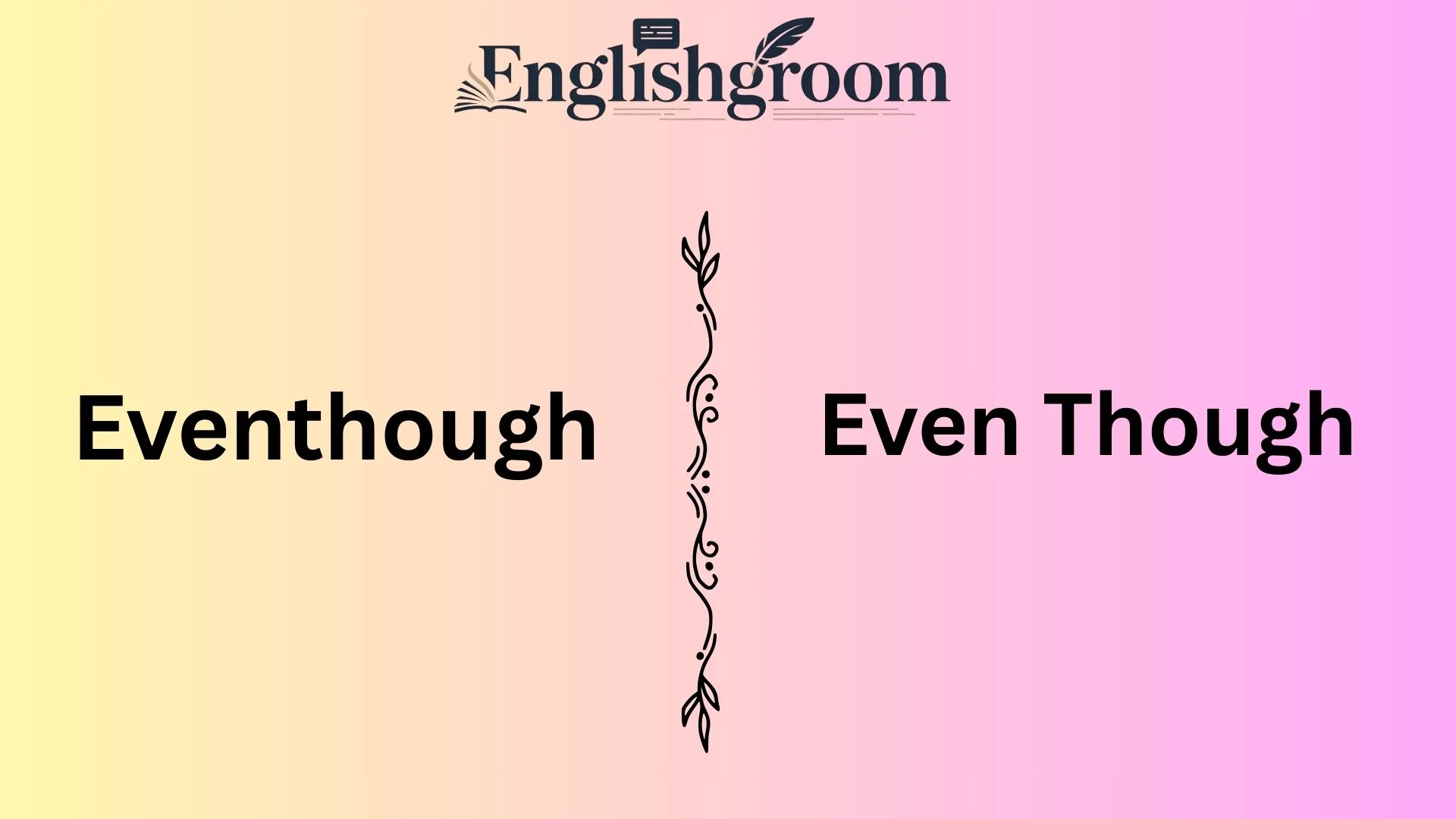
If you’ve ever typed “eventhough” and paused, wondering if it looked right, you’re not alone.
This tiny spacing issue causes outsized confusion.
It shows up in blogs, emails, student essays, and even professional reports.
Yet the rule itself is surprisingly simple once you see how it works.
This guide breaks down eventhough vs. even though in plain English.
You’ll learn why only one form is correct, how the mistake happens, and how to fix it instantly.
No fluff. No vague grammar talk. Just clear explanations, real examples, and practical tools you can use today.
Why “Eventhough” Looks Right at First Glance
At first glance, eventhough feels believable. English already has plenty of compound words that once lived separate lives.
Think about words like:
- anyone
- everyone
- already
- altogether
Your brain sees even and though together so often that it quietly merges them. That mental shortcut makes eventhough look familiar, even though it isn’t real English.
Another reason this happens is typing speed. When you’re moving fast, your fingers don’t care about spaces. Over time, repetition cements the error.
Here’s the key point:
Plausible does not mean correct.
English can be messy, but in this case, the rule is firm.
The Grammar Rule That Ends the Debate: “Even Though” Only
Let’s clear this up cleanly.
“Even though” is a subordinating conjunction.
It introduces a contrast between two ideas.
- Even adds emphasis
- Though introduces opposition or concession
Together, they form a phrase—not a compound word.
Why spacing matters
If you remove the space, you destroy the grammatical structure. English does not recognize eventhough as a word, phrase, or acceptable variant.
Correct
- Even though it was raining, we went outside.
Incorrect
- Eventhough it was raining, we went outside.
There is no gray area here. Dictionaries, style guides, editors, and academic standards all agree.
What “Even Though” Actually Means
Before worrying about spelling, it helps to understand meaning.
Even though expresses contrast despite a condition.
It answers the idea:
“This happened in spite of that.”
Examples:
- Even though she studied hard, the exam was difficult.
- He smiled, even though he felt nervous.
How it differs from similar words
| Phrase | Meaning | Emphasis |
|---|---|---|
| even though | Strong contrast | High |
| although | Formal contrast | Medium |
| though | Casual contrast | Light |
Even though carries emotional or logical weight. It highlights surprise, resistance, or determination more strongly than its alternatives.
Why “Even Though” Never Became One Word
Some people argue that English evolves, so maybe eventhough will become acceptable someday. History suggests otherwise.
A brief linguistic reality check
- Even comes from Old English efen, meaning “equal” or “exact.”
- Though comes from þēah, meaning “however” or “in spite of.”
They evolved separately and kept their independence. Unlike compound nouns, conjunctions rarely merge in English.
That’s why we write:
- in spite of
- as long as
- even if
- even though
Not one word. Not hyphenated. Always spaced.
Why “Eventhough” Is Always Incorrect
Let’s be blunt.
- It’s not in any dictionary.
- It’s not accepted in formal or informal writing.
- It fails grammar checks in academic and professional contexts.
Using eventhough signals one thing to readers:
The writer didn’t proofread—or doesn’t know the rule.
That may sound harsh, but perception matters in writing.
The Real Cost of Using the Wrong Form
One tiny space can quietly damage credibility.
Where this mistake hurts most
- Academic writing
Teachers and professors flag it instantly. - Professional emails
Small grammar slips can undermine authority. - SEO and online content
Editors reject posts over basic errors. - Job applications
Recruiters associate grammar with attention to detail.
You might have great ideas. A simple error like eventhough distracts readers from them.
Why Pronunciation Tricks the Eye
Here’s where psychology sneaks in.
When people say “even though” out loud, it often sounds like one word. Spoken English blends sounds together naturally.
Your brain hears:
ee-vən-tho
Your fingers type:
eventhough
This isn’t ignorance. It’s a speech-to-text illusion.
Similar errors happen with:
- alot instead of a lot
- aswell instead of as well
- incase instead of in case
Sound lies. Spelling doesn’t.
How to Use “Even Though” Correctly in Sentences
Let’s look at real usage patterns.
At the beginning of a sentence
Even though the deadline was tight, the team delivered on time.
Rule:
When the clause comes first, use a comma after the dependent clause.
In the middle of a sentence
The team delivered on time, even though the deadline was tight.
Here, the comma comes before even though.
Short conversational use
I went anyway, even though I was tired.
Natural. Clear. Correct.
Common Mistakes—and How to Fix Them Fast
| Mistake | Why It’s Wrong | Correct Form |
|---|---|---|
| eventhough | Not a word | even though |
| even, though | Breaks meaning | even though |
| though even | Awkward structure | even though |
Quick fix trick
Replace even though with although.
If the sentence still works, you spelled it right.
Myths That Keep “Eventhough” Alive
“I see it online all the time”
Yes—and many online texts contain errors. Frequency doesn’t equal correctness.
“Language evolves, so rules don’t matter”
Language evolves slowly. Grammar still defines clarity. Spelling isn’t optional.
“Autocorrect didn’t flag it”
Spellcheck misses real-looking mistakes. That doesn’t make them right.
The Digital Age Made This Worse
Modern writing habits don’t help.
- Fast typing
- Mobile keyboards
- Social media shortcuts
- Informal messaging
All of these reward speed over precision. Eventhough slips through because it looks logical.
But logic doesn’t override grammar.
Memory Tricks That Actually Stick
Forget gimmicks. Use rules that work.
The “replace test”
If you can replace it with although, keep it two words.
Visual spacing trick
Picture even stepping back from though. They never touch.
One-sentence rule
If it shows contrast, it’s two words.
That’s it.
Alternatives to “Even Though” (And When to Use Them)
Sometimes variation improves flow.
| Alternative | Best Used When |
|---|---|
| although | Formal writing |
| though | Casual tone |
| despite the fact that | Legal or academic contexts |
| while | Softer contrast |
Each option has a purpose. None combine into one word.
Editing in Real Life: Catching the Error Instantly
Professional editors use fast scans.
One-pass proofreading method
- Search for though
- Check the word before it
- Confirm the space exists
This takes seconds and saves embarrassment.
Why Getting “Even Though” Right Signals Strong Writing
Good writing isn’t about sounding fancy. It’s about sounding careful.
Correct grammar shows:
- Attention to detail
- Respect for the reader
- Control over language
Small things shape big impressions.
Frequently Asked Questions About Eventhough vs. Even Though
What is the difference between “eventhough” and “even though”?
Even though is correct English. Eventhough is not a word and is always incorrect.
Is “eventhough” ever accepted in English?
No. It’s not accepted in academic, professional, or informal writing.
Can “even though” be used in formal writing?
Yes. It’s appropriate in essays, reports, and professional documents.
Why do people keep writing “eventhough”?
Because spoken English blends sounds, and the brain merges familiar phrases.
What’s the easiest way to remember the correct form?
Replace it with although. If it works, you need two words.
Conclusion
The eventhough vs. even though debate isn’t really a debate at all. One form follows grammar.
The other doesn’t exist.
Once you understand the structure, the mistake disappears for good.
You’ll spot it instantly. You’ll fix it without thinking. And your writing will look sharper because of it.
That single space?
It’s doing more work than you think.

Hi! I’m Sami, a 28-year-old content writer with a love for words and storytelling. Writing has always been my way of expressing ideas, sharing knowledge, and connecting with people. I enjoy creating engaging and well-researched content—whether it’s blogs, articles, or social media posts—that not only informs but also inspires readers. My goal is to turn complex ideas into clear, creative, and meaningful pieces of writing that leave a lasting impact.