Last updated on February 21st, 2026 at 07:15 am
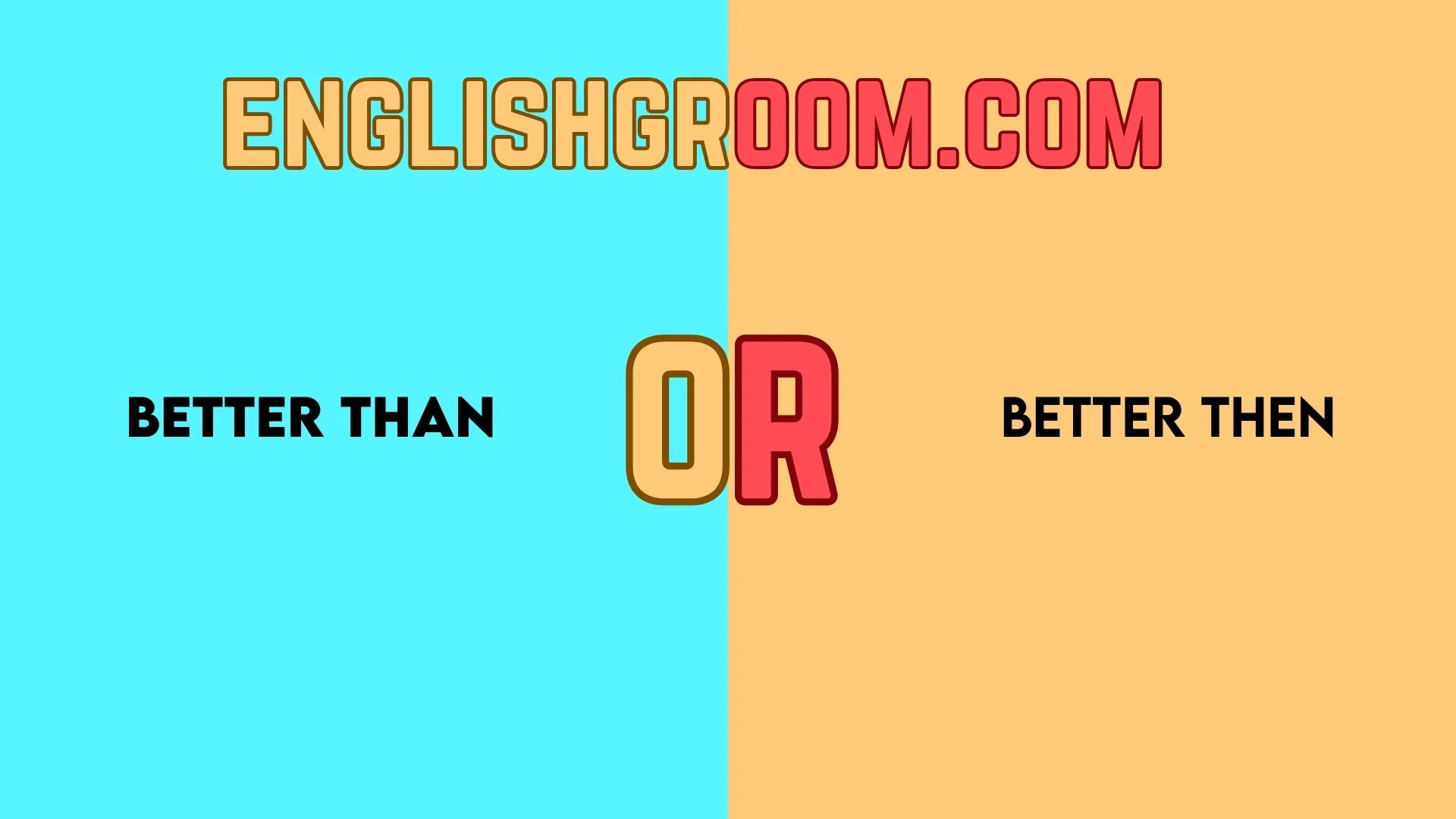
Mixing up “than” and “then” might seem harmless, but it changes meaning completely. You’ve probably seen sentences like “You’re better then me” floating around online. They look almost right—until you read them out loud.
This guide clears up every bit of confusion between “than” and “then.” You’ll get clear rules, examples, tables, tricks, and real-world applications so you’ll never second-guess yourself again.
Why This Tiny Word Mix-Up Matters
These two words might look and sound similar, but they serve different jobs in English. Mixing them up can make your writing look careless—even if your point is clear.
Imagine saying:
“She’s faster then me.”
That one letter changes meaning. It should be:
“She’s faster than me.”
A small fix, yet it completely changes the sentence from nonsense to correct English.
Clarity in writing builds credibility—especially in business emails, resumes, academic writing, or social media posts where grammar mistakes stand out fast.
‘Than’ vs. ‘Then’ at a Glance
Here’s a quick comparison to lock it into your memory:
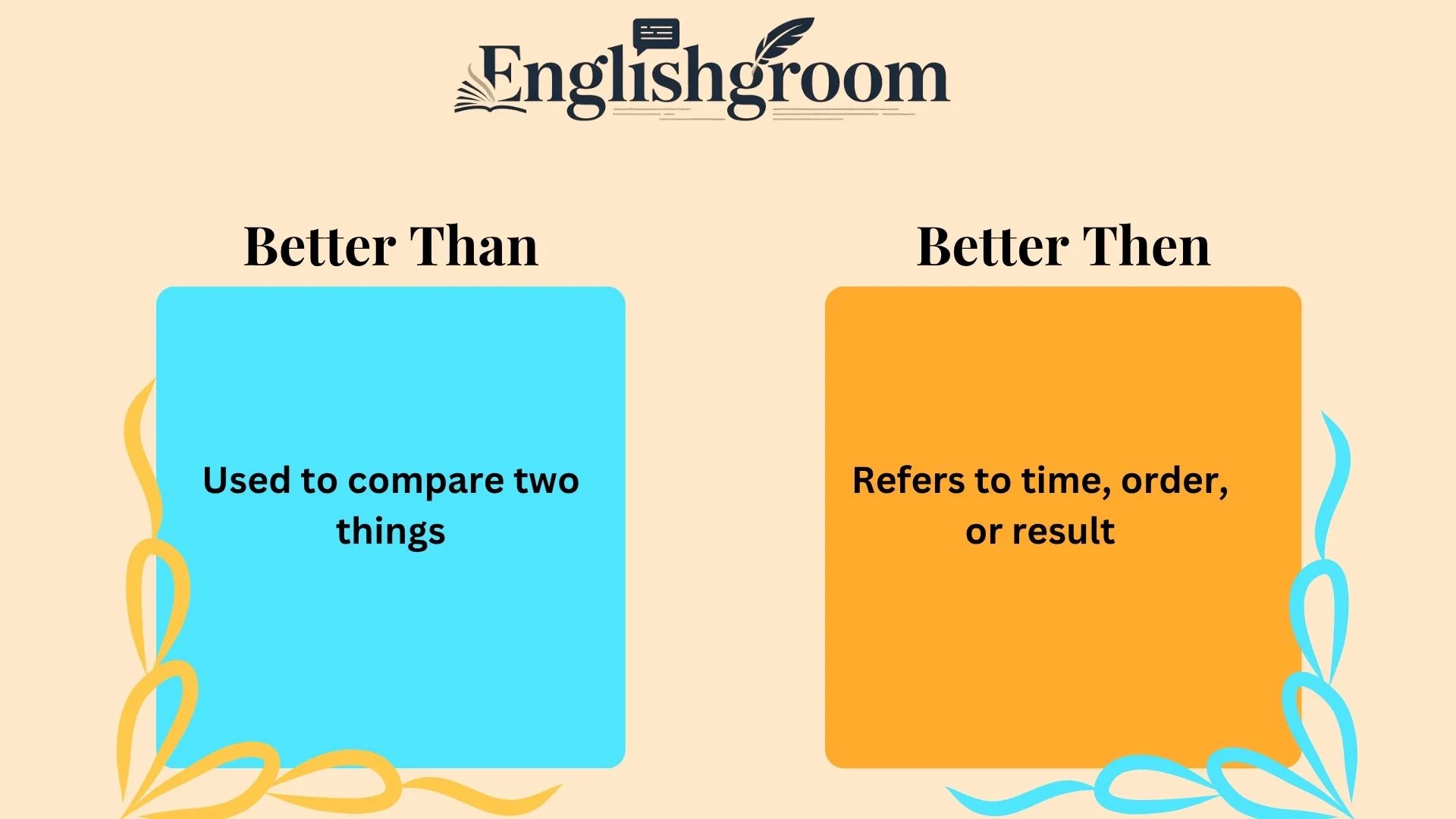
| Word | Function | Meaning | Example | Test |
|---|---|---|---|---|
| Than | Conjunction / Preposition | Used to compare two things | “I’m taller than you.” | Replace with “in comparison to” |
| Then | Adverb / Noun / Adjective | Refers to time, order, or result | “We ate dinner, then watched a movie.” | Replace with “at that time” or “next” |

💡 Memory tip:
If you’re talking about time, sequence, or what happens next, use then.
If you’re comparing, use than.
What ‘Than’ Actually Means
“Than” is mainly a conjunction or preposition that introduces a comparison between two things.
It appears in sentences like:
- “She’s stronger than she looks.”
- “I’d rather study than sleep.”
- “No sooner had we arrived than it started raining.”
You’ll often see “than” after comparative adjectives like:
- better
- taller
- smaller
- faster
- wiser
- stronger
It also appears after comparative adverbs like:
- more quickly
- more easily
- less frequently
Grammar Snapshot
| Sentence Type | Example | Explanation |
|---|---|---|
| Comparison of qualities | “He’s more confident than before.” | Comparing current vs. past confidence. |
| Comparison of choices | “I’d rather walk than drive.” | Preference between two actions. |
| Comparison in degree | “This job is tougher than the last one.” | Degree of toughness. |
Common Idioms and Expressions with ‘Than’
Idioms often use “than” because they express comparisons in creative ways. Here are some of the most common—and what they mean:
| Idiom | Meaning | Example |
|---|---|---|
| Better late than never | It’s good to do something eventually rather than not at all. | “He finally apologized—better late than never.” |
| Easier said than done | Something sounds simple but is hard to do. | “Quitting sugar? Easier said than done.” |
| More than meets the eye | There’s more to something than it seems. | “This project has more than meets the eye.” |
| Other than that | Except for that. | “Other than that, everything’s fine.” |
Idioms give your writing rhythm and familiarity—just remember to spell “than” right.
What ‘Then’ Actually Means
“Then” is usually an adverb (sometimes a noun or adjective) that deals with time, sequence, or consequence.
How to Recognize ‘Then’
It answers “When?”, “What happened next?”, or “What’s the result?”
Examples:
- “We had dinner, then went for ice cream.” (sequence)
- “If you’re sure, then let’s go.” (result)
- “Back then, people wrote letters instead of emails.” (time reference)
Different Ways ‘Then’ Works
| Use | Function | Example |
|---|---|---|
| Time | Describes when something happened | “Back then, phones had cords.” |
| Sequence | Describes what comes next | “I’ll finish my work, then relax.” |
| Consequence | Shows cause and effect | “If it rains, then we’ll stay in.” |
| Transition | Moves story or idea forward | “First, mix the ingredients. Then, bake for 20 minutes.” |
Everyday Phrases and Idioms with ‘Then’
Common expressions using “then” make English sound natural and fluent.
| Phrase | Meaning | Example |
|---|---|---|
| Back then | Refers to a time in the past | “Back then, we didn’t have smartphones.” |
| Every now and then | Occasionally | “I still visit my hometown every now and then.” |
| Since then | From that time until now | “I’ve worked here since then.” |
| Now and then | Occasionally | “He calls every now and then.” |
Using “then” correctly helps your writing flow like natural speech.
Why People Mix Them Up
There are a few key reasons for the confusion:
- Similar sound: They’re pronounced nearly the same.
- Typing errors: Fingers move fast, especially on phones.
- Casual speech: People say “then” loosely in conversation.
- Autocorrect issues: Predictive text often changes “than” to “then.”
- Low grammar awareness: Many learn by ear, not by structure.
Case Study: Real Example
A marketing post once said:
“Our service is faster then anyone else’s.”
Readers caught it immediately—hurting credibility. The company later edited it to:
“Our service is faster than anyone else’s.”
That small fix made the ad sound professional again.
The Quick Grammar Check Method
Here’s an instant way to choose the right word every time:
- Replace with “in comparison to.”
- If it fits, use than.
- Example: “She’s taller (in comparison to) me.” ✅
- Replace with “at that time” or “next.”
- If it fits, use then.
- Example: “We ate and (next) went for a walk.” ✅
Common Red Flag Mistakes (and Fixes)
| ❌ Incorrect | ✅ Correct | Why |
|---|---|---|
| She’s smarter then me | She’s smarter than me | Comparison |
| Finish this first, than rest | Finish this first, then rest | Sequence |
| I’d rather eat home then go out | I’d rather eat home than go out | Comparison |
| We talked, and than we left | We talked, and then we left | Time/order |
| He’s more kind then honest | He’s more kind than honest | Comparative structure |
10 Everyday Examples: Correct vs. Incorrect
| Incorrect | Correct |
|---|---|
| You’re better then I thought. | You’re better than I thought. |
| First study, than relax. | First study, then relax. |
| He’s older then me. | He’s older than me. |
| Back than, life was simple. | Back then, life was simple. |
| She’s more talented then her peers. | She’s more talented than her peers. |
| If you go, than call me. | If you go, then call me. |
| I’d rather sleep then run. | I’d rather sleep than run. |
| We finished lunch, than left. | We finished lunch, then left. |
| No sooner had I arrived, then it started. | No sooner had I arrived, than it started. |
| He’s less patient then before. | He’s less patient than before. |
Use this list as a quick refresher whenever in doubt.
Easy Memory Tricks That Actually Work
Mnemonic Devices
- “Than compares, then describes when.”
- “Then = time. Than = comparison.”
- “Than” has an “A” like in “comparison.”
- “Then” has an “E” like in “sequence.”
Visualization Tip
Picture a timeline for “then” and a balance scale for “than.”
Time → Then.
Comparison → Than.
Mini Quiz
Which is right?
- I’d rather call (then/than) text.
- We’ll go shopping, (then/than) eat.
- She’s more curious (then/than) scared.
Answers: 1. than, 2. then, 3. than.
Idiomatic Expressions to Get Right
Phrases with “Than”
- More than enough
- Other than that
- No sooner than
- Better late than never
- More than likely
Phrases with “Then”
- Back then
- And then some
- Since then
- Now and then
- Every now and then
Getting idioms right adds polish and clarity to your writing.
Real-Life Application: Think Before You Post
In an era where tweets and texts define first impressions, grammar slips can cost credibility.
Whether you’re:
- writing a business email,
- creating a caption,
- or publishing an article,
a simple then/than mix-up can distract readers and reduce trust.
Quick Fix Habit
Before hitting send, do a “than/then” scan.
If the sentence compares, it’s than.
If it talks about time or sequence, it’s then.
“Good writing isn’t about sounding smart—it’s about sounding clear.”
— Anonymous Grammar Coach
FAQs
What’s the main difference between “than” and “then”?
Than compares two things. Then refers to time, sequence, or consequence.
Can “then” ever mean “than”?
No. They’re not interchangeable. “Then” is about time, “than” is about comparison.
Why do people often confuse “then” and “than”?
Because they sound similar, and casual writing habits or autocorrect make it easy to mistype.
Is “better then” ever correct?
No. The correct phrase is “better than.” “Better then” changes the meaning completely.
How can I remember which to use?
Try this: If it’s time, use then. If it’s comparison, use than. Or say the mnemonic: “Than compares, then describes when.”
Learn More English With These Best Articles:
Ingrained or Engrained? Which One’s Right and Why It Matters
Is Yupper a Word Meaning & Usage Explained
Who Else or Whom Else? The Complete Grammar Guide You’ll Actually Remember
Checkup or Check Up The Complete Guide to Using Them Correctly
A Chip off the Old Block Meaning Origin & Modern Significance
Final Takeaway
If it’s a comparison, use than.
If it’s about time or order, use then.
It’s that simple. You don’t need grammar textbooks—just awareness. Every time you write, pause for a second and think: Am I comparing or sequencing?
With practice, you’ll never mix them up again.

Hi! I’m Sami, a 28-year-old content writer with a love for words and storytelling. Writing has always been my way of expressing ideas, sharing knowledge, and connecting with people. I enjoy creating engaging and well-researched content—whether it’s blogs, articles, or social media posts—that not only informs but also inspires readers. My goal is to turn complex ideas into clear, creative, and meaningful pieces of writing that leave a lasting impact.