Last updated on February 12th, 2026 at 07:11 am
A single letter can change how your writing is perceived. In English, the difference between “aging” and “ageing” is subtle, but it carries real implications for readers, writers, and professionals across the globe.
From academic papers to marketing campaigns, choosing the correct spelling matters.
This guide will break down the history, usage, grammar, and context for aging and ageing, providing clear rules, examples, and memory hacks to ensure you never make a mistake.
Historical Origins of the Spelling Split
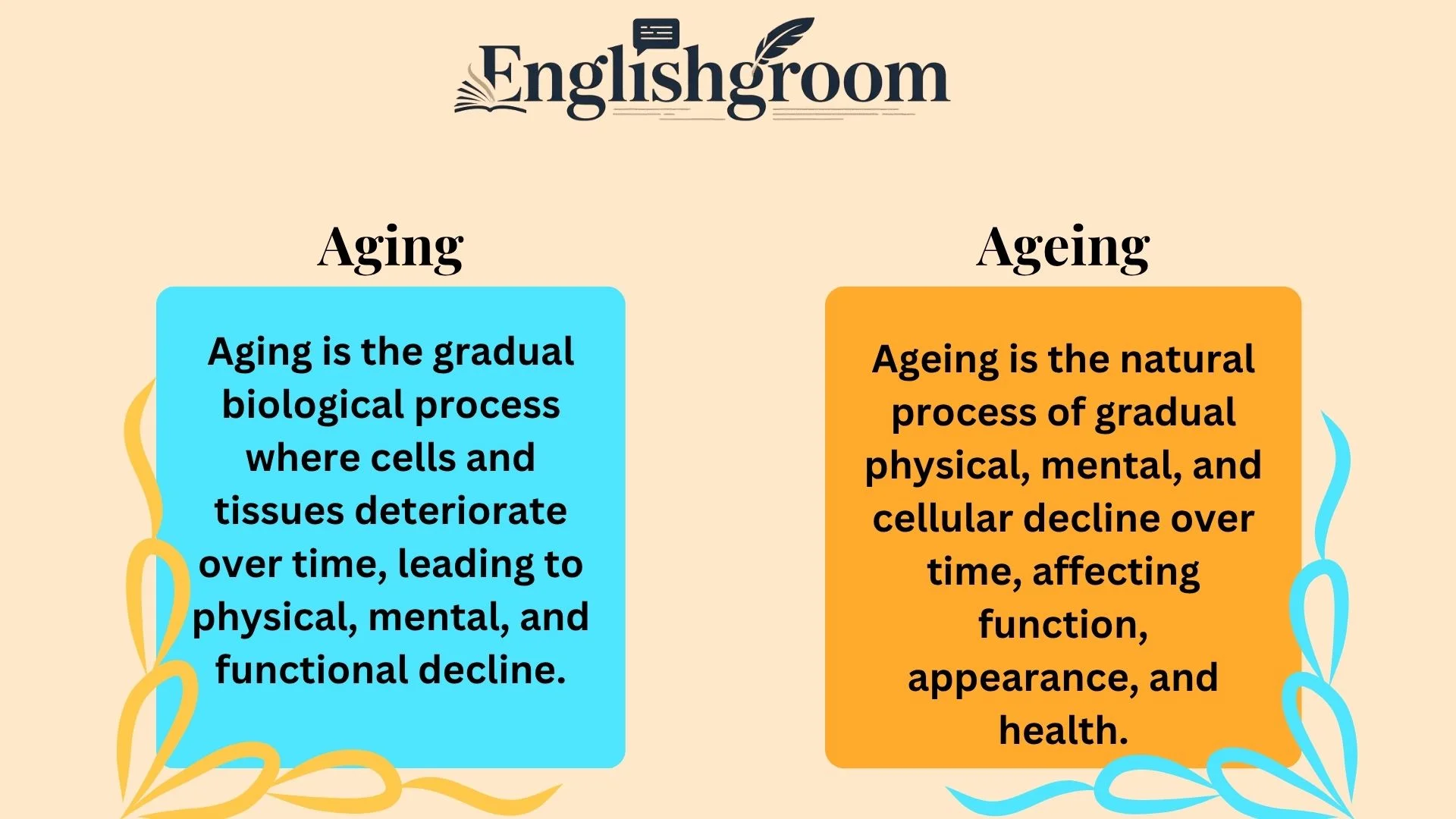
The spelling difference between aging and ageing has deep historical roots. Both forms originate from the word “age”, which comes from the Latin word aetas, meaning “lifetime” or “era.”
In the early 19th century, American English began simplifying spelling. Noah Webster, the creator of the famous Webster’s Dictionary, championed spelling reforms that eliminated silent letters. This is why American English favors “aging” without the extra ‘e’.
Meanwhile, British and Commonwealth English preserved the traditional “ageing”, reflecting older forms of English spelling.
Key Fact: Many modern differences in American and British spelling (color/colour, honor/honour, traveling/travelling) follow the same simplification pattern.
Geographic Preferences
Choosing between aging and ageing depends heavily on geography.
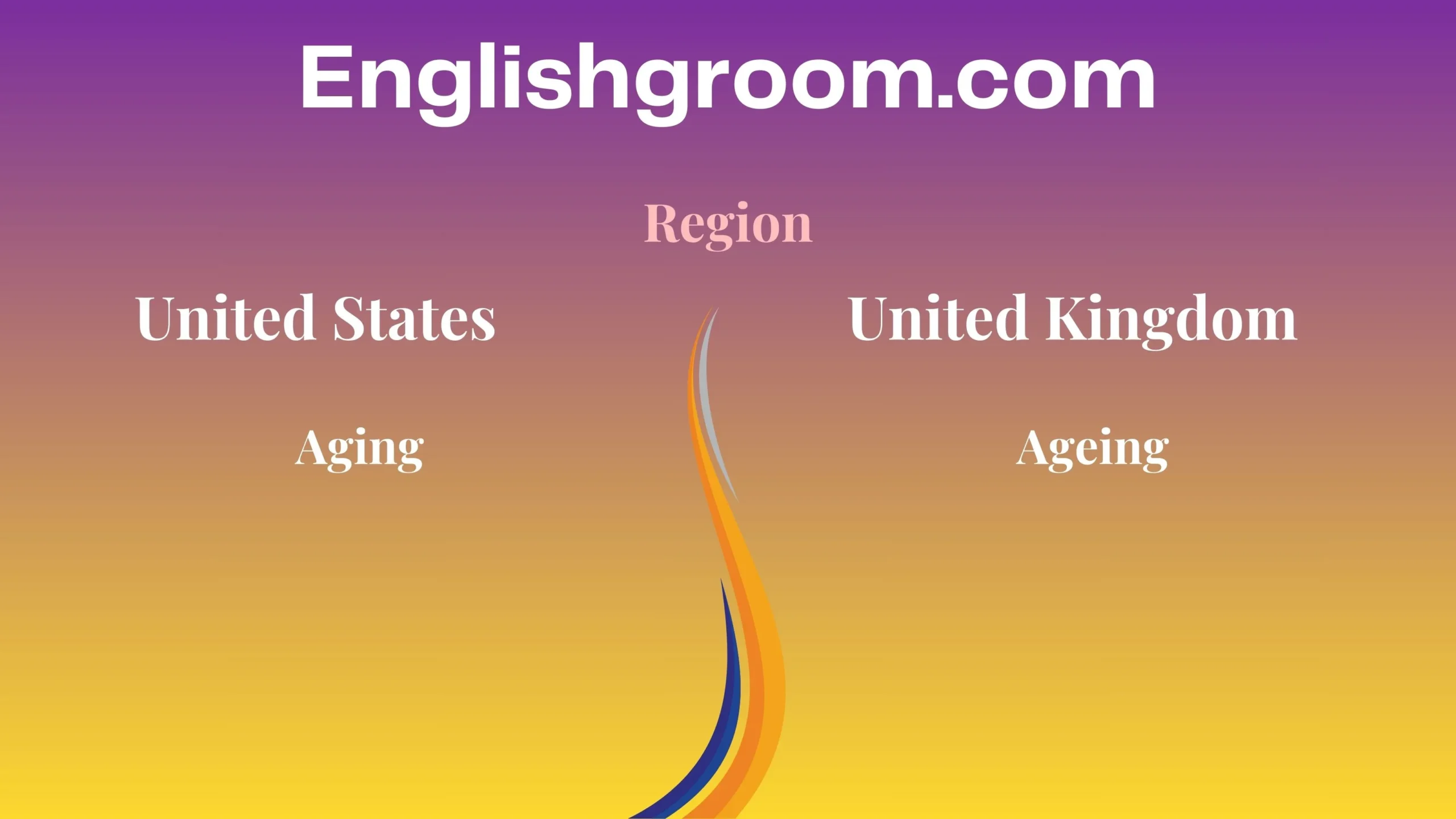
| Region | Preferred Spelling | Notes |
|---|---|---|
| United States | Aging | Standard in all formal and informal writing. |
| United Kingdom | Ageing | Common in newspapers, books, and academic writing. |
| Australia & New Zealand | Ageing | Aligns with British conventions. |
| Canada | Both | Canadian English is flexible, but context often determines usage. |
Example:
- US: “The aging population requires new healthcare policies.”
- UK: “Ageing gracefully is a common theme in lifestyle magazines.”
The table above highlights the regional divide. If your audience is international, knowing their location can help maintain professionalism and clarity.
Style Guide Recommendations
When writing for formal or academic purposes, style guides are essential. They dictate which spelling to use consistently.
- APA, Chicago, MLA (American): Use aging.
- Oxford, Cambridge, Australian Style Manual: Use ageing.
- Scientific Journals: Many adopt American English regardless of location, so aging is often preferred.
Practical Tip: If your style guide doesn’t specify, pick one form and stay consistent throughout the document.
Grammar and Function
The words aging and ageing are versatile. They can function as verbs, gerunds, or adjectives, depending on context.
As a Verb (Present Participle)
- Describes an ongoing action.
- Example:
- US: “The cheese is aging perfectly in the cellar.”
- UK: “The wine is ageing in oak barrels.”
As a Gerund (Noun Form)
- Refers to the process of growing older.
- Example:
- “Aging is inevitable.”
- “Ageing gracefully requires good lifestyle habits.”
As an Adjective
- Describes nouns.
- Example:
- “The aging population needs better healthcare.”
- “The ageing workforce brings experience to companies.”
Tip: Grammar rarely determines which spelling you use—region and style guide do.
Language Evolution and Modern Trends
The global dominance of American media, technology, and scientific publications has made aging increasingly common worldwide. Even British and Australian publications sometimes adopt aging in digital content to appeal to global audiences.
Trends to note:
- Social media and online publications often favor American English for SEO purposes.
- Academic journals may choose aging to align with international standards.
- Marketing campaigns, especially in skincare or anti-aging products, overwhelmingly use aging to target global audiences.
Example: Skincare brands like L’Oréal or Olay always use anti-aging on their websites, even in the UK and Australia.
Contextual Usage Guidelines
To decide between aging and ageing, consider audience, medium, and consistency.
- Audience Location:
- US readers → aging
- UK/Australia → ageing
- Medium:
- Academic or professional → follow style guide
- Marketing or casual → consider global SEO trends
- Consistency:
- Never mix both forms in one document. It reduces professionalism and confuses readers.
Quick Tip: If you’re unsure, default to aging for online content, and ageing for traditional print in the UK and Commonwealth.
Real-World Examples Across Domains
Healthcare
Medical research papers often standardize aging for clarity.
- Example: “The aging process affects cellular regeneration and immune function.”
- Gerontology journals use aging in titles: Aging Cell, The Journals of Gerontology.
Marketing & Consumer Products
Anti-aging creams, wellness blogs, and fitness brands follow American spelling even outside the US.
- Example:
- “Our anti-aging serum reduces wrinkles in two weeks.”
- “Discover the secrets to aging gracefully.”
Academia & Research
Sociology, demography, and gerontology studies frequently use spelling according to the journal’s style guide.
- Case Study: The Lancet (UK) may use ageing, while JAMA (US) uses aging.
- Important for citations: maintain consistency with the source’s spelling.
Memory Tips for Writers
Struggling to remember which spelling to use? Here are some easy hacks:
- US = drop the “e” → aging
- UK = keep the “e” → ageing
- Think of “e” for England as a mnemonic for British spelling.
- Use a single choice per document: consistency beats perfection.
Pro Tip: Create a style cheat sheet for your team to avoid confusion across publications.
Tables for Quick Reference
Aging vs Ageing by Region
| Region | Spelling | Common Usage Examples |
|---|---|---|
| United States | Aging | Aging population, anti-aging products |
| United Kingdom | Ageing | Ageing gracefully, the ageing workforce |
| Australia | Ageing | Ageing population, age-related policies |
| Canada | Both | Context determines usage |
| Global Journals | Aging | Standard in science, medicine, and technology |
Grammar Functions Table
| Function | Example (US) | Example (UK) |
|---|---|---|
| Verb | “The wine is aging.” | “The wine is ageing.” |
| Gerund (Noun) | “Aging is inevitable.” | “Ageing gracefully takes practice.” |
| Adjective | “The aging population grows.” | “The ageing workforce contributes expertise.” |
FAQs About Aging vs Ageing
What is the difference between aging and ageing?
The only difference is spelling: aging is American English; ageing is British/Commonwealth English.
Which is correct in medical journals?
Most international medical journals use aging, regardless of location.
Can I mix both spellings in a single article?
No. Mixing reduces readability and professionalism. Pick one and stay consistent.
Is one spelling more modern or trendy?
Aging is more common in digital media and global marketing, while ageing is traditional in British print.
Does grammar affect which spelling to use?
No. Spelling choice depends on audience and style guide, not verb/gerund/adjective use.
Learn More English With These Best Articles:
Impatient vs. Inpatient The Complete Guide to Understanding the Real Difference
Brite vs Bright: What’s the Real Difference and When to Use Each?
Absolutely True – Right or Redundant? The Real Meaning Behind This Common Phrase
Propose vs Purpose: The Real Difference You Need to Know
By Which or In Which? The Complete Grammar Guide You’ll Never Forget
Conclusion
The difference between aging and ageing may seem small, but it carries real weight in communication. Use aging for American audiences, global publications, and digital content.
Use ageing for UK, Australian, and Commonwealth readers. Always follow style guides, maintain consistency, and consider your audience first.
By applying these simple rules and memory hacks, you’ll never confuse readers or appear unprofessional. Whether writing for science, marketing, or casual content, a single letter can make all the difference.

Hi! I’m Sami, a 28-year-old content writer with a love for words and storytelling. Writing has always been my way of expressing ideas, sharing knowledge, and connecting with people. I enjoy creating engaging and well-researched content—whether it’s blogs, articles, or social media posts—that not only informs but also inspires readers. My goal is to turn complex ideas into clear, creative, and meaningful pieces of writing that leave a lasting impact.